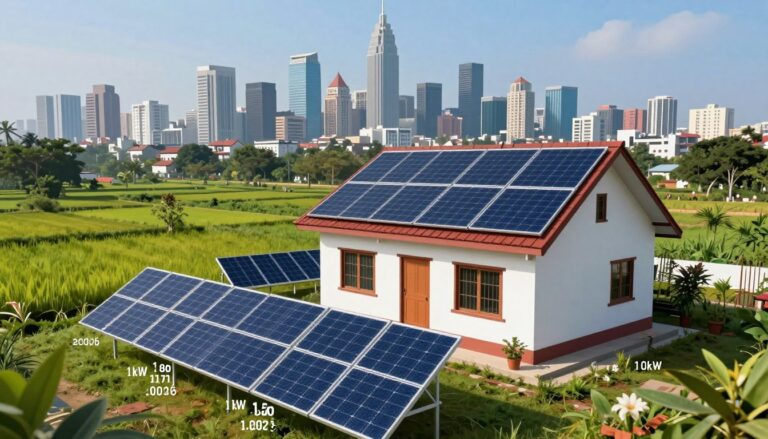




Rule of thumb: 65-80 sq. ft. of shadow-free roof per kW. But usable roof is not total roof - here is how engineers actually measure what your roof can do, from shadow analysis to walkways.
Knowledge Center · Solar Basics
“Amar chhade koto kW hobe?” — it is usually the first question, and the answer starts with one engineering rule of thumb: roughly 65–80 square feet of shadow-free roof per kW of solar panels.
| System Size | Approx. Roof Needed | Typical Use |
|---|---|---|
| 1 kW | 65–80 sq. ft. | Lights, fans, TV, router backup |
| 3 kW | 200–240 sq. ft. | Family home with refrigerator |
| 5 kW | 330–400 sq. ft. | Larger home, partial AC support |
| 10 kW | 650–800 sq. ft. | Small commercial / large residence |
| 100 kW | 7,000–8,000 sq. ft. | Industrial rooftop plant |
This is where most self-estimates go wrong. From your total roof area, an engineer subtracts:
A 1,000 sq. ft. roof rarely gives 1,000 sq. ft. of usable solar area — 600–750 sq. ft. usable is common after honest deductions.
A small shadow is not a small problem. Panels in a string behave together — shading on one section can drag down the output of the whole string. That is why a proper design includes a morning-to-evening shadow assessment, not just a midday glance. A water tank that casts no shadow at noon may cover three panels at 4 PM.
Most flexible — tilted structures optimize generation, and walkways are easy to plan.
Panels follow the roof slope on rail structures. Sheet condition and purlin strength must be checked first.
Higher-wattage panels and careful layout can recover surprising capacity from awkward spaces.
Measure your roof, subtract the obvious obstacles, and divide by ~75 sq. ft. — that is your ballpark capacity. Then let an engineer verify it on site: the difference between “ballpark” and “buildable” is exactly what a structured site visit resolves.
Our engineers will assess usable area, shading, and structure — and tell you honestly what your roof can do.