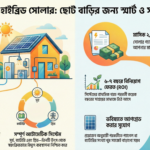





On-grid saves the most money; hybrid keeps the lights on during load-shedding. The right answer depends on your outage reality, daytime load, and what an outage actually costs you - here is the engineering view.
Knowledge Center · System Selection
This is the single most common question we hear: “On-grid naki hybrid?” The honest answer depends on three things — your outage reality, your daytime load, and your budget. Here is the engineering view, without sales talk.
An on-grid system connects your solar panels to your loads and the grid — no battery. It gives the best return on investment because batteries are the most expensive recurring component. But it has one hard rule: when the grid fails, the system shuts down (a mandatory safety feature called anti-islanding).
A hybrid system adds a battery bank and an intelligent inverter. Solar serves your loads first, surplus charges the battery, and during load-shedding your selected loads keep running on stored energy.
| Question | On-grid | Hybrid |
|---|---|---|
| Works during load-shedding? | No — shuts down for safety | Yes — battery carries selected loads |
| Battery cost? | None | Significant (sized to backup hours) |
| Return on investment | Highest | Good, but battery adds cost |
| Net metering benefit | Yes — surplus becomes bill credit | Possible, depending on configuration |
| Maintenance complexity | Lowest | Battery care required |
| Best fit | Stable-grid daytime users | Anyone facing regular outages |
If load-shedding regularly disrupts your home or business, backup is not a luxury — hybrid is your direction. If your grid is genuinely stable, on-grid wins on economics.
Heavy daytime users (factories, offices, schools) get maximum value from on-grid because solar generation matches their consumption hours directly.
For a clinic, restaurant, or retail shop, one hour of darkness can cost more than the battery’s daily share. Count that cost honestly before choosing on price alone.
Share your electricity bill and outage pattern — our engineers will recommend the right direction with honest numbers, free.