
Solar is an investment, so it deserves an investment calculation — not a slogan. This guide shows exactly how payback is worked out in Bangladesh after BERC’s June 2026 tariff revision, with numbers you can check against your own bill.
Updated October 2026 · Written and reviewed by the Frostec Solar Powers engineering team
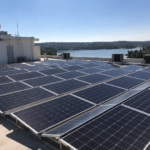
- In Bangladesh, 1 kW of well-installed panels produces roughly 3.5–4.5 kWh per day on a yearly average (lower in December and the monsoon, higher in March–May).
- Rooftop solar removes your most expensive units first — so the higher your monthly consumption, the faster the payback.
- Indicative 2026 paybacks: about 2–4 years for well-sized on-grid systems and about 4–7 years for hybrid systems with batteries.
- A credible estimate always states its assumptions: yield, tariff, self-consumption, degradation, maintenance and battery replacement.

What is the payback period of solar in Bangladesh?
Short answer: for an on-grid system that is sized to your daytime use and installed correctly, payback in 2026 is typically around 2 to 4 years. Hybrid systems with lithium batteries usually take around 4 to 7 years, because the battery adds cost without adding generation. These are indicative ranges — your figure depends on the five variables below.
The five variables that decide your return
| Variable | What it means | Typical Bangladesh value |
|---|---|---|
| Generation | Units (kWh) your system produces per year | ≈ 1,300–1,600 kWh per kW per year |
| Value per unit | The tariff you avoid for every unit you self-consume | ৳8.50–17.35 (residential slabs above 75 units); ≈ ৳13.82 daytime commercial (LT-E off-peak) |
| Self-consumption | Share of solar you use on site instead of exporting | 60–100% when sized to daytime load |
| Degradation | Gradual loss of panel output | ≈ 1% in year one, then ≈ 0.4% per year for N-type panels |
| Running costs | Cleaning, inspection, AMC, eventual inverter/battery replacement | Small but real — always include them |
Solar radiation data for Dhaka averages around 4.2 kWh/m² per day, ranging from roughly 3.2 in December to 5.2 in April. That seasonal swing is why we size on yearly averages, not on a sunny April afternoon.
Why solar pays back faster for bigger consumers
Residential electricity in Bangladesh is billed in slabs. After the June 2026 revision, units above 400 per month cost about ৳15.01 and above 600 about ৳17.35, while the first 75 units stay at the old lower rates. Every unit your panels generate comes off the top of your bill — the most expensive slab first. A home using 500 units a month therefore saves far more per solar unit than a home using 150.
For shops, offices and factories on commercial or industrial tariffs, daytime electricity is charged at the off-peak rate (about ৳13.82 per unit for LT-E commercial). Solar produces almost all its energy in exactly those hours, which is why well-sized commercial systems often pay back quickest.
Worked example 1: a medium home (on-grid)
- Consumption: about 450 units per month (fans, fridge, two ACs used in the evening).
- System: 3 kW on-grid, generating roughly 360 units per month on a yearly average.
- Bill units removed: the 360 most expensive units — 50 at ৳15.01, 100 at ৳9.62, 100 at ৳9.10 and 110 at ৳8.50.
- Monthly saving: ≈ ৳3,550 before VAT (≈ ৳42,000–45,000 per year).
- Indicative investment: about ৳96,000 at a turnkey on-grid rate of roughly ৳32 per watt.
- Simple payback: ≈ 2–2.5 years.
Worked example 2: a 50 kW commercial rooftop
- Generation: 50 kW × ~4 kWh/kW/day × 365 ≈ 73,000 kWh in year one.
- Value: if almost all is used on site at ≈ ৳13.82 per unit, ≈ ৳10 lakh per year.
- Indicative investment: about ৳16 lakh at ≈ ৳32 per watt.
- Simple payback: under 2 years — if the load really is there during daylight. If much of the energy is exported, payback lengthens.
What changes the numbers for hybrid systems?
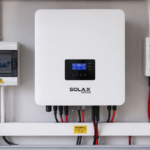
A battery stores solar for the evening and keeps your lights and fans running through load-shedding. That resilience has real value, but batteries do not generate energy — they store it, with some losses — and they are usually replaced once or twice over a 25-year system life. A 5 kW hybrid at around ৳75 per watt costs roughly ৳3.75 lakh, so with savings similar to an on-grid system its payback is typically 4–7 years. If backup is your priority, see Hybrid Solar with Battery Backup.
Net metering in 2026: what it means for your return
SREDA’s revised net-metering guideline (September 2025) allows rooftop systems up to 100% of your sanctioned load (previously 70%), opened the scheme to single-phase and prepaid/smart-meter consumers, introduced online applications, and pays exported energy in taka to a bank or mobile-banking account. Exported units are generally worth less than the units you avoid buying, so the best economics still come from using your solar on site. Frostec handles the net-metering application and documentation for clients — see On-grid Solar & Net Metering.
How Frostec estimates your payback
- Read 12 months of bills to find your real slab position and daytime share.
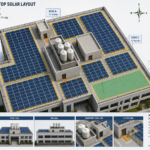
- Survey the roof for usable area, shading, orientation and structure.
- Model generation month by month, with realistic losses and degradation.
- Value each unit at the tariff it actually displaces, separating self-use and export.
- Add lifetime costs — cleaning, AMC, inverter and (for hybrid) battery replacement.
- Show you the assumptions so you can verify every number.
Want the full sizing method first? Read the Solar System Sizing Guide or compare ownership models in Solar Investment Models: CAPEX vs OPEX.
Frequently Asked Questions
How many units does 1 kW of solar produce per day in Bangladesh?
On a yearly average, about 3.5 to 4.5 kWh per day for a well-installed, unshaded system — roughly 1,300 to 1,600 kWh per year. Output is lower in December and during monsoon cloud cover, and highest from March to May.
Is solar still worth it after the 2026 tariff change?
For most homes using more than about 200 units a month and for nearly all daytime businesses, yes. The June 2026 BERC revision raised average retail tariffs by about 16.7%, which increases the value of every unit solar replaces. Homes using 75 units or less kept the old rates and benefit least.
Does net metering make payback faster?
It helps by paying you for surplus energy, but exported units are usually valued lower than the units you avoid buying. The fastest payback comes from sizing the system to your own daytime consumption and using net metering for the remainder.
What costs should an honest payback estimate include?
Equipment and installation, net-metering documentation, panel cleaning, periodic inspection or AMC, inverter replacement during the system life, and battery replacement for hybrid systems — plus realistic panel degradation of roughly 0.4% per year.
Get a Payback Estimate Based on Your Bill
Every recommendation in this guide becomes precise only after we see your bill, roof and load. Our engineers will design first and quote second.
Questions? Call or WhatsApp +880 1805-208117 or email info@frostecsolarpowers.com. Figures in this article are indicative and approximate; final values depend on your site survey, design and the manufacturer terms of the equipment supplied.