
Commercial Rooftop Solar Designed for Business Energy Performance
FSP designs commercial solar systems based on daytime load, monthly bill, roof condition, cable route, safety requirements, net metering option, and long-term business value — not a price-first package.
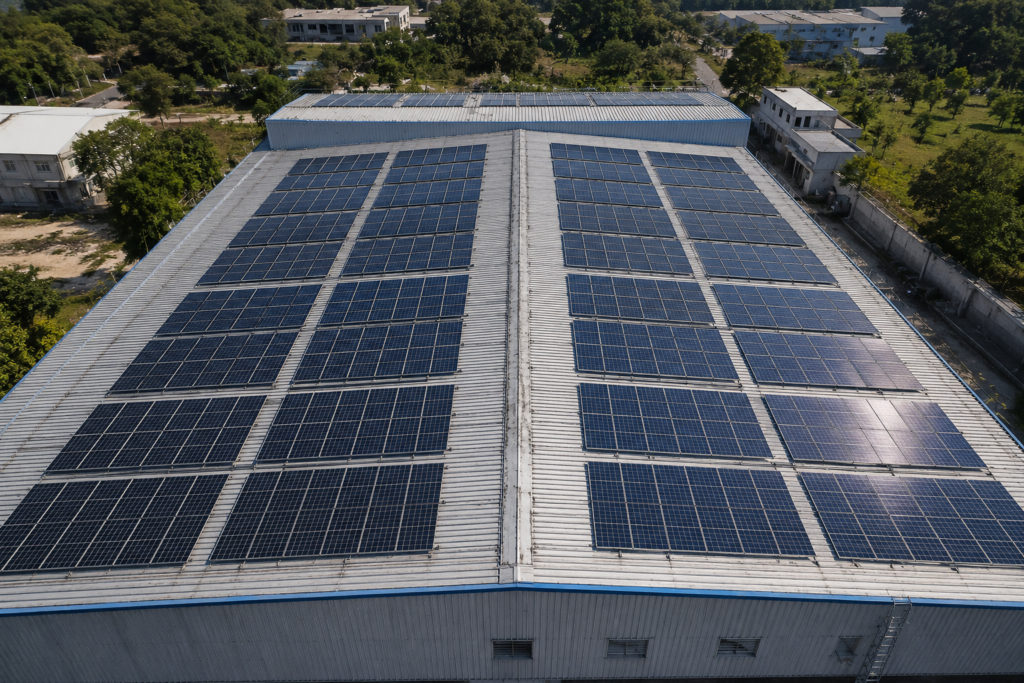
The Problem
What Drains a Commercial Energy Budget
Rising Electricity Cost
Tariffs keep climbing, raising your monthly operating expense.
High Daytime Use
Offices, shops, and clinics consume most power exactly during sun hours.
Unused Roof Space
A large rooftop sits idle while you pay full grid tariff below it.
Unstable Power
In some areas, outages interrupt business and cost revenue.
Price-First Sizing
Cheap quotes often hide poor sizing that underperforms for years.
Unclear ROI
No transparent payback calculation, and weak after-sales support.
Best Fit
Commercial Solar by Business Type
Offices
Energy: Steady daytime load (AC, lighting, computers).
Benefit: Direct cut to monthly bills.
Restaurants
Energy: Heavy cooling & kitchen load.
Benefit: Hybrid keeps critical loads alive in outages.
Schools
Energy: Strong daytime use, large roofs.
Benefit: Excellent self-consumption match.
Clinics
Energy: Sensitive, continuous load.
Benefit: Hybrid backup for critical equipment.
Shops
Energy: Lighting, cooling, refrigeration.
Benefit: Lower running cost, day after day.
Commercial Buildings
Energy: Mixed tenant load.
Benefit: Roof becomes a generating asset.
Warehouses
Energy: Large roof, moderate load.
Benefit: Huge area for high-capacity systems.
Small Factories
Energy: Daytime machinery load.
Benefit: Offset demand during production hours.
Design Factors
What FSP Checks Before Sizing Your System
A correct commercial design depends on all of these — we do not skip any of them.
- Monthly electricity bill
- Daytime load pattern
- Roof space (usable, shadow-free)
- Roof type & condition
- Shadow from nearby structures
- Inverter location
- DB / SDB condition
- AC / DC cable route
- Earthing
- Lightning protection
- Net metering possibility
- Backup requirement
- Future expansion plan
On-grid vs Hybrid
Which Commercial System Fits You?
On-grid Commercial
- Best for daytime load
- Reduces monthly electricity bill
- No battery by default
- Depends on grid availability
- Net metering if approved
Hybrid Commercial
- Useful when backup is required
- Includes battery
- Higher cost than on-grid
- Supports essential load in grid failure
- Needs load-priority planning
ROI & Saving
How Your Return Is Estimated
Here is a worked example showing how the numbers fit together for a mid-size commercial system. Your actual figures come from your bill, load, and site survey — these are estimates, not promises.
| Input | Example value |
|---|---|
| Monthly electricity bill | ৳45,000 (example) |
| Monthly unit consumption | ≈ 4,200 kWh |
| Proposed system size | ≈ 30 kW |
| Estimated monthly generation | ≈ 3,600 kWh (estimate) |
| Estimated monthly saving | ≈ ৳30,000 (estimate) |
| Estimated payback period | ≈ 4–6 years (estimate) |
| Maintenance consideration | Cleaning + AMC per plan |
Roof & Site Assessment
What We Check On Your Roof
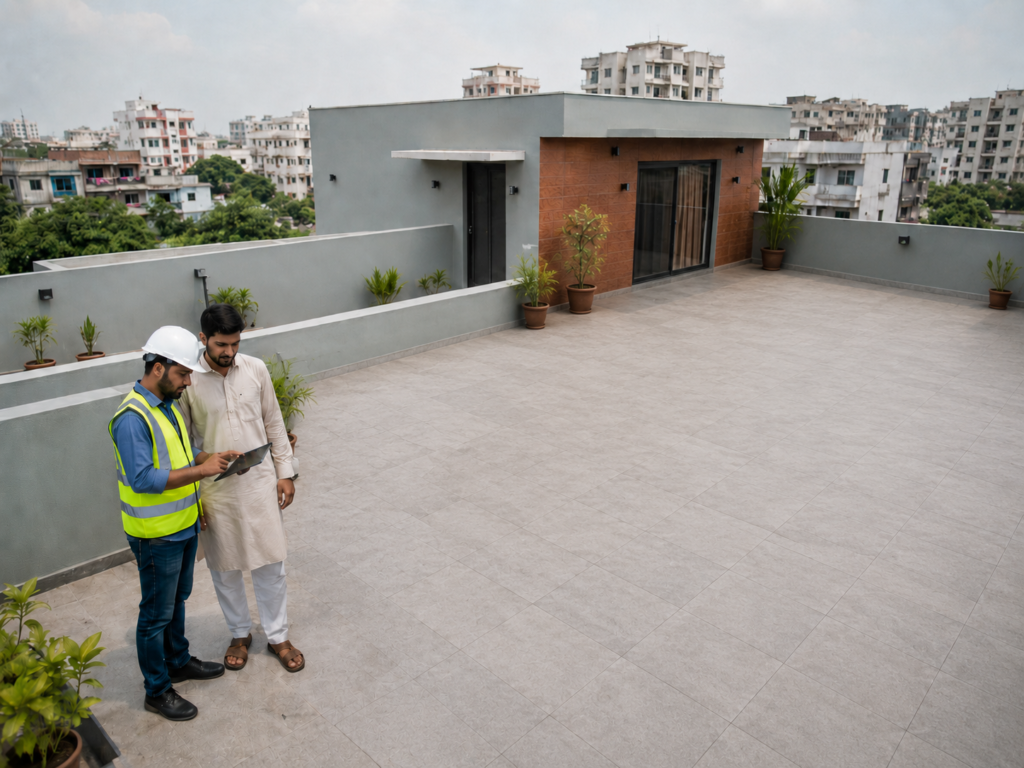
- Available roof area
- Shade from nearby buildings
- Roof access
- Roof strength & surface condition
- Panel layout possibility
- Inverter placement
- DB / SDB location
- Cable route
- Safety access & earthing point
- Maintenance walkway
How We Work
Commercial Project Process
Inquiry
Tell us your business type, bill, and goal.
Bill & Load Review
Consumption pattern and savings potential analyzed.
Site Visit
Roof, shading, structure, DB, and cable route verified.
Engineering Design
System sized from real data, on-grid or hybrid.
Quotation
Calculated ROI and transparent scope.
Approval
Design and commercial terms confirmed with you.
Installation
Professional installation with full protection.
Testing
Electrical testing and performance validation.
Handover
Documentation, net metering support, and training.
O&M / AMC Support
Scheduled maintenance for the system’s life.
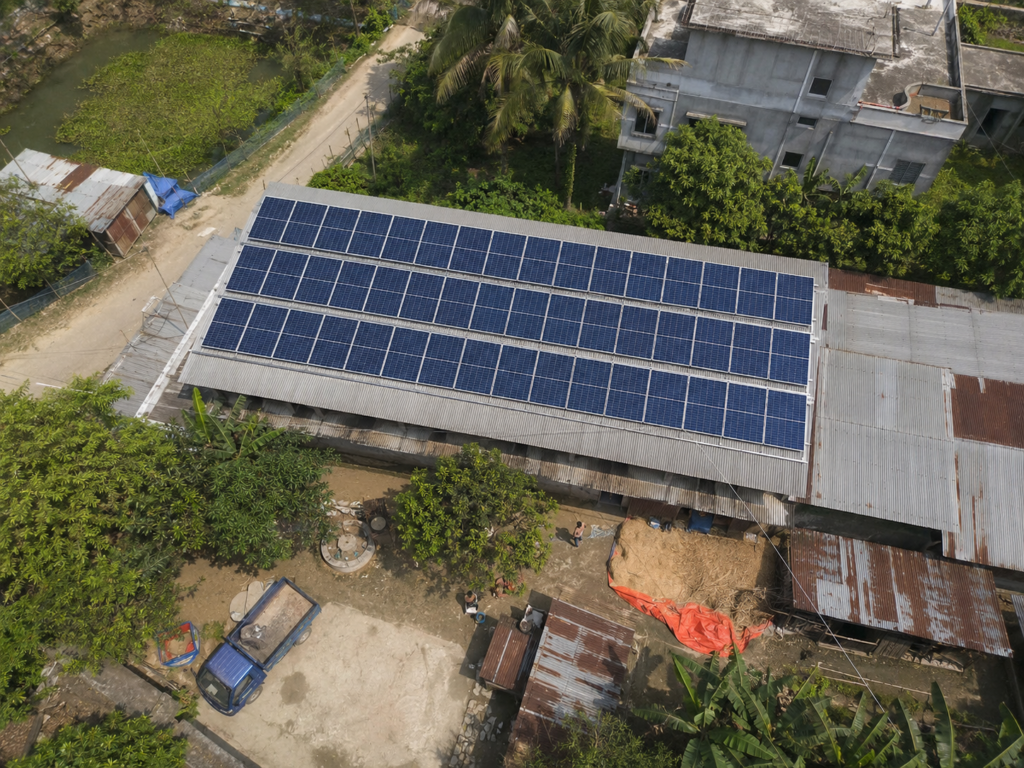
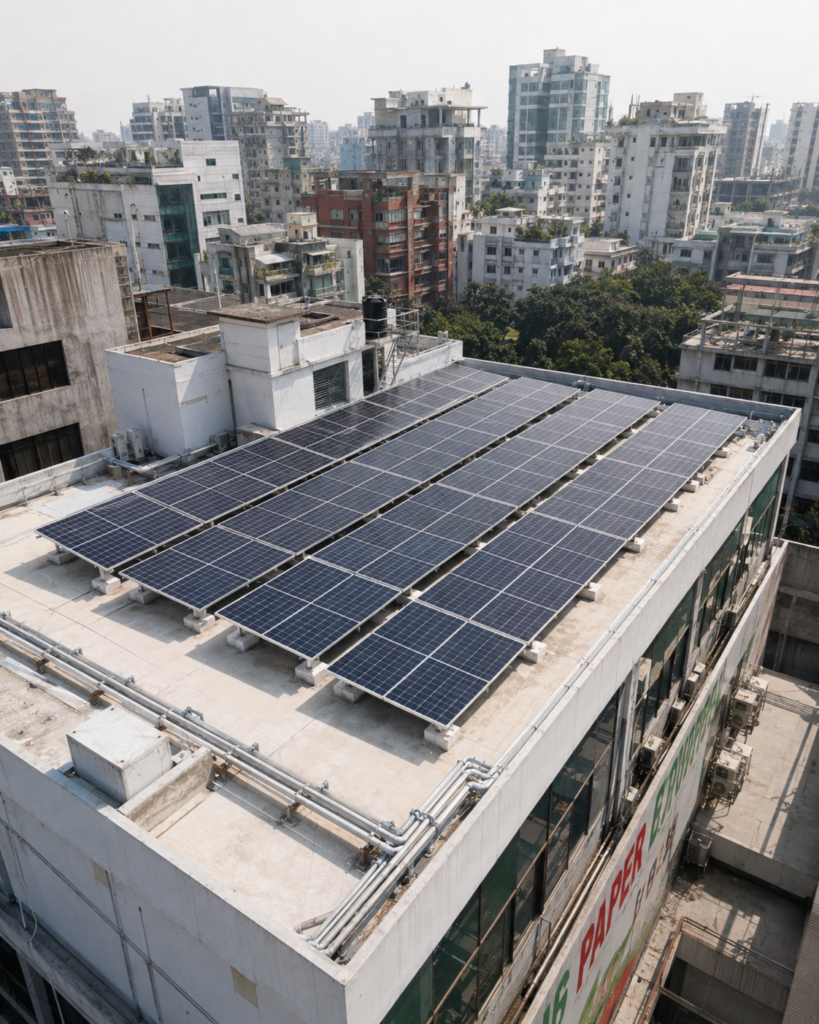
Commercial Solar Project Gallery
Projects in the Field
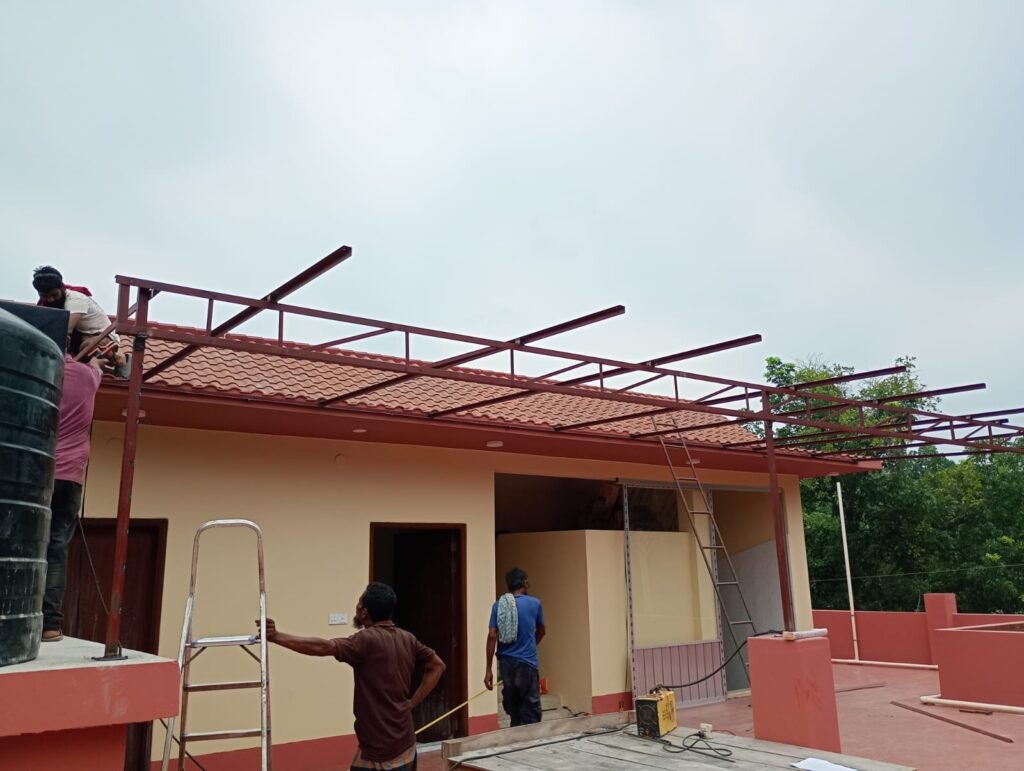
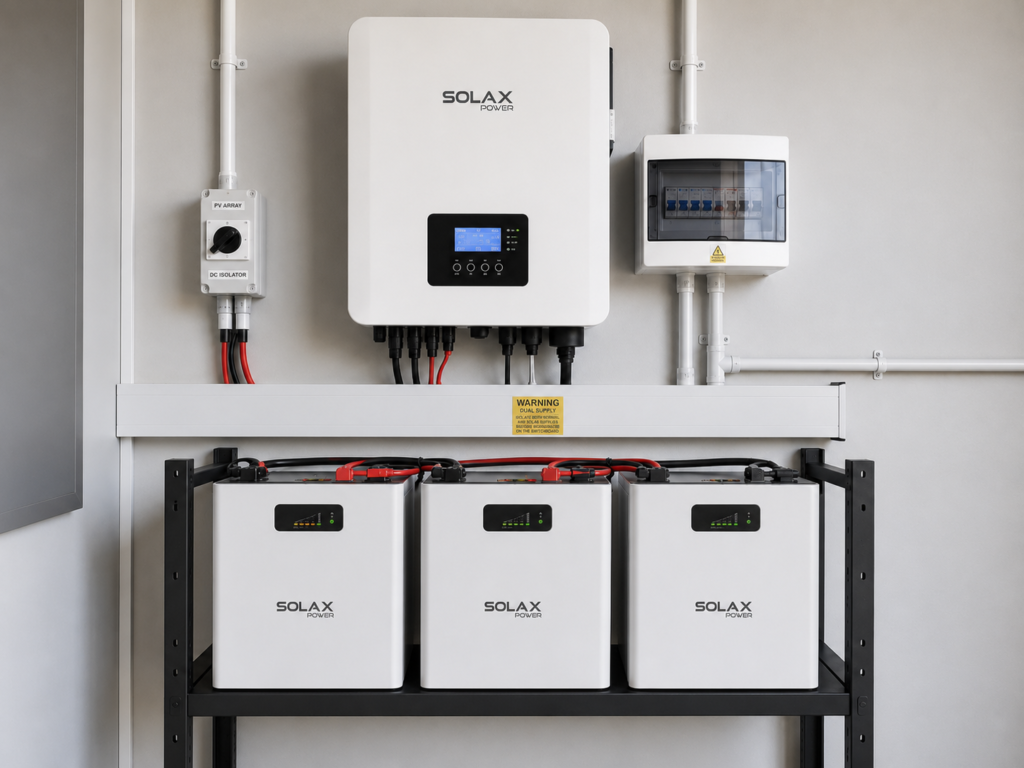
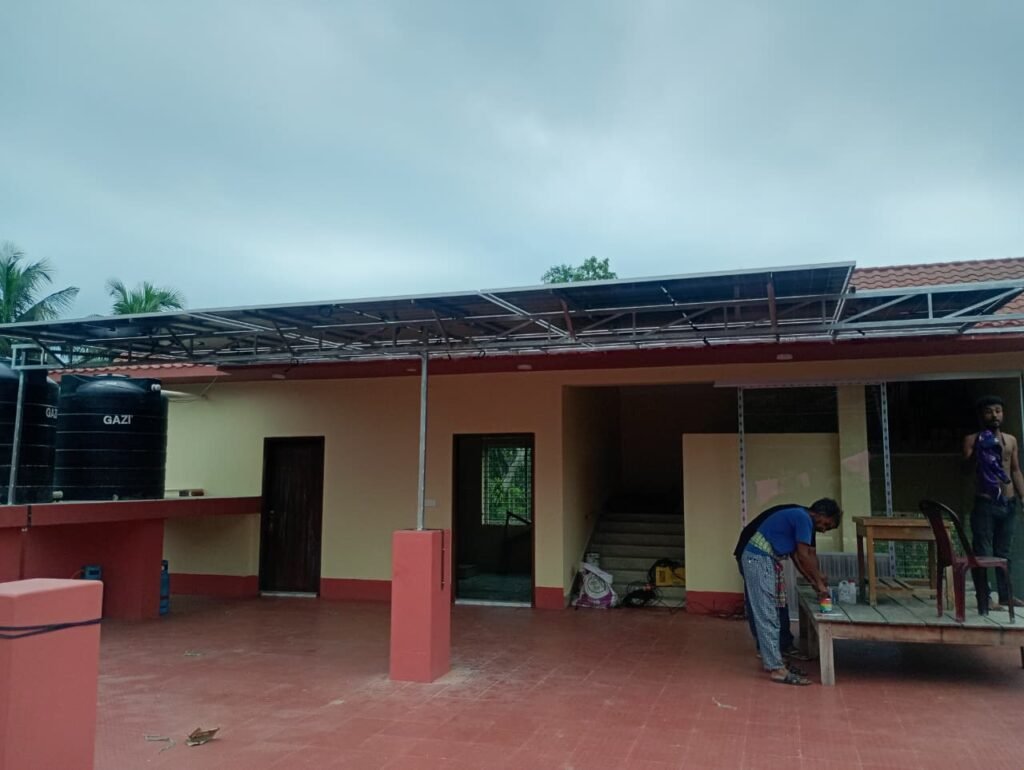
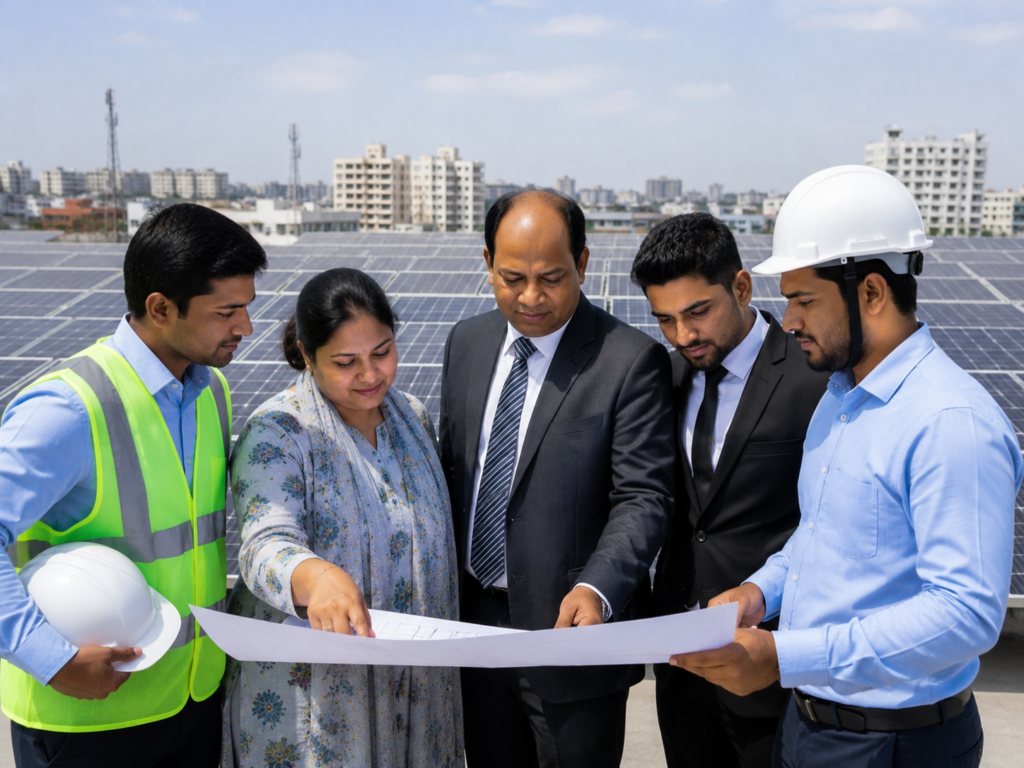
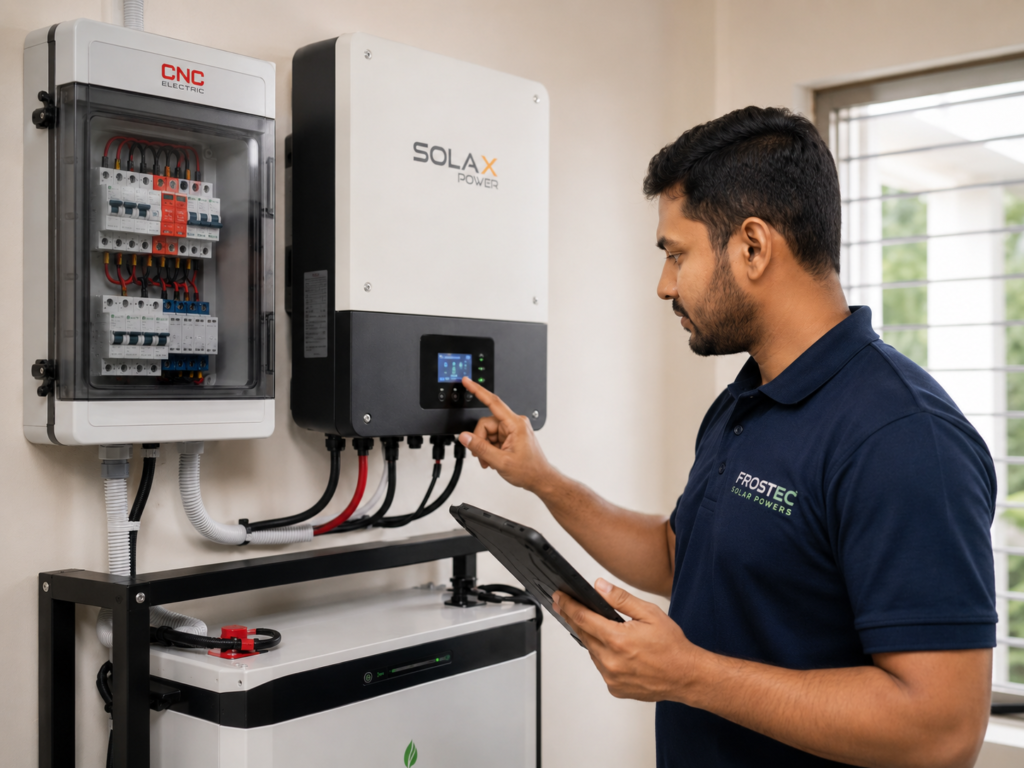
Commercial rooftop, site visit, installation, inverter, and completed systems — documented across our work.

Components
System Components
Final product selection depends on system design, project requirement, product availability, warranty condition, and client approval.
Solar Panels
High-efficiency monocrystalline panels sized to the rooftop’s usable area and the system’s daily generation target based on your actual load.
On-grid Inverter
String or central inverter that converts DC solar power to AC for direct business consumption. Matched to the system size and grid connection capacity.
Hybrid Inverter
Used when backup is required. Manages solar, battery, and grid simultaneously — keeps essential business loads running during grid failure.
Battery Storage
Added only when backup is required. Lithium iron phosphate (LiFePO4) preferred for cycle life, safety, and reliability in commercial environments.
Mounting Structure
Galvanized or aluminium structure engineered for commercial roof type, wind load, and panel tilt. Designed for safe maintenance access and long service life.
AC / DC Cable
Correctly rated DC solar cable and AC wiring, routed in cable tray or conduit for organized, safe, and serviceable cable management on commercial sites.
ACDB / DCDB
DC combiner box and AC distribution board for safe aggregation, circuit protection, and clean fault isolation between solar array and the building’s electrical system.
Protection Devices
DC fuses, AC MCBs and MCCBs, surge protection devices (SPD) on both sides, and isolation switches for safe servicing and emergency shutdown.
Earthing & Lightning
Resistance-tested earthing for panels, structure, and inverter. Lightning protection system designed by site exposure — required on all commercial rooftop systems.
Monitoring System
String or system-level monitoring of solar generation, energy consumption, fault alerts, and performance trends — accessible from a dashboard or mobile app.
Why FSP
Design-First for Your Business
Design Before Price
Engineering first, quotation second — the order that protects your investment.
Load & Bill Review
Your real consumption drives the system size — no arbitrary packages.
Roof Condition Check
Structure and shading verified before any capacity is proposed.
Safe Electrical Integration
Protection, earthing, and correct DB integration in every job.
Net Metering Support
Application, documentation, and utility approval handled end to end.
Clear Quotation
Transparent scope and honest estimates — no hidden gaps or surprises.
Testing & Commissioning
Full electrical testing and performance validation before handover.
O&M & AMC Support
Structured long-term maintenance to protect your investment and yield.
Keep Exploring
Related Pages
FAQ
Commercial Solar Questions
Is commercial solar better as on-grid or hybrid?
Does on-grid solar provide backup?
What information is needed for a commercial solar quotation?
Is a site visit required before final quotation?
How is commercial solar system size calculated?
How much roof space is needed?
Can solar reduce my monthly electricity bill?
How is ROI calculated?
What maintenance is required?
Can the system be expanded later?
Ready to Design Your Commercial Solar System Correctly?
Before recommending system size or price, FSP reviews your electricity bill, daytime load, roof condition, safety requirements, cable route, net metering option, and future expansion plan.