
Two 600 W panels can produce different amounts of energy on the same roof. The difference often comes from cell technology — and in Bangladesh, where roofs can reach 65–70 °C in summer, how a panel behaves in heat matters more than its laboratory rating.
Updated October 2026 · Written and reviewed by the Frostec Solar Powers engineering team
- PERC (p-type) is the older mainstream technology; TOPCon and HJT (n-type) are newer and more efficient.
- Leading n-type modules reach about 22.6–24.8% efficiency (e.g. LONGi Hi-MO 7, JA DeepBlue 4.0 Pro, Jinko Tiger Neo 3.0).
- Heat matters: a lower temperature coefficient means less power lost on hot roofs.
- N-type modules typically degrade more slowly and carry longer power warranties (around 30 years from leading brands).
- Bifacial panels gain most on raised frames over light surfaces; on a typical flat roof the gain is modest.
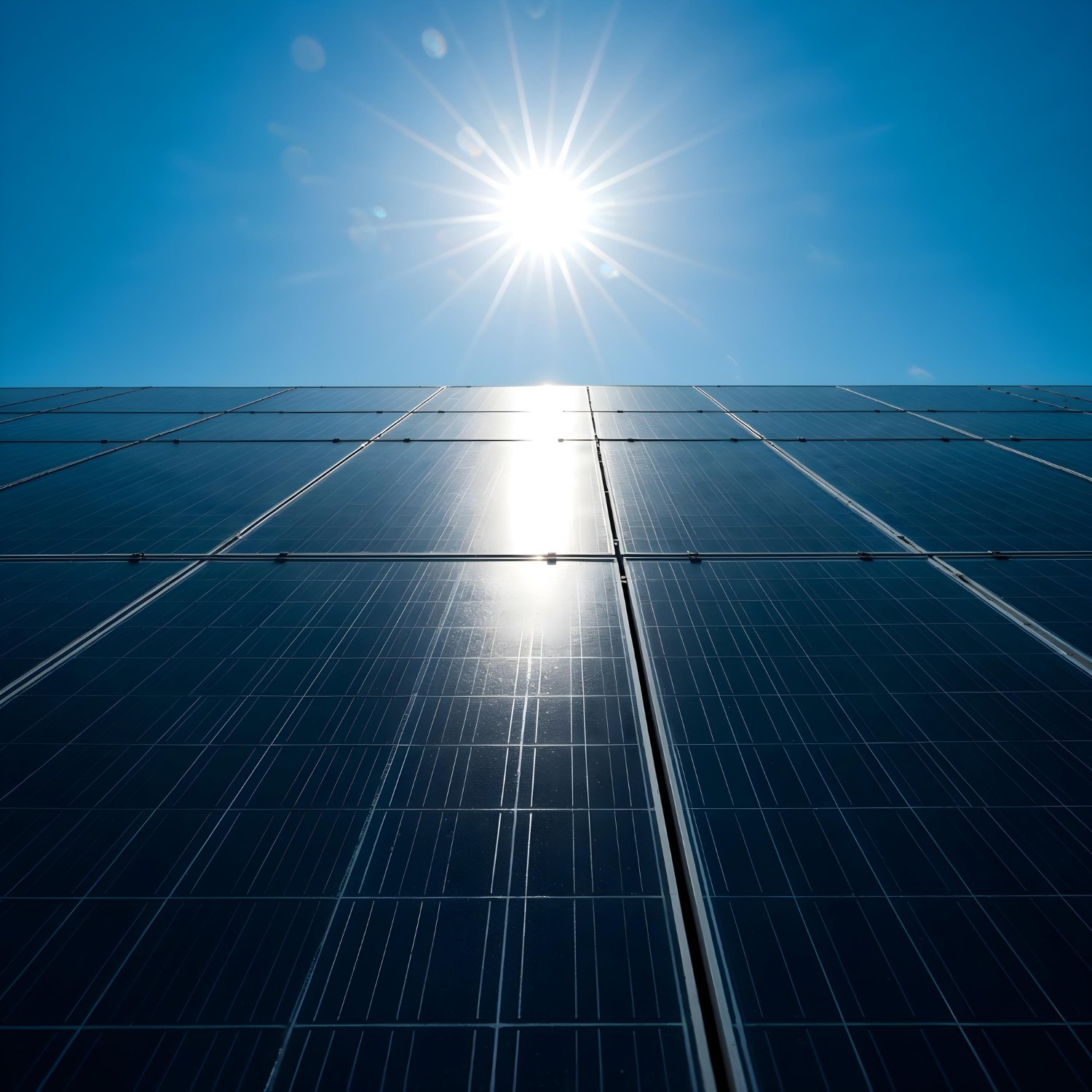
The technologies in plain language
| Technology | What it is | Typical traits |
|---|---|---|
| PERC (p-type) | Passivated emitter and rear cell — the mainstream technology of the last decade | Lower cost; higher heat loss; faster early degradation |
| TOPCon (n-type) | Tunnel oxide passivated contact — now the mainstream for new projects | Higher efficiency, better heat behaviour, slower degradation |
| HJT (n-type) | Heterojunction — thin amorphous silicon layers on crystalline silicon | Very good heat behaviour; often higher price |
| Back-contact (e.g. HPBC) | All contacts on the back of the cell | High efficiency and clean appearance |
| Bifacial | Glass on both sides; captures reflected light from behind | Extra yield on raised frames over light surfaces |
Leading modules: what the datasheets say
| Module | Max efficiency | Temperature coefficient (Pmax) | Power warranty |
|---|---|---|---|
| Jinko Tiger Neo 3.0 (TOPCon) | Up to 24.8% | See datasheet | 30 years; ~1% first-year, then ~0.4%/year |
| JA DeepBlue 4.0 Pro (n-type) | 23.3% | −0.29%/°C | ≥ 87.4% output at year 30 |
| LONGi Hi-MO 7 | 22.6% | −0.28%/°C | 12-year product, 30-year power |
Figures vary by model and wattage; always check the exact datasheet. Warranties are subject to manufacturer terms. Our Jinko vs LONGi vs JA guide compares these brands in detail.
Why heat matters: a worked example
Panels are rated at 25 °C cell temperature. On a Bangladeshi summer roof, cells can reach about 65 °C — 40 °C hotter. Power loss ≈ temperature coefficient × 40:
| Typical coefficient | Power lost at 65 °C | A 600 W panel produces about |
|---|---|---|
| −0.35%/°C (typical older PERC) | ≈ 14% | ≈ 516 W |
| −0.29%/°C (typical n-type TOPCon) | ≈ 11.6% | ≈ 530 W |
| −0.25%/°C (typical HJT) | ≈ 10% | ≈ 540 W |
Illustrative values before other losses. Over 25 years and thousands of hot days, a few percent adds up. Good ventilation under the panels also lowers cell temperature — see the hidden engineering behind a rooftop array.
Is bifacial worth it?
Bifacial panels collect light reflected onto their back. The gain depends on how much light reaches the rear: it is highest on raised frames above white or light-coloured roofs and ground, and modest on panels mounted close to a dark roof. Bifacial glass-glass panels are also durable in humid conditions, which is useful in Bangladesh.
How to choose
- Compare cost per watt and expected energy, not wattage alone.
- Prefer n-type (TOPCon, HJT, back-contact) for new systems where the price difference is small.
- Check the temperature coefficient and degradation on the datasheet.
- Buy from authorised channels with serial numbers you can verify — see how to spot fake panels.
- Understand the warranty — see what a 25–30 year warranty means.
Frequently Asked Questions
What is the difference between TOPCon and PERC panels?
PERC is an older p-type technology. TOPCon is an n-type technology with higher efficiency, lower heat loss and slower degradation, and is now the mainstream choice for new systems.
Are HJT panels better for hot climates?
HJT panels typically have the lowest temperature coefficient, so they lose less power on hot roofs. They are often more expensive than TOPCon.
How much power does a solar panel lose in heat?
Roughly the temperature coefficient multiplied by the degrees above 25 °C. At 65 °C, a panel with −0.29%/°C loses about 11.6% of its rated power.
Are bifacial panels worth it on a rooftop?
The gain is largest on raised frames above light-coloured surfaces and modest close to a dark roof. They are also durable in humid conditions.
Which solar panel brand is best in Bangladesh?
Jinko, LONGi and JA Solar all offer high-efficiency n-type modules with around 30-year power warranties. The best choice depends on the exact model, price and authorised availability.
Choose Panels by Energy, Not Just Wattage
We compare panel options for your roof by expected yield, heat behaviour and cost per unit of energy.
Questions? Call or WhatsApp +880 1805-208117 or email info@frostecsolarpowers.com. Head office: Suite 708/B, Level 7, Zaman Tower, 37/2 Purana Paltan, Dhaka 1000. Figures in this article are indicative and approximate; final values depend on your site survey, design and the manufacturer terms of the equipment supplied.