
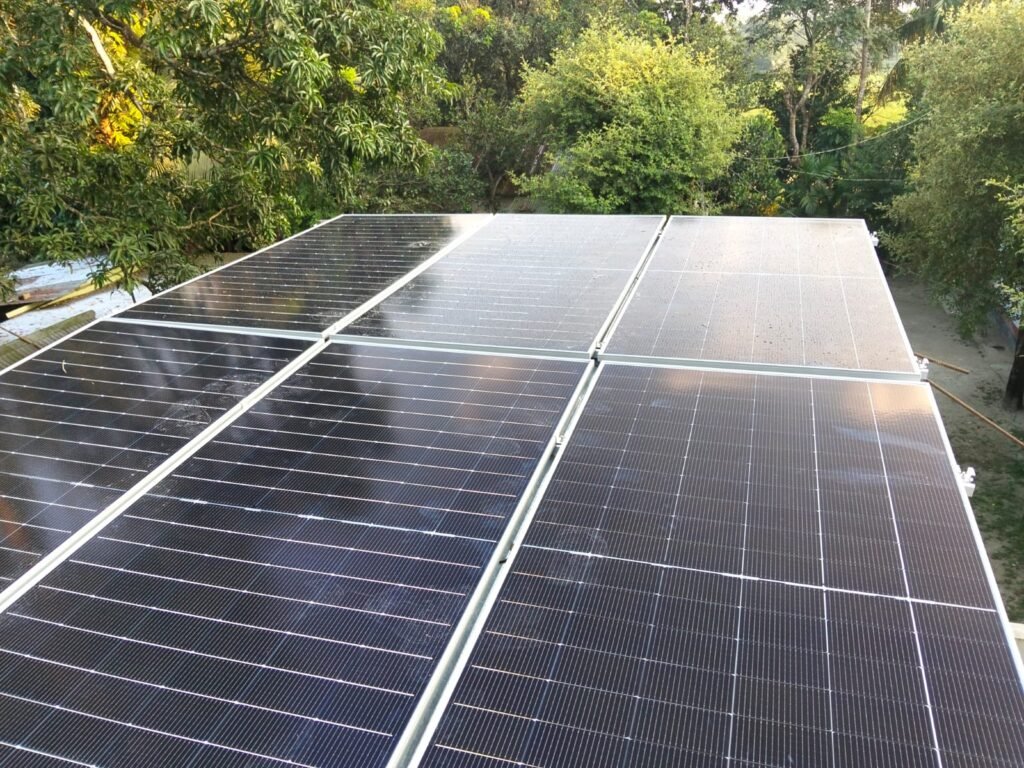
Solar panels have no moving parts, but they are not maintenance-free. In much of Bangladesh, dust from roads and construction, smoke from brick kilns and bird droppings build up on the glass, especially between November and April when there is little rain. Cleaning is the simplest way to keep a system producing what it was designed to produce.
Key takeaways
- Dirty panels produce less; how much less depends on location, tilt and season.
- In the dry season most sites need more frequent cleaning than in the monsoon.
- Clean with soft brushes or sponges and clean water, early morning or late afternoon.
- Never use detergents, abrasive pads or high-pressure jets, and never walk on panels.
- Use your monitoring app: a steady drop in output on sunny days is often the first sign that cleaning is due.
How dirt affects output
Anything that blocks light from reaching the cells reduces output. A uniform layer of dust lowers generation across the whole array; a single bird dropping or leaf on one cell can have a bigger effect than its size suggests, because cells in a panel are connected in series. Research on soiling, including studies in Bangladesh, shows losses vary widely with location, tilt and how long panels go without rain or cleaning.
How often should you clean?
There is no single schedule for every site. Use this as a starting point, then adjust using your monitoring data.
| Site type | Dry season (Nov–Apr) | Monsoon (Jun–Sep) |
|---|---|---|
| Home roof, quiet residential area | About every 2–4 weeks | Check monthly; rain does much of the work |
| Near main roads or construction | About every 1–2 weeks | Check after dry spells |
| Factories, mills, near brick kilns | Often weekly | Check after dry spells and for oily residue |
| Farms and poultry sheds | About every 1–2 weeks | Check for feed dust and droppings |
Frequencies are indicative starting points, not fixed rules. Your own generation data is the best guide.
How to clean solar panels safely
Pick the right time
Early morning or late afternoon, when the glass is cool. Cold water on hot glass can stress it.
Stay off the panels
Work from the walkway or use an extension pole. Never stand or kneel on panels.
Use plain water
Clean, low-mineral water with a soft brush or sponge. Hard water can leave marks.
Be gentle
No detergents, abrasive pads or high-pressure jets, which can damage coatings and seals.
Mind electricity
Do not spray inverters, junction boxes or connectors. Keep water away from cables.
Check as you clean
Look for cracked glass, loose clamps, damaged cables or hot spots and report them.
A seasonal maintenance checklist
Before the monsoon
- Clean panels and clear leaves from gutters and under the array.
- Check clamps, bolts and anchors for looseness or rust.
- Inspect cable trays and conduits for damage.
- Test earthing connections and surge protection devices.
After storms
- Look for shifted panels, broken glass or debris on the array.
- Check the inverter for error messages and the earth fault indicator.
Dry season
- Increase cleaning frequency.
- Clean the inverter’s air vents and check fan noise.
- Compare monthly generation with the same month last year.
When to call a professional
Cleaning the glass is something many owners can manage. Electrical checks are not. Call an engineer if you notice repeated inverter errors, a sudden drop in output that cleaning does not fix, burning smells, discoloured connectors or any damaged cable. An AMC plan combines cleaning, inspection and electrical testing on a fixed schedule.
Frequently asked questions
How often should solar panels be cleaned in Bangladesh?
It depends on the site. Many residential roofs need cleaning every few weeks in the dry season and much less in the monsoon, while sites near roads, factories or brick kilns may need weekly cleaning. Monitoring data is the best guide.
Can I clean solar panels with soap or detergent?
It is best not to. Use clean water and a soft brush or sponge. Detergents can leave residue and some cleaners can damage anti-reflective coatings.
Is it safe to clean solar panels with a pipe?
A gentle flow of clean water is fine, but avoid high-pressure jets and do not spray inverters, junction boxes or connectors. Clean when the glass is cool.
Does rain clean solar panels?
Rain removes loose dust, especially from tilted panels, but it does not remove bird droppings, sticky residue or leaves trapped at the frame edges.
How do I know my solar panels need cleaning?
Compare generation on clear sunny days. A gradual drop over a few weeks, with no inverter errors, usually means the panels are getting dirty.
Want cleaning and checks handled for you?
Our AMC plans combine scheduled cleaning, inspection and electrical testing.
Keep reading
Written and reviewed by the Frostec Solar Powers engineering team · Updated November 2026. Photos are from Frostec installations. Figures are indicative; final values depend on the site survey, system design and the manufacturer terms of the equipment supplied. Questions? Call or WhatsApp +880 1805-208117.