

When a Power Asset Is Bought Like an Appliance
A factory owner approves “a 50 kW solar system.” Three quotations arrive. They differ mostly by price per watt, so the cheapest wins. Panels go up in a week. For the first few months the meter looks good and everyone is satisfied.
Two years later the output has quietly dropped well below expectation. One inverter has failed and the replacement took six weeks to arrive. A junction box scorched during the monsoon. Nobody on site can explain why production is low, because nobody was ever given a design document, a string layout, or a commissioning report. The panels are mostly fine. The system was never engineered.
This is the single most expensive misunderstanding in the solar market: buying a 25-year power asset the way you would buy an appliance.
A solar plant is not a box you purchase. It is infrastructure you build onto your roof and wire into the heart of your electrical system. It must survive sun, heat, dust, wind, rain, and electrical stress every day for two to three decades, while feeding power into the same network that runs your machines. Treated as a product, it underperforms and ages badly. Treated as infrastructure, it becomes one of the most reliable assets a business owns.
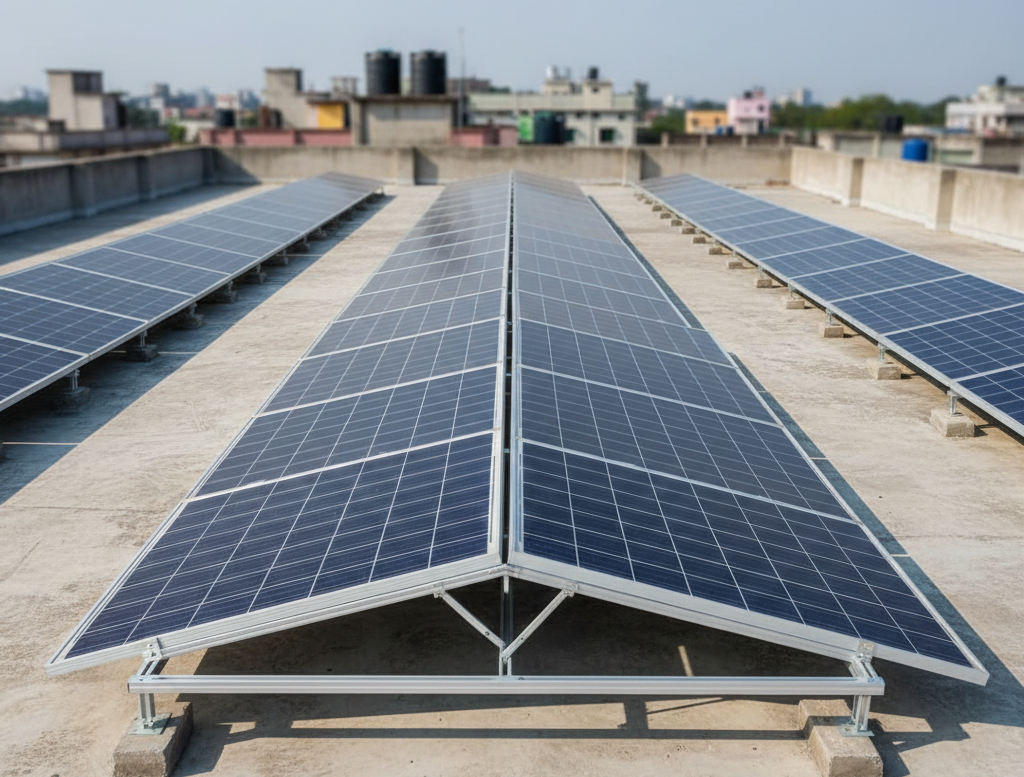
The Problem: The Market Sells Watts, You Actually Buy a System
Most solar marketing reduces a complex engineered system to two numbers: capacity (kW) and price (per watt). That framing is convenient for selling and dangerous for buying.
When you compare only kW and price, every quotation looks roughly the same, so the decision collapses to “who is cheapest.” But the things that actually determine whether your plant performs for 25 years are almost never on that price line: structural design, DC architecture, protection and earthing, cable sizing, inverter matching, commissioning quality, and a maintenance plan.
Those are engineering decisions. They are where good companies spend their effort and where cheap suppliers cut. And because their effects are invisible on day one and only show up in years two through ten, the buyer who compared on price never finds out what they gave up until the asset is already on the roof.
Definition: What “Engineered Infrastructure” Actually Means
Engineered infrastructure is a long-life physical system designed by qualified engineers to perform a defined function reliably and safely over decades, accounting for loads, environment, failure modes, and maintenance — and documented so it can be operated, verified, and repaired.
A solar plant meets every part of that definition. It carries structural loads. It manages high-voltage DC and AC electrical energy. It must be protected against faults, surges, and lightning. It interacts with your building load and the utility grid. And it must keep doing all of this through 25 years of weather. That is infrastructure — closer in discipline to a substation or a building service than to a consumer product.
The Five Subsystems Hiding Behind the Word “Solar”
A useful way to think like an engineer is to stop saying “solar” and start seeing five interacting subsystems. A weakness in any one of them limits the whole plant.
1. The generation subsystem (modules and strings)
Modules convert light to DC power, but how they are grouped into strings, oriented, tilted, and spaced determines real-world yield. Shading on a single module can drag down an entire string. Mismatched modules waste capacity. Orientation and tilt that ignore the site’s latitude and seasonal sun path leave energy on the table every day.
2. The structural subsystem (mounting and roof interface)
This is the part buyers ignore most and regret most. Modules and structure sit on your roof for 25 years and must resist wind uplift, self-weight, and thermal movement without damaging the roof or leaking. In a country exposed to cyclonic wind and heavy monsoon, an under-designed mounting system is not a cosmetic risk — it is a safety and asset-loss risk.
3. The electrical subsystem (DC architecture, inverter, AC distribution)
DC voltages on a commercial array are high and unforgiving. Cable sizing must control voltage drop and heat. The inverter must be matched to the array (the DC-to-AC ratio), sized for ambient temperature, and integrated into your distribution board correctly. Get this wrong and you lose energy continuously and stress components toward early failure.
4. The protection and earthing subsystem
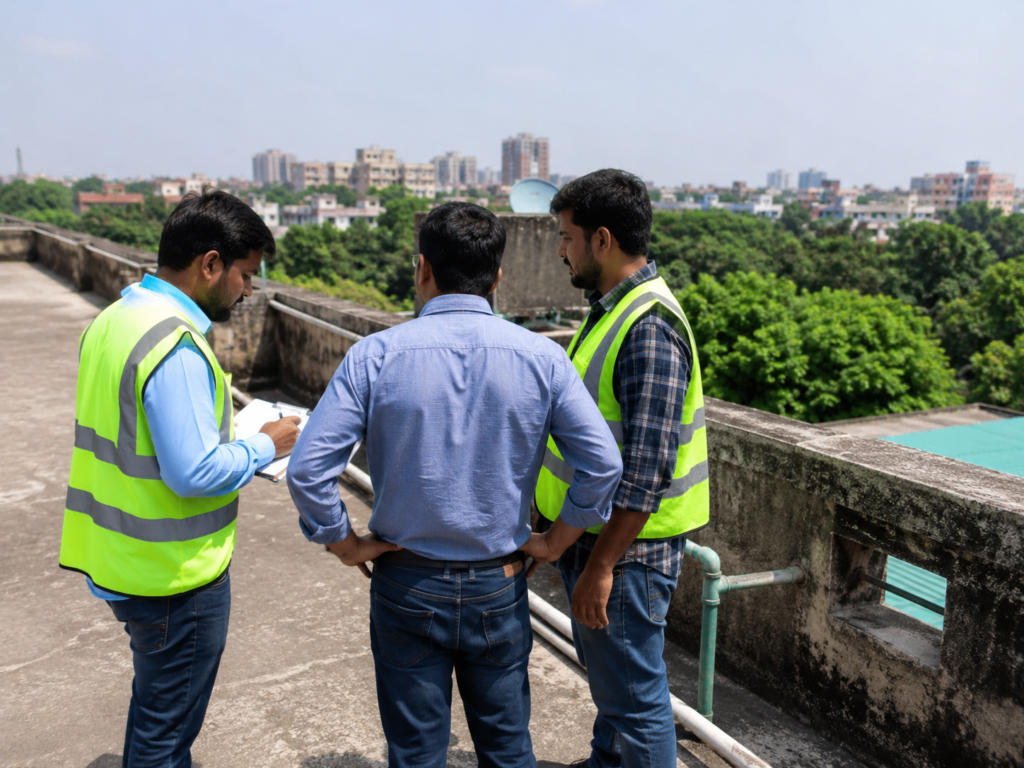
This is the subsystem that keeps people and equipment safe: DC distribution and isolation (DCDB), AC distribution and protection (ACDB), surge protection (SPD) against lightning and switching transients, and a proper earthing/grounding system. It rarely appears clearly on a cheap quotation. Its absence rarely appears either — until a fault or a lightning season exposes it.
5. The control and monitoring subsystem
Without monitoring, a plant cannot tell you it is underperforming. A logger, basic sensors, and a monitoring portal turn an invisible asset into a measured one. You find out about a dead string in days, not in next year’s electricity bill.
Why the Product Mindset Quietly Destroys Value
The product mindset and the infrastructure mindset lead to completely different decisions at every stage. The table below is the core of this article.
| Decision stage | Product mindset | Infrastructure mindset |
|---|---|---|
| What is being bought | “A 50 kW system” | A 25-year power asset wired into the building |
| Basis of comparison | Price per watt | Design quality, lifecycle cost, documentation |
| Structural design | Assumed standard | Roof load and wind reviewed for this building |
| Electrical safety | “Standard accessories” | DCDB, ACDB, SPD, earthing specified and verified |
| Commissioning | “It’s switched on, it works” | Tested, measured, and documented before handover |
| Maintenance | Optional, reactive | Scheduled cleaning, monitoring, fault response |
| Documentation | Often none | Design, as-built, test reports handed over |
| Outcome over 10 years | Drift, early failures, no diagnosis | Predictable performance, traceable, repairable |
The product buyer saves money on day one and pays it back, with interest, in lost generation, premature replacements, downtime, and a stranded asset nobody can diagnose. The infrastructure buyer spends correctly once and owns a measured, maintainable plant.
The Business Implication: This Is a Capital Asset, Treat It Like One
A solar plant is one of the few investments where the cheapest option and the best option are almost never the same — and where the gap only becomes visible after the money is spent.
Reframing solar as infrastructure changes five business decisions:
- Procurement stops being a price auction and becomes a technical evaluation. You compare designs and documentation, not just totals.
- Lifecycle cost replaces upfront cost as the real number. A plant that yields more and fails less can cost more on day one and far less over 25 years. (Any payback figure is approximate and depends on your tariff, load profile, roof, and equipment quality.)
- Asset value becomes real. A well-documented, well-maintained plant adds verifiable value to a building and can be assessed by a buyer, lender, or insurer. An undocumented plant is a liability nobody can price.
- Uptime and risk become managed, not hoped for. Self-generation only protects you against rising or unreliable grid power if the plant itself is reliable.
- Financing and insurance improve. Lenders and insurers respond to engineering documentation and verifiable performance, not to “we installed 50 kW.”
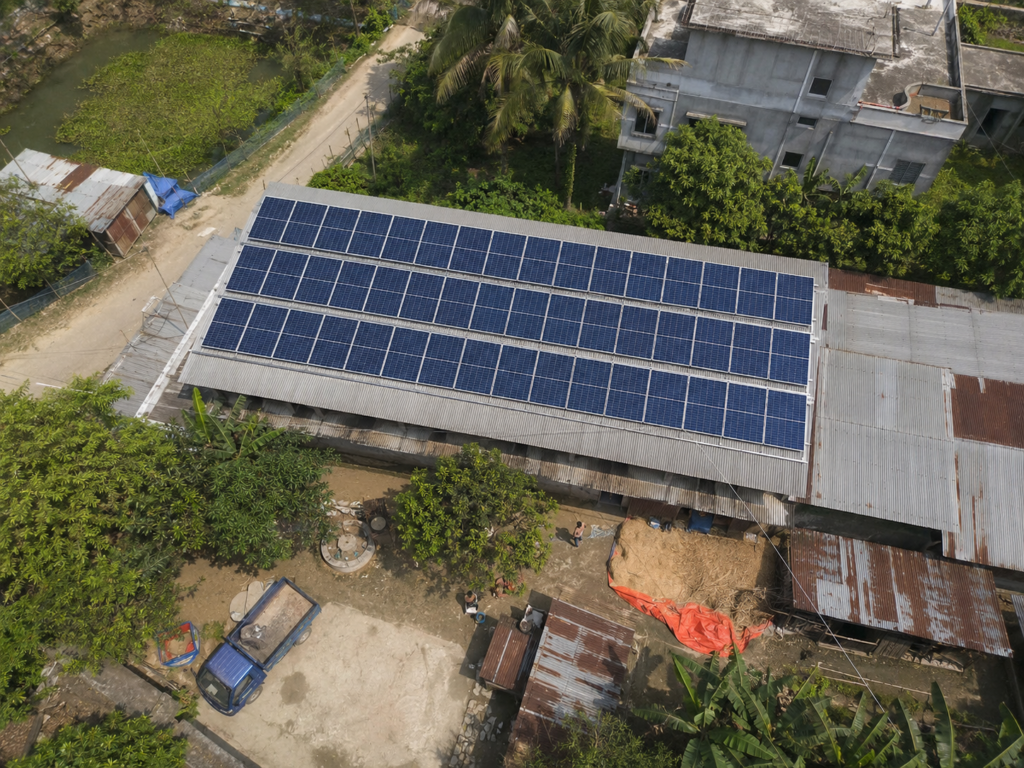
Common Mistakes That Reveal a Product Mindset
- Comparing quotations on price per watt alone, with no design to compare.
- No structural or roof-load review before mounting tens of tonnes of structure and modules.
- Inverter sized to “match the kW” with no allowance for high ambient temperature derating.
- DC and AC cables undersized, causing continuous voltage-drop losses and heat.
- Protection items — DCDB, ACDB, SPD, earthing — missing, vague, or unverified.
- Shading not assessed across the seasons, so yield is permanently below model.
- No commissioning tests and no handover documentation, so faults can never be diagnosed.
- No maintenance plan, so soiling and undetected faults erode output year after year.
- Choosing the lowest bidder for a 25-year asset, then being surprised that it behaves like a 25-year asset built cheaply.
Engineering Checklist: Is Your Solar Project Being Treated as Infrastructure?
Ask any prospective supplier — including us — these questions. Good answers are specific and documented. Vague answers are a warning.
- Has the roof load and structure been reviewed for this specific building and its wind exposure?
- Is there a string and DC layout showing module grouping, orientation, tilt, and shading analysis?
- Is the inverter sizing justified, including DC-to-AC ratio and temperature derating?
- Are cable sizes specified with voltage-drop and current-carrying calculations?
- Are DCDB, ACDB, SPD, and earthing explicitly specified — not implied as “standard accessories”?
- Is there a written commissioning and testing procedure with a documented handover?
- Will you receive design, as-built, and test documents you can keep?
- Is monitoring included, so underperformance is detectable?
- Is there a defined maintenance plan (cleaning schedule, inspection, fault response)?
- Are all savings and warranty claims stated as approximate and subject to terms — not guaranteed?
Bangladesh and International Relevance
In Bangladesh, the case for infrastructure-grade solar is stronger, not weaker. The grid carries voltage fluctuation and load-shedding risk, which makes a reliable self-generation asset valuable — but only if the asset itself is reliable. The climate is demanding: high ambient temperatures derate inverters and reduce module output, monsoon rain stresses waterproofing and protection, dust and soiling cut yield between cleanings, and cyclonic wind makes structural design a safety matter. Net-metering arrangements that let you offset grid consumption also depend on local rules and utility procedures [VERIFY CURRENT DATA BEFORE PUBLISHING — SREDA / DPDC / DESCO / BPDB net-metering terms and eligibility].
Internationally, the engineering principles are identical; only the codes and conditions change. A factory roof in Dhaka, Ho Chi Minh City, or Lagos faces the same five subsystems and the same failure modes. What varies is the applicable standard (for example IEC, NEC, or national electrical codes), the wind and seismic loading, the grid-connection rules, and the tariff structure [VERIFY LOCAL CODE AND GRID-CONNECTION REQUIREMENTS]. An investor or procurement team evaluating projects across markets can apply the same infrastructure test everywhere.
Frequently Asked Questions
Is solar a product or an infrastructure investment?
A solar plant is engineered infrastructure. You are buying a long-life power asset that carries structural loads, manages high-voltage electricity, and connects to your building and the grid for 25 years — not a single appliance. Evaluating it on price per watt alone ignores the engineering that decides its performance.
Why do cheap solar systems often fail early?
Because the savings usually come from the invisible engineering — structural design, protection, cable sizing, commissioning, and documentation — that only shows its value in years two through ten. The modules may be fine while the system underperforms or fails.
What is the difference between system capacity and system performance?
Capacity (kW) is the nameplate rating. Performance is how much energy the plant actually delivers over time, which depends on design, orientation, shading, temperature, equipment quality, and maintenance. Two systems of identical capacity can perform very differently.
Does this matter for a small rooftop, or only large factories?
It matters at every size. A smaller plant has fewer subsystems to get wrong, but the same principles — structure, protection, commissioning, documentation — still determine whether it lasts.
What documents should I receive when a solar plant is handed over?
At minimum: the system design and string layout, an as-built drawing, commissioning and test reports, equipment datasheets and warranty terms, and a maintenance plan. If a supplier cannot provide these, the plant was likely sold as a product, not engineered as infrastructure.
How do I tell a good supplier from a cheap one before I sign?
Use the engineering checklist above. Ask for the design, the protection specification, the commissioning procedure, and the documents you will keep. Specific, documented answers indicate engineering discipline; vague answers indicate a product sale.
Where to Read Next
If this re-framing is useful, the natural next step is Product Thinking vs System Thinking in Solar Procurement and The Hidden Engineering Behind a “Simple” Rooftop Array. To understand why early failure is so common, read Why Low-Cost Solar Systems Fail in 3–5 Years, and to put real numbers around the decision, Lifecycle Cost vs Upfront Cost. For the deeper pillars, see Industrial Rooftop Solar, Hybrid Solar and Energy Security, Solar Design, QA/QC, and Commissioning, Solar ROI and Procurement, and Solar O&M and Long-Term Performance. [ADD INTERNAL LINKS once these posts are published.]
Treat Your Next Solar Project as Infrastructure From the First Decision
Frostec Solar Powers is a design-first solar engineering firm. We offer two ways to start:
- Free Load Assessment — we review your load profile and roof to tell you what is technically and financially realistic for your site, with no obligation.
- Second Opinion — already holding a quotation? Send it to us. We will assess it against the engineering checklist above and tell you what is strong, what is missing, and what to ask before you sign.
Hotline: +880 1805-208117 · Email: info@frostecsolarpowers.com