
“It’s Just Panels on a Roof”
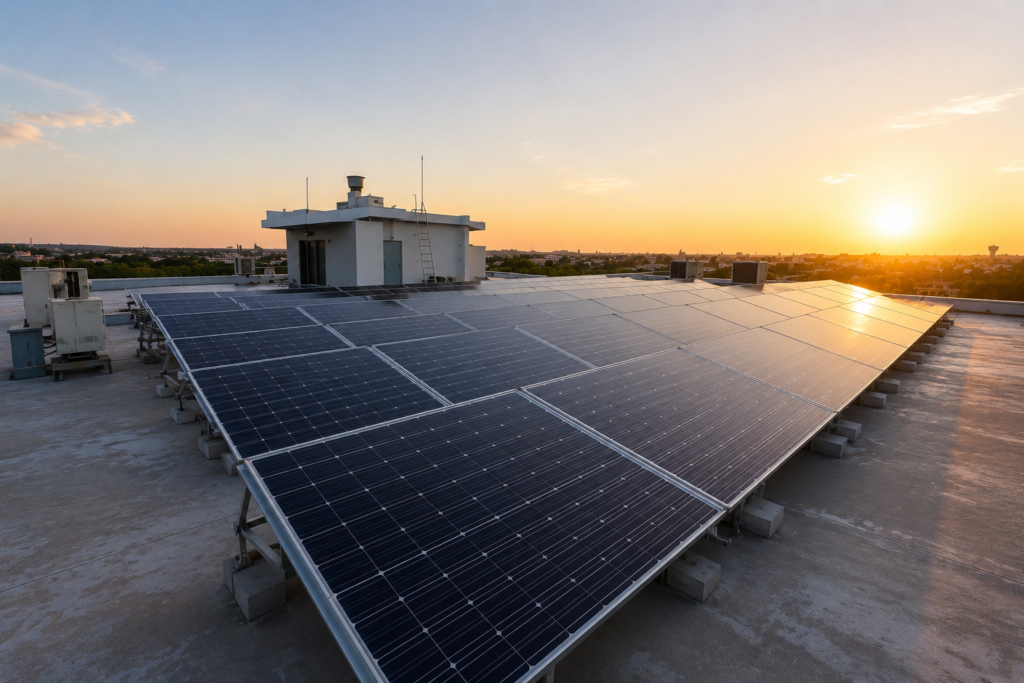
From the ground, a rooftop solar array looks simple: rectangles of glass in neat rows. That appearance is exactly why so many systems are bought carelessly. The visible part — the modules — is the part least likely to fail. The engineering that decides whether the plant performs and survives is mostly invisible from below.
This article walks through what is actually engineered behind a “simple” rooftop array, so you can recognise the work that separates a reliable plant from a risky one.
Definition: What Counts as the “Engineering” of a Rooftop Array
Rooftop solar engineering is the set of structural, electrical, and protection decisions that turn modules into a safe, high-yield, long-life power system on a specific building — accounting for that roof, that climate, and that electrical load.
The modules are a commodity. The engineering is site-specific and is where good and bad systems diverge.
The Engineering You Can’t See From the Ground
Structure and wind: the array is a sail
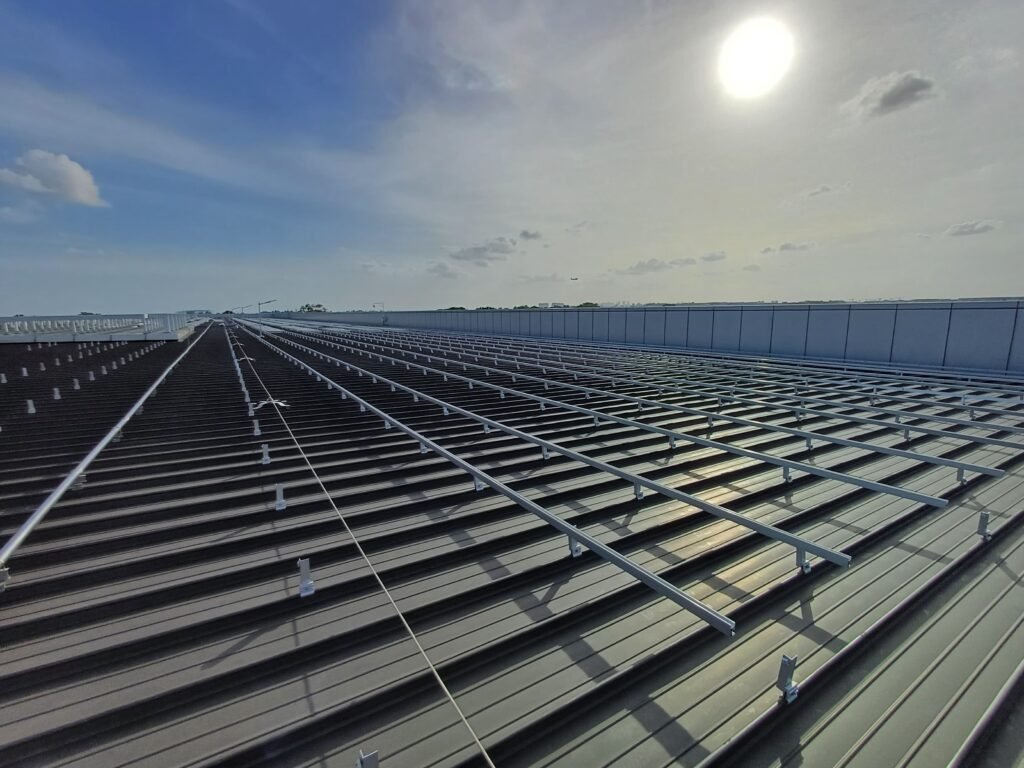
A rooftop array is a large, flat surface exposed to wind. Wind does not just push it — it lifts it. The mounting structure, its fixings, and the roof connection must resist uplift and self-weight for 25 years without loosening, corroding, or damaging the roof. On a building in a cyclone-and-monsoon climate, this is a safety calculation, not a formality.
String design and the inverter’s voltage window
Modules are wired in series into “strings.” The number of modules per string sets the string voltage, which must stay inside the inverter’s operating window across the full temperature range — cold mornings raise voltage, hot afternoons lower it. A string designed without temperature limits can push the inverter outside its window and lose energy, or in the worst case, stress it. This is invisible from the roof and obvious only in the design.
Shading: one shaded module, one weakened string
Because modules in a string share current, shade on a single module — from a parapet, a water tank, a vent, or a neighbouring building at certain hours — can pull down the whole string. Good engineering studies the seasonal sun path and lays out strings to limit shading losses. Poor engineering ignores it, and the plant simply underperforms forever.
Cable sizing and voltage drop
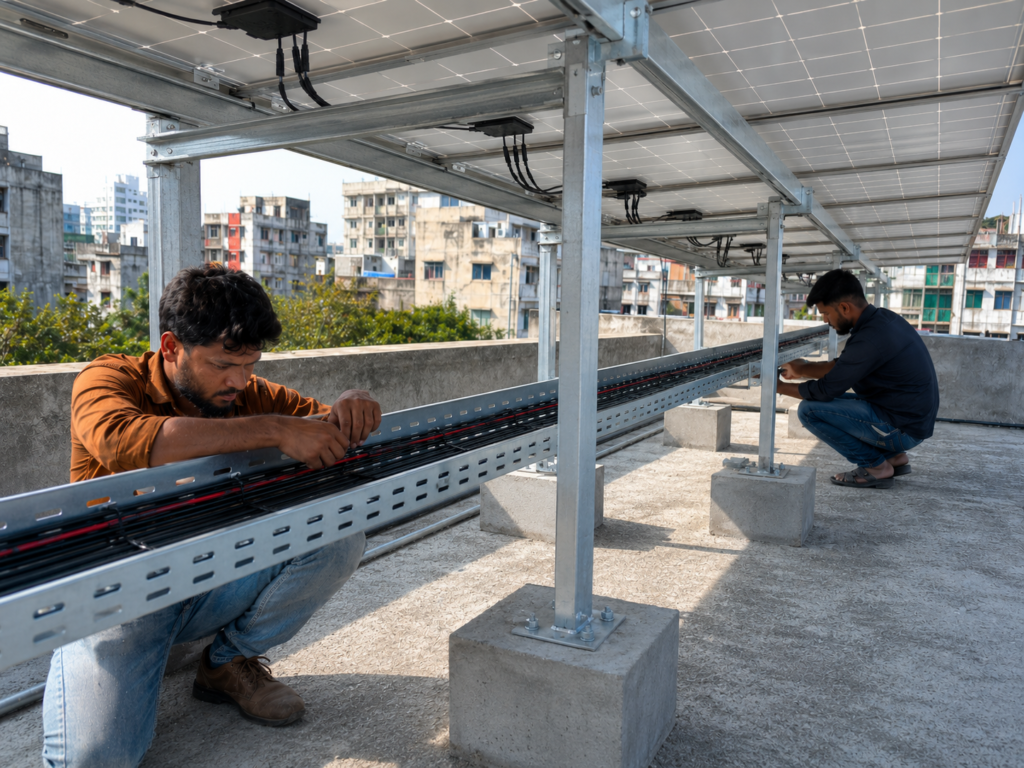
DC and AC cables must carry current without excessive voltage drop or heat. Undersized cable wastes energy continuously as heat and runs hotter, ageing insulation faster. The right cable size comes from a calculation — current, distance, allowable drop — not from habit. You never see this on the roof; you see it on the electricity meter, slightly low, every month.
Protection and earthing
DC isolation and distribution (DCDB), AC distribution and protection (ACDB), surge protection (SPD) against lightning and switching, and a proper earthing system protect people and equipment. These are the items most often thinned out to win on price, and the items whose absence is invisible — until a fault or a lightning season.
The Business Implication
Because all of this is invisible, it is also the easiest thing to cut and the hardest thing for a buyer to check. The result is a market where the cheapest-looking quotation is often the least engineered — and the difference only appears in years two through ten as lost yield, early failures, and downtime.
Recognising the hidden engineering lets you ask for it explicitly, compare it across suppliers, and pay for the version that lasts. Any savings or yield figure you weigh in that decision is approximate and depends on your specific roof, climate, and load.
Common Mistakes
- Assuming “panels on a roof” needs no real design.
- No wind / structural review for the specific building.
- String length chosen without temperature limits on inverter voltage.
- Shading from parapets, tanks, and vents ignored.
- Cables sized by habit, not by voltage-drop calculation.
- Protection and earthing thinned out to lower the price.
Engineering Checklist: What to Ask About a “Simple” Array
- Is there a wind / structural review for this roof and its exposure?
- Does the string design keep voltage inside the inverter window across the full temperature range?
- Has seasonal shading been studied and the layout adjusted for it?
- Are cable sizes backed by voltage-drop and current calculations?
- Are DCDB, ACDB, SPD, and earthing specified explicitly?
- Will the design and as-built documents be handed to you?
Bangladesh and International Relevance
In Bangladesh, the hidden engineering matters more, not less: high ambient temperature shifts the inverter voltage window and derates output, monsoon and dust attack waterproofing and yield, and cyclonic wind makes the structural design a safety issue. Internationally, the same hidden subsystems apply on every rooftop; only the governing code and the wind/seismic loading change [VERIFY LOCAL CODE AND WIND LOADING REQUIREMENTS].
Frequently Asked Questions
Isn’t rooftop solar just panels and an inverter?
No. The visible modules are the most reliable part. The structure, string design, cable sizing, protection, and earthing — all largely invisible — decide whether the plant is safe, high-yield, and long-lived.
Why does shading on one panel matter so much?
Modules in a string share current, so shade on one module can reduce the output of the whole string. Good layout studies the seasonal sun path to limit this loss.
How do I check the hidden engineering before buying?
Ask for the structural review, string design, cable calculations, and protection specification. A supplier doing real engineering can show these; one selling a product usually cannot.
Where to Read Next
This supports the pillar Solar Is Not a Product. It Is Engineered Infrastructure. Pair it with Product Thinking vs System Thinking and the design pillar Solar Design, Safety, QA/QC, and Commissioning. [ADD internal links once published.]
See the Engineering Before You Buy
Free Load Assessment — we review your roof and load and show you the design that fits it. Or send a quotation for a Second Opinion and we will tell you what hidden engineering is present, missing, or vague.
Hotline: +880 1805-208117 · Email: info@frostecsolarpowers.com