
A solar system is only as good as its weakest component. Most suppliers are honest, but buyers in Bangladesh have reported panels with inflated wattage labels, “MPPT” controllers that were really PWM, and cables thinner than their markings. With prices falling after the 2026 budget, there is no reason to accept any of it.
Updated October 2026 · Written and reviewed by the Frostec Solar Powers engineering team
- Reported tricks include relabelled panel wattage, PWM controllers sold as MPPT, and undersized cables.
- Ask for the datasheet, per-panel flash test report and serial numbers — and verify them with the manufacturer or authorised distributor.
- Simple field checks — weight, dimensions, open-circuit voltage — catch most fakes.
- Insist on an invoice listing brand, model and serial numbers; it is your proof for warranty and complaints.
- Complaints can go to BSTI or the Directorate of National Consumer Rights Protection (hotline 16121).
Tricks that have been reported
| Trick | What happens | How to catch it |
|---|---|---|
| Relabelled panels | A lower-wattage panel carries a higher-wattage label, making the price per watt look cheap | Check size, weight and cell count against the datasheet; measure voltage and current |
| PWM sold as MPPT | The controller wastes a large share of panel power | Check the maximum PV input voltage — a real MPPT accepts far more than the battery voltage |
| Undersized cables | Cables heat up, lose energy and become a fire risk | Check the conductor cross-section and solar cable marking (PV1-F or H1Z2Z2-K) |
| Overstated batteries | Fewer usable kWh and shorter life than promised | Ask for chemistry, usable kWh, cycle life and BMS details on the datasheet |
| Grey-import inverters | No local warranty support | Register the serial number with the manufacturer or authorised distributor |
These cases were described in news reporting on Bangladesh’s solar market. Buyers who kept a money receipt with the seller’s name and product details were able to get refunds.
Checklist for solar panels
- Datasheet and flash test report: genuine Tier-1 panels come with a datasheet and per-panel test data (the “flash report”) from the factory.
- Serial numbers: each panel has a unique serial. Check it with the manufacturer or its authorised distributor — see our Jinko vs LONGi vs JA guide.
- Size and weight: compare dimensions, weight and cell count with the datasheet. Relabelled lower-wattage panels are usually smaller or have fewer cells.
- Voltage test: on a cool, sunny morning, measure the open-circuit voltage (Voc) with a multimeter. It should be close to the datasheet value; a clearly lower reading is a warning.
- Build quality: check the frame, glass, junction box, MC4 connectors and label print quality.
Checklist for inverters, controllers and batteries
- Brand and model match the quotation; serial number registered for warranty.
- MPPT controllers: the PV input voltage range is well above the battery voltage.
- Batteries: LiFePO4 chemistry stated, usable kWh, cycle life, BMS and warranty years in writing.
- Equipment that meets BSTI and SREDA standards — required for net-metering approval.
Checklist for cables and protection
- DC solar cable with a recognised marking and the conductor size stated in the design.
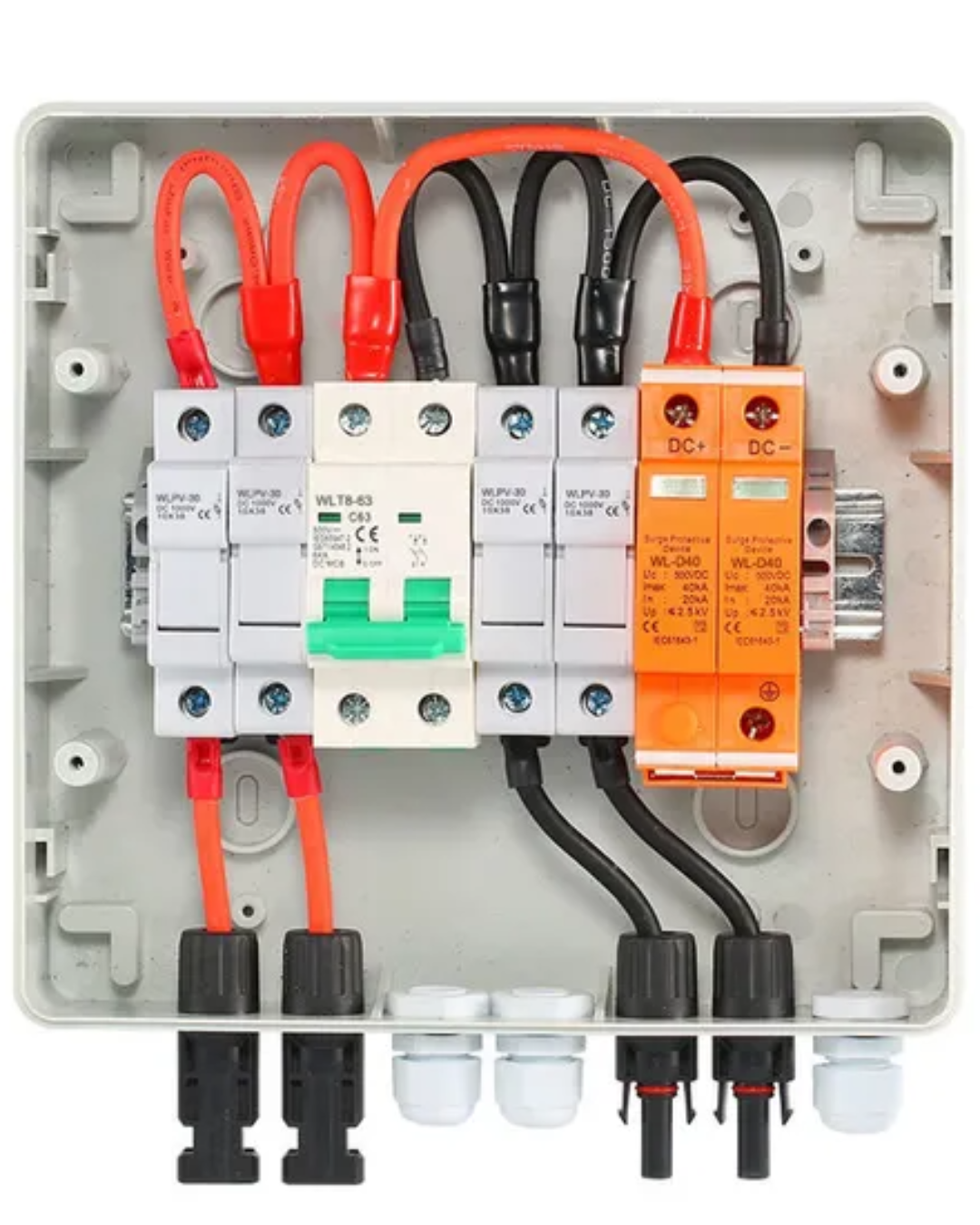
- DC breakers or fuses, DC isolator and surge protection (SPD) on the DC side; AC breaker and SPD on the AC side.
- Proper earthing of frames and equipment — see the hidden engineering behind a rooftop array.
Paperwork that protects you
- An itemised invoice with brand, model, quantity and serial numbers.
- Warranty certificates for panels, inverter and battery — see what a 25-year warranty means and our handover checklist.
- A commissioning report with measured string voltages and currents.
Where to complain
Report substandard or mislabelled products to BSTI (Bangladesh Standards and Testing Institution) or to the Directorate of National Consumer Rights Protection through its hotline 16121. Keep the invoice, photographs and test readings as evidence.
Frequently Asked Questions
How can I check if a solar panel is genuine?
Ask for the datasheet, the per-panel flash test report and serial numbers, and verify them with the manufacturer or its authorised distributor. Then compare the panel’s size, weight and cell count with the datasheet and measure its open-circuit voltage in sunlight.
How do I know if a charge controller is really MPPT?
Check its maximum PV input voltage. A genuine MPPT controller accepts a PV voltage far above the battery voltage and converts the excess into extra charging current. A PWM controller cannot.
What cable should be used for solar panels?
Use UV-resistant DC solar cable with a recognised marking such as PV1-F or H1Z2Z2-K, with the conductor size specified by the system design.
Is BSTI certification required for solar equipment?
Equipment must meet BSTI and SREDA technical standards for net-metering approval. Ask the supplier for certification documents.
Where can I complain about fake solar products in Bangladesh?
To BSTI or the Directorate of National Consumer Rights Protection, whose hotline is 16121. Keep your invoice, photos and test readings as evidence.
Want a Second Opinion on a Quote?
Send us any solar quotation. Our engineers will check the components, cable sizes and protection — free of jargon.
Questions? Call or WhatsApp +880 1805-208117 or email info@frostecsolarpowers.com. Head office: Suite 708/B, Level 7, Zaman Tower, 37/2 Purana Paltan, Dhaka 1000. Figures in this article are indicative and approximate; final values depend on your site survey, design and the manufacturer terms of the equipment supplied.