
These are the questions our engineers hear every week — answered plainly, without sales spin, and updated for the 2026 tariff and net-metering rules.
Updated October 2026 · Written and reviewed by the Frostec Solar Powers engineering team
- On-grid systems give the best return but switch off during load-shedding; only hybrid or off-grid systems provide backup.
- Indicative 2026 turnkey rates are roughly ৳32 per watt for on-grid and ৳75 per watt for hybrid with battery — confirmed only after a site survey.
- Since SREDA’s 2025 revision, net metering allows systems up to 100% of sanctioned load and is open to single-phase and prepaid-meter consumers.
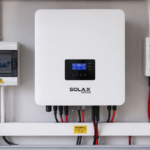
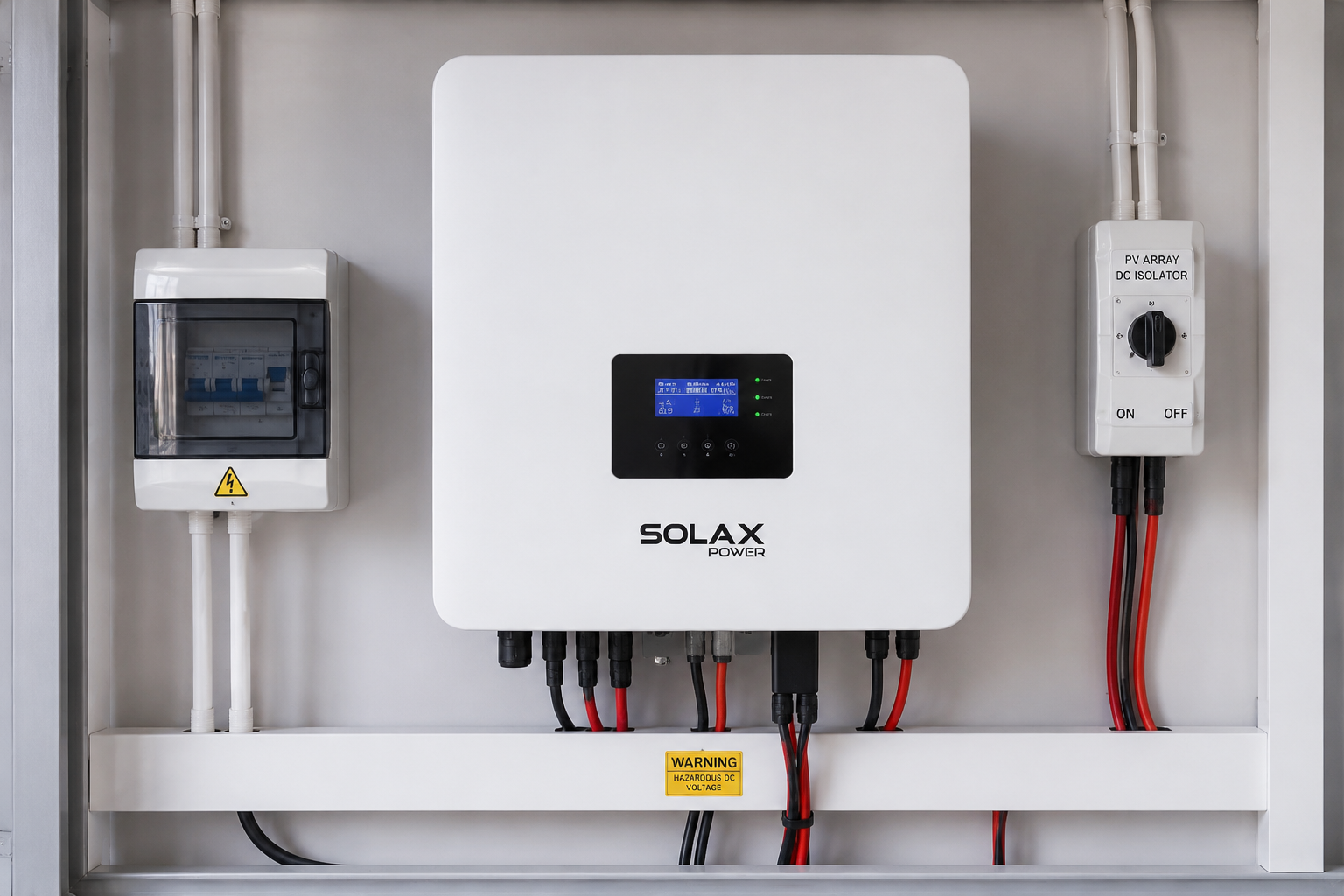
- The inverter, DC isolator and protection devices (pictured) matter as much as the panels for safety and lifespan.
Cost and savings
How much does a solar system cost in Bangladesh?
As an indicative 2026 guide, Frostec’s turnkey on-grid systems are around ৳32 per watt and hybrid systems with battery around ৳75 per watt, including panels, inverter, structure, cables, protection, installation and net-metering support. A 3 kW on-grid home system is therefore roughly ৳96,000. The final price is confirmed after a site survey and design.
How long does solar take to pay for itself?
Typically about 2–4 years for a well-sized on-grid system and 4–7 years for a hybrid system, depending on your consumption slab, daytime use and design. See the full method in Solar ROI & Payback Guide.
Will solar really reduce my electricity bill?
Yes. Every unit your panels generate and you use is a unit you do not buy — and it comes off your most expensive tariff slab first, so higher consumers save more per unit.
System types and load-shedding
What is the difference between on-grid, hybrid and off-grid?
On-grid: connected to the grid, best return, no backup. Hybrid: solar + battery + grid, backup during outages. Off-grid: fully battery-based, for sites with no reliable grid.
Will my solar work during load-shedding?
Only hybrid and off-grid systems. An on-grid inverter must shut down when the grid fails — a legal safety requirement that protects line workers.
How big should my battery be?
Size it from the loads you want to keep running and for how many hours — for example fans, lights, router and fridge for four hours — not from the panel size. See Hybrid Solar with Battery Backup.
Net metering and the grid
What changed in net metering in 2025–26?
SREDA’s revised guideline (September 2025) raised the limit to 100% of sanctioned load (from 70%), opened the scheme to single-phase and prepaid/smart-meter consumers, introduced online applications, and pays exported energy in taka to a bank or mobile-banking account.
Who handles the net-metering paperwork?
Frostec prepares and follows up the application and documentation with your distribution utility as part of our on-grid and hybrid installations.
Equipment
Which panel brand should I choose?
Any genuine Tier-1 N-type panel from an authorised channel performs similarly; installation quality matters more than the logo. Our comparison is in Jinko vs LONGi vs JA Solar.
What does the DC isolator in the photo do?
It lets a technician safely disconnect the high-voltage DC from the panels before working on the inverter. Together with fuses, surge protection devices and earthing, it is part of the protection system every installation needs.
How long do inverters and batteries last?
Quality inverters typically last 10–15 years and LiFePO4 batteries around 10 years or a few thousand cycles, so plan for at least one replacement over a 25-year system life. Many carry up to 10-year manufacturer warranties, subject to terms.
Site visit, maintenance and warranty
Why is a site visit necessary before a quotation?
Shading, roof condition, structural load, cable routes and your distribution board all change the design. A quotation without a site visit is a guess.
How often should panels be cleaned?
Every 2–4 weeks in dry, dusty months and after long dry spells; rain helps during the monsoon. Use water and a soft brush — never abrasive tools or high-pressure jets.
What warranty does Frostec give?
A 1-year service warranty on our installation, plus the manufacturers’ component warranties documented at handover. See Warranty & Handover: What You Receive.
Frequently Asked Questions
How much does a solar system cost in Bangladesh in 2026?
Indicatively around ৳32 per watt for a turnkey on-grid system and around ৳75 per watt for a hybrid system with battery, including installation and net-metering support. The final price depends on the site survey and design.
Will solar work during load-shedding?
Only hybrid and off-grid systems provide backup. On-grid inverters shut down when the grid fails for safety reasons.
What changed in Bangladesh net metering in 2025?
SREDA raised the allowed capacity to 100% of sanctioned load, opened the scheme to single-phase and prepaid or smart-meter users, introduced online applications and pays exported energy to bank or mobile-banking accounts.
How often should solar panels be cleaned in Bangladesh?
About every 2–4 weeks in dry and dusty months, less often in the monsoon, using water and a soft brush.
Still Have a Question?
Ask our engineers directly. We answer with your site in mind — and we will tell you honestly if solar is not the right fit.
Questions? Call or WhatsApp +880 1805-208117 or email info@frostecsolarpowers.com. Figures in this article are indicative and approximate; final values depend on your site survey, design and the manufacturer terms of the equipment supplied.