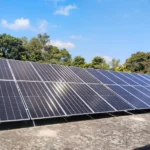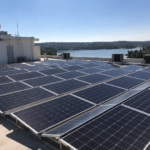

Walk through any industrial area in Gazipur, Narayanganj or Chattogram and most roofs you see are metal: trapezoidal steel sheets on steel or timber purlins. They are some of the best surfaces for solar in Bangladesh — large, unshaded and close to the loads below. They are also the roofs where a careless installation causes the most damage.
Key takeaways
- A metal roof can carry solar only if the sheets and purlins are in good condition; the survey checks both before anything is designed.
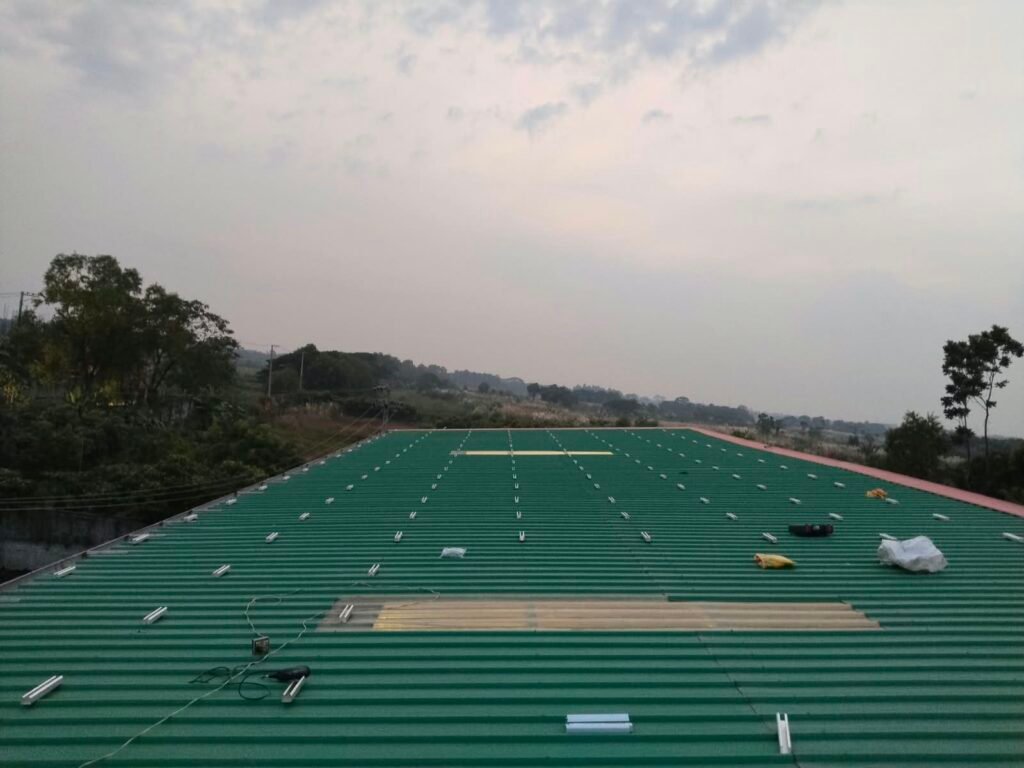
- Panels are fixed to rails, and rails to the roof with sheet clamps or sealed fasteners into the purlins — never just screws into thin sheet.
- Every penetration needs an EPDM-sealed washer or flashing; a single bad screw can leak for years.
- Leave a walkway along the ridge and between blocks for cleaning, inspection and fire access.
- Plan the cable route and roof drainage before the first rail goes down.
Why metal roofs suit solar so well
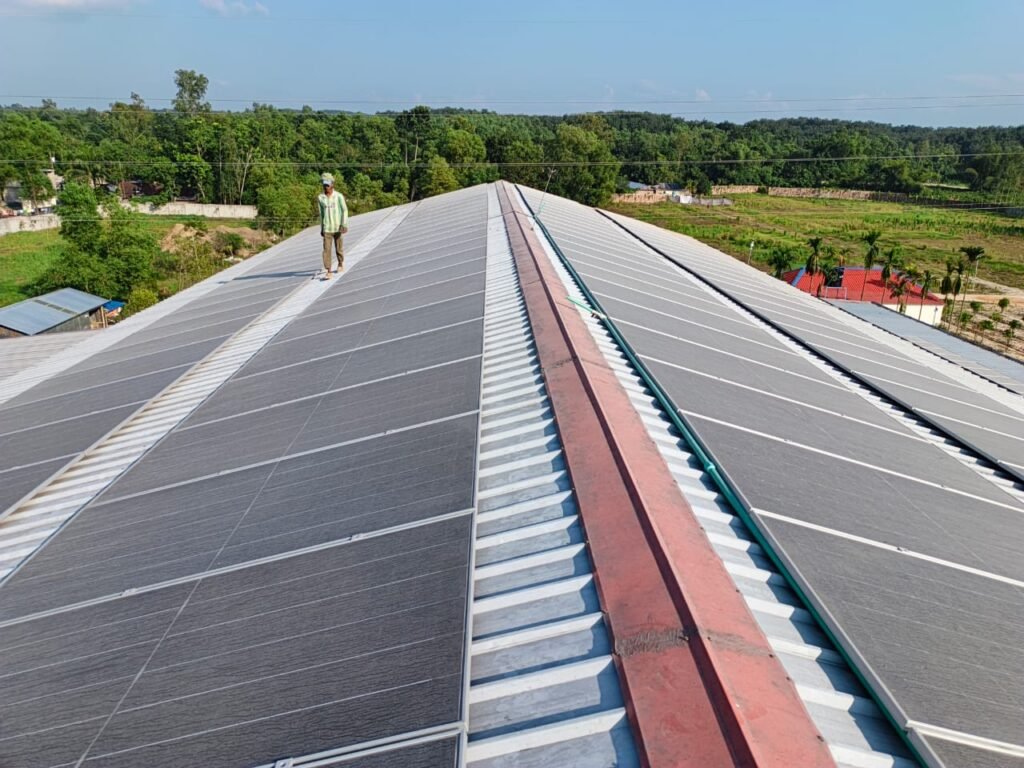
Metal roofs are usually large, open and pitched at a shallow angle. On a factory or warehouse, the roof area is often several times larger than a flat RCC roof of the same building footprint would be, and there are no water tanks or stair rooms in the way. The building’s electricity demand sits right below the array, so cable runs are short and most of the energy is used on site during working hours.
The trade-off is that a metal roof is thin. A trapezoidal sheet may be well under a millimetre thick, and the roof’s real strength is in the purlins and rafters below. That changes how the mounting system must be designed.
What we check before designing
The survey decides whether the roof can take solar as it is, needs repair first, or should not be used at all.
- Sheet condition: rust, holes, loose or missing screws, previous patch repairs.
- Sheet profile: trapezoidal, corrugated or standing seam — each takes a different clamp.
- Purlin size, spacing and condition: the fixings and the added load go into these members.
- Roof slope and direction: decides panel layout and how rain runs off.
- Gutters and drainage: rails and cables must not block water.
- Skylights and turbo vents: these cannot be covered or shaded.
- Access: safe ladder or stair access and anchor points for workers.
How panels are fixed to a metal roof
There are two common approaches, and the roof profile decides which is right.
| Method | How it works | Where it fits |
|---|---|---|
| Sheet clamps / mini-rails | Aluminium clamps or short rails fixed to the crest of the trapezoidal profile with sealed self-drilling screws | Good-condition trapezoidal sheets; light, fast, many small fixing points |
| Fasteners into purlins | L-feet or hanger bolts pass through the sheet into the purlin, sealed with EPDM washers | Corrugated sheets, older roofs, high-wind sites where uplift is the governing load |
| Standing-seam clamps | Clamps grip the raised seam with no penetration at all | Standing-seam roofs (less common in Bangladesh) |
Whichever method is used, the fixing goes into the crest of the profile, not the valley where water runs. Fastener spacing and the number of fixings per panel are set by the wind load for that site, which matters in coastal districts — see our guide to cyclone-proof solar structures.
Leak-proofing: the part most installers rush
Every hole in a metal roof is a potential leak. A good installation keeps penetrations to the minimum and treats each one properly:
- Self-drilling screws with bonded EPDM washers, tightened so the washer seals without being crushed.
- Fixings in the crest of the sheet, never the valley.
- Swarf (metal shavings from drilling) swept off the roof the same day, before it rusts and stains the sheet.
- Cable entries through proper glands or flashings, not open holes with sealant smeared on top.
- A walk-over after the first heavy rain to check the ceiling below.
Layout: walkways, ventilation and heat
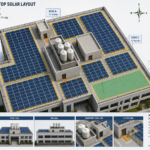
Metal roofs get very hot in summer, and panels lose some output as their temperature rises. Rails that lift the panels slightly off the sheet let air flow underneath, which helps both the panels and the building below.
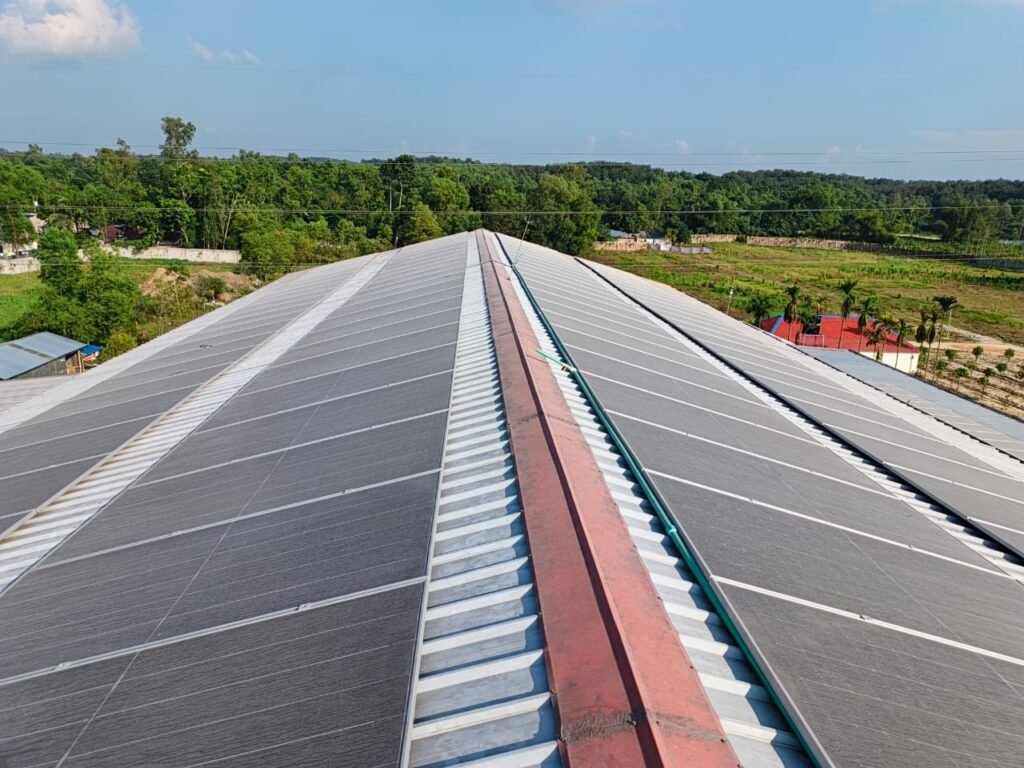
Ridge walkway
A clear path along the ridge lets technicians reach every block without stepping on panels.
Block gaps
Breaks between blocks give access for cleaning and limit how far a fire could spread.
Edge clearance
Keeping panels back from the roof edge reduces wind uplift and makes work safer.
Cable trays
DC cables run in UV-resistant trays or conduit, clipped clear of the sheet and water paths.
Factories, sheds and markets: what changes
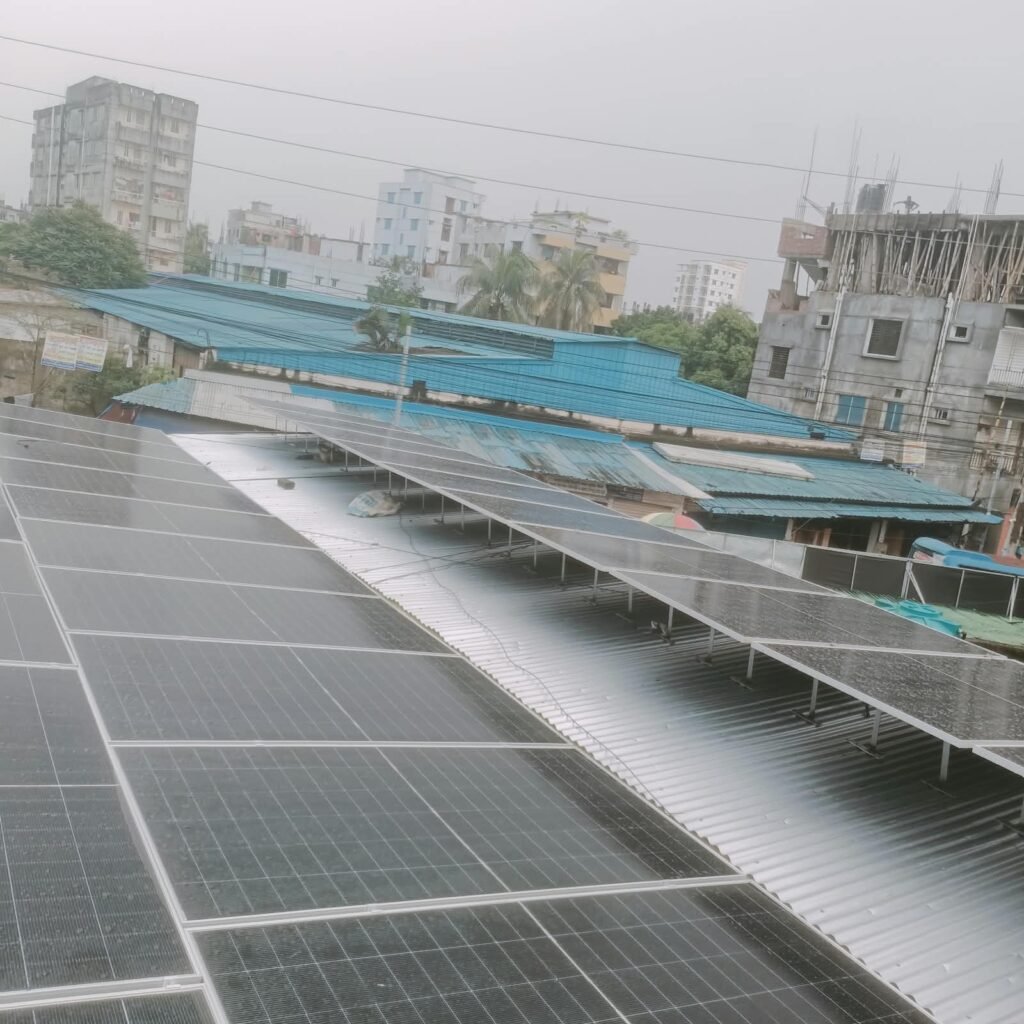
On a garment or manufacturing unit, the system is usually sized to match daytime demand so almost all generation is used on site; our guide to rooftop solar for garment factories covers the business case. On a poultry shed or dairy farm, the roof is often lighter, so structural checks matter even more. On a market or shop roof in town, neighbouring buildings can shade part of the array, and the layout has to work around them.
Frequently asked questions
Can solar panels be installed on a tin-shed roof?
Yes, if the sheets and purlins are in good condition. The mounting system is fixed to the sheet crests with sealed clamps or through the sheet into the purlins. An engineer should check the roof structure first.
Will solar panels make my metal roof leak?
Not if the installation is done correctly. Fixings go into the crest of the sheet with EPDM-sealed washers, penetrations are kept to a minimum, and cable entries use proper glands or flashings.
How much weight does solar add to a metal roof?
Panels and aluminium rails typically add a modest distributed load, but the real question is whether the purlins and fixings can carry that load plus wind uplift. That is checked during the structural survey for each roof.
Do I need a walkway between solar panels on a factory roof?
Yes. Walkways along the ridge and between blocks are needed for safe cleaning, inspection and fire access. Walking on panels can crack cells and void warranties.
Should I replace an old roof before installing solar?
If the sheets are rusted or near the end of their life, yes. Removing and reinstalling a working array to re-roof later costs far more than replacing the sheets first.
Planning solar on a metal roof?
Our engineers check sheets, purlins, drainage and access before designing anything.
Keep reading
Written and reviewed by the Frostec Solar Powers engineering team · Updated November 2026. Photos are from Frostec installations. Figures are indicative; final values depend on the site survey, system design and the manufacturer terms of the equipment supplied. Questions? Call or WhatsApp +880 1805-208117.