
Load shedding is back in every conversation in Bangladesh. The question we hear most is simple: “If I install solar, will my lights stay on when the power goes?” The honest answer is: only if the system is designed for it. This guide explains which backup option works for which situation, and how to size one properly.
Updated October 2026 · Written and reviewed by the Frostec Solar Powers engineering team
- In October 2026 load shedding reached about 2,500 MW nationally, with the largest cuts recorded around 1 am — so backup must work after dark.
- A standard on-grid solar inverter shuts down automatically when the grid fails. Solar alone does not give you backup.
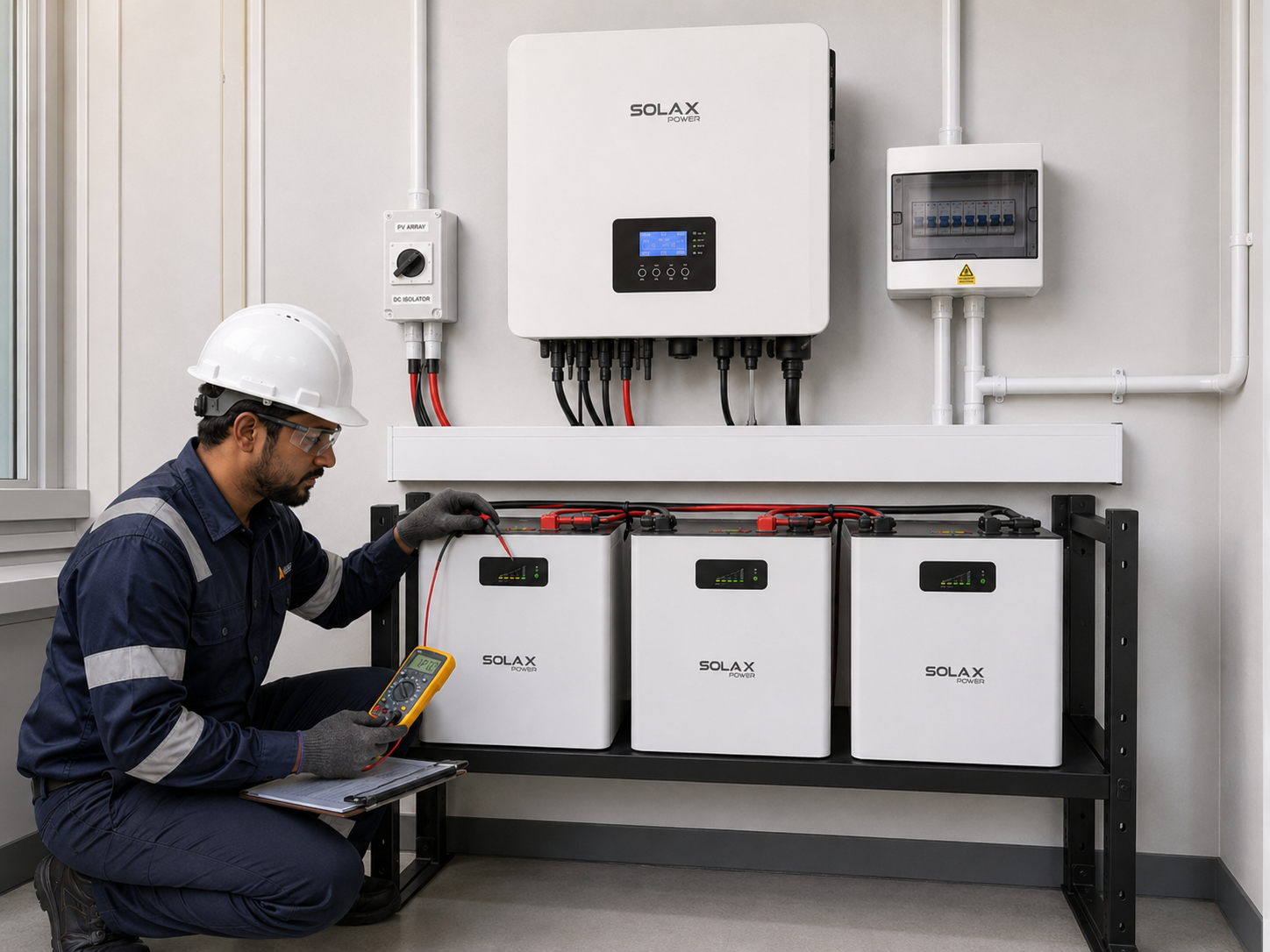
- A hybrid system (solar + battery + hybrid inverter) charges from the sun by day and runs your essential loads during outages, day or night.
- IPS only stores grid electricity; during long or repeated outages it often cannot recharge in time.
- Size backup from your essential loads and outage hours, not from the total connected load of the house.
How bad is load shedding right now?
According to Bangladesh Power Development Board data reported on 8 October 2026, load shedding reached about 2,500 MW, with 35 power plants offline, mainly because gas supply to power plants (about 895 mmcfd) was far below their requirement (about 2,524 mmcfd). The cut on 7 October was about 2,040 MW at 1 am — higher than the 859 MW recorded at 8 am. In the south-west, residents of Khulna reported 13–14 hours of outages a day in mid-October.
Two lessons follow for anyone planning backup power:
- Outages happen at night, when solar panels produce nothing. Backup needs stored energy.
- Outages can be long and repeated, so the storage must be recharged reliably between them — ideally by the sun, not only by the grid.
Why ordinary on-grid solar switches off during load shedding
An on-grid (grid-tied) inverter is designed to stop exporting the moment the grid disappears. This is called anti-islanding protection, and it is a legal and safety requirement: it prevents your system from back-feeding a line that utility workers believe is dead. So even at noon, a pure on-grid system goes dark during load shedding.
On-grid solar is still the best choice for cutting bills (see our on-grid & net metering guide). It is simply not a backup system.
The four options compared
| Option | Works at night? | Recharges during long outages? | Cuts your bill? | Best for |
|---|---|---|---|---|
| On-grid solar | No | — | Yes, strongly | Bill reduction where outages are short or rare |
| IPS (battery + charger) | Yes, for a few hours | Only when grid returns | No (adds charging losses) | Short outages, very small budgets |
| Diesel / petrol generator | Yes | Yes, while fuel lasts | No — diesel now costs ৳135 per litre | Heavy loads, emergency only |
| Hybrid solar + battery | Yes | Yes, from the sun every day | Yes | Homes, clinics, shops and offices that need reliable backup |
A hybrid inverter does three jobs: it runs your loads from solar during the day, charges the battery with the surplus, and switches your essential circuits to the battery within milliseconds when the grid fails. When the grid is available it can also work with net metering. Read more on our Hybrid Solar page.
How to size a backup system — step by step
The most common mistake is sizing for the whole house. Backup should cover essential loads only, wired to a separate backup distribution board.
- List essential loads and their watts. Example for a family flat: 4 ceiling fans (4 × 60 W), 8 LED lights (8 × 10 W), Wi-Fi router and ONU (20 W), TV (80 W), phone charging (20 W) and an inverter refrigerator (about 60 W on average). Total ≈ 500 W.
- Decide the outage hours to cover. If your area loses power for about 4 hours at night: 500 W × 4 h = 2.0 kWh.
- Add inverter losses. At roughly 90% efficiency: 2.0 ÷ 0.9 ≈ 2.2 kWh must come out of the battery.
- Convert to battery size. A lithium iron phosphate (LiFePO4) battery can typically use about 90% of its rated capacity: 2.2 ÷ 0.9 ≈ 2.5 kWh. Adding a reserve for a second outage or a cloudy day, a 5 kWh battery (for example 51.2 V, 100 Ah) is a sensible choice.
- Size the panels to recharge it. In Bangladesh, 1 kW of panels produces about 3.5–4.5 kWh a day on average. A 3 kW array covers daytime use and fully recharges a 5 kWh battery on most days. (Our panel-count guide explains this calculation in detail.)
Lithium (LiFePO4) or lead-acid battery?
| LiFePO4 lithium | Tubular lead-acid | |
|---|---|---|
| Usable capacity | About 80–90% of rating | About 50% for a reasonable life |
| Typical rated cycle life | Several thousand cycles | Several hundred to around a thousand cycles |
| Daily cycling with solar | Designed for it | Wears quickly if deeply discharged every day |
| Maintenance | None (managed by a BMS) | Water top-up, ventilation, terminal cleaning |
| Upfront price | Higher | Lower |
With load shedding happening every day, the battery is cycled every day. That is exactly the duty lithium is built for. Check the actual datasheet for cycle life, warranty years and the battery management system (BMS) before buying any brand.
What does a hybrid backup system cost?
As an indicative October 2026 guide, Frostec’s turnkey hybrid systems with lithium battery are around ৳75 per watt, so a 3 kW hybrid home system is roughly ৳2.25 lakh, including panels, hybrid inverter, battery, structure, protection, installation and commissioning. The exact figure depends on battery size and site conditions. Import duties on solar equipment were removed in the 2026-27 budget — see what that means for prices.
A battery-backed rooftop system installed by 28 February 2027 may also qualify for the government’s Tk 10.50 per unit payment for surplus electricity exported to the grid. Read our Tk 10.50 incentive guide.
Safety: why backup must be engineered
- A proper changeover so the backup circuit never feeds the utility line.
- DC and AC breakers, surge protection and correctly sized cables between battery and inverter.
- Batteries installed in a ventilated, shaded place, away from water and children.
- Correct earthing of the inverter, frame and distribution boards.
These are the details that separate a reliable system from a fire risk. See the hidden engineering behind a rooftop array and why low-cost solar fails.
Frequently Asked Questions
Will my solar panels work during load shedding?
Only if you have a hybrid or off-grid system with a battery. A standard on-grid inverter shuts down automatically when the grid fails, even in daylight, to protect line workers.
How many hours of backup will I get?
It depends on battery size and how much load you connect. For example, a 5 kWh lithium battery running about 500 W of essential loads gives roughly 8 hours in theory, or about 4 hours with a comfortable reserve left for a second outage.
Is solar backup better than IPS?
For long or repeated outages, yes. An IPS only charges from the grid, so it may not refill between outages. A hybrid solar system recharges from the sun every day and also reduces your electricity bill.
Can I run an air conditioner on solar backup?
Yes, but it must be designed for. An AC needs a larger inverter, a bigger battery and more panels. Most families back up fans, lights, Wi-Fi, TV and the refrigerator, and run ACs only when the grid is available.
Can I add a battery to my existing on-grid solar system?
Often yes, by adding a hybrid inverter or an AC-coupled battery system. An engineer must check your existing inverter, wiring and protection first.
Need Backup That Works at Night?
Send us your essential load list and outage hours. Our engineers will size the battery, inverter and panels — and show you the numbers before you spend anything.
Questions? Call or WhatsApp +880 1805-208117 or email info@frostecsolarpowers.com. Head office: Suite 708/B, Level 7, Zaman Tower, 37/2 Purana Paltan, Dhaka 1000. Figures in this article are indicative and approximate; final values depend on your site survey, design and the manufacturer terms of the equipment supplied.