
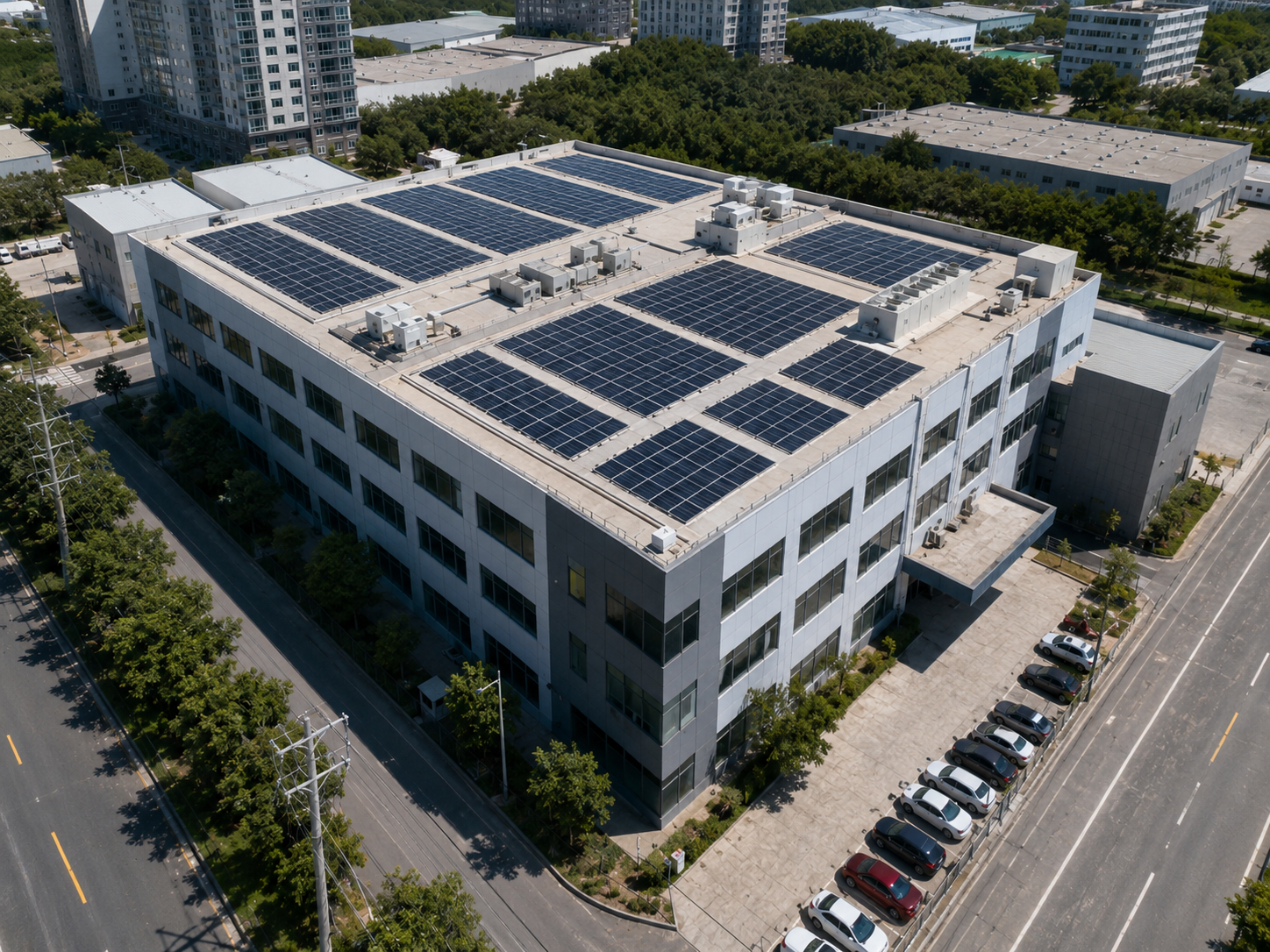
A garment factory roof is one of the most valuable unused assets in Bangladesh. It is flat, large, close to the load, and exposed to the sun during exactly the hours the machines run. Yet most of these roofs still produce nothing.
Updated October 2026 · Written and reviewed by the Frostec Solar Powers engineering team
- CPD (August 2026) estimates 1,768 MWp of rooftop solar potential across 3,320 RMG factories — about 14% of their electricity demand. IDCOL puts textile, garment and EPZ potential at 2,815 MWp.
- Only about 3% of electricity used by surveyed factories is renewable.
- Rooftop solar generation costs around ৳3 per unit — less than half the grid tariff and a fraction of diesel generation.
- Global buyers are pushing suppliers to cut emissions; solar is the fastest measurable step.
- Structural checks, net-metering approval and financing are the main hurdles — all solvable with proper preparation.
The opportunity in numbers
| Indicator | Figure | Source |
|---|---|---|
| Active RMG factories | 3,320+ | CPD / Mongabay, 2026 |
| Rooftop potential (RMG) | 1,768 MWp | CPD, Aug 2026 |
| Potential (textile, garment, EPZ) | 2,815 MWp, ≈ ৳12,670 crore investment | IDCOL estimate |
| Renewable share of factory electricity | ≈ 3% | CPD (survey of 878 factories) |
| Factories that have adopted any renewables | ≈ 31%, mostly at low capacity | Study reported by Mongabay, Aug 2026 |
| Rooftop solar generation cost | ≈ ৳3.04 per unit | CPD |
One large example: Ha-Meem Group has installed about 29 MWp of rooftop solar and reports cutting diesel consumption by nearly 60%.
Solar vs grid vs diesel
When gas supply is short and the grid fails, many factories switch to diesel generators every few hours. A diesel generator typically produces about 3–3.5 units per litre. With diesel at ৳135 per litre, the fuel alone costs roughly ৳39–45 per unit. Grid electricity for industry costs roughly ৳12–14 per unit. Rooftop solar produces at about ৳3 per unit over its life.
Indicative example: a 1 MWp rooftop plant produces about 1 MW × 3.8 units × 365 days ≈ 13.9 lakh units a year. At ৳12–14 per unit avoided, that is about ৳1.7–1.9 crore a year — more where it displaces diesel. MW-scale projects are priced per design, and payback of a few years is common for factories that use the power on site.
What buyers expect
Major brands sourcing from Bangladesh — including H&M, Inditex, Walmart, Gap and M&S, as cited by CPD — have decarbonisation targets that extend to their suppliers. Factories are increasingly asked to report energy use and emissions and to show a reduction plan. Rooftop solar is measurable, auditable through inverter data, and visible on the factory roof.
The real barriers — and how to handle them
| Barrier | What to do |
|---|---|
| Old RCC roofs with unknown load capacity; corrugated (CGI) shed roofs | Commission a structural assessment first; use lightweight mounting, purlin-clamped rails on sheds, and ballast only where the slab allows. |
| Roof space reserved by buyer or compliance requirements | Design zones around exits, fire routes and equipment; keep clear walkways and access. |
| Slow approvals | Submit a complete net-metering file with standard-compliant equipment; follow up with the utility and SREDA. |
| High cost of capital (9–12% commercial) | Use IDCOL (up to 80%, 6%, 10 years) or Bangladesh Bank’s 5% green refinance — see our solar loan guide. |
| No capital at all | Third-party ownership (OPEX / RESCO): pay only for the electricity — see CAPEX vs OPEX. |
| Shading from neighbouring buildings | Shade analysis at design stage; string layout and optimiser use where needed. |
Rules that now apply to factories
Under the Power Division circular of December 2025, industrial and commercial consumers with an approved load of 10 kW or more must install solar of at least 20% of the approved load for new net-metering connections, and existing consumers increasing load must add solar for the additional load. Details are in our rules explainer. The 2026-27 budget also removed import duties on key solar equipment — see what that means for prices.
Safety on a factory roof
- DC isolators and clearly labelled shutdown points for firefighters.
- Correct cable sizing, UV-resistant cable management and fire-rated penetrations.
- Lightning protection and equipotential earthing of all frames.
- Walkways and edge protection for safe cleaning and maintenance.
These details are covered in the hidden engineering behind a rooftop array. Learn more about our Industrial Rooftop Solar service.
Frequently Asked Questions
How much rooftop solar can Bangladesh’s garment factories install?
CPD estimated 1,768 MWp across 3,320 RMG factories in August 2026, about 14% of their electricity demand. IDCOL estimates 2,815 MWp for the textile, garment and EPZ sectors together.
How much does solar electricity cost a factory compared with diesel?
Rooftop solar generates at around ৳3 per unit over its life. Diesel generators, at ৳135 per litre and about 3–3.5 units per litre, cost roughly ৳39–45 per unit for fuel alone.
Can solar be installed on a corrugated steel factory roof?
Yes, with rails clamped to the purlins or seams, after a structural check of the shed. The roof sheet condition and wind uplift must be assessed first.
Is solar mandatory for factories in Bangladesh?
For new net-metering connections and load increases, industrial and commercial consumers with an approved load of 10 kW or more must install solar of at least 20% of the approved load, under the December 2025 Power Division circular.
How can a factory finance rooftop solar?
Through IDCOL (up to 80% of cost at 6% for 10 years), Bangladesh Bank’s 5% green refinance via banks, the new government solar fund, or a third-party OPEX/RESCO model with no upfront cost.
Get a Factory Rooftop Assessment
Our engineers check roof structure, shading, load profile and approvals — then show you the generation, savings and financing options for your factory.
Questions? Call or WhatsApp +880 1805-208117 or email info@frostecsolarpowers.com. Figures in this article are indicative and approximate; final values depend on your site survey, design and the manufacturer terms of the equipment supplied.