
Home Solar Designed for Backup, Safety & Long-Term Performance
FSP designs residential solar systems based on your actual load, backup requirement, roof condition, inverter capacity, battery capacity, surge load, safety, and future expansion. For most homes, we recommend hybrid systems with battery backup — unless you specifically need on-grid.
The Problem
Why Home Solar Often Disappoints
Load Shedding
Outages disrupt daily life — the real reason most homes want solar.
High Electricity Bill
Rising tariffs make monthly bills harder to control.
Wrong System Size
Package deals ignore your real load — over or undersized.
Weak Battery Planning
Undersized batteries die early and disappoint on backup.
Poor Inverter Selection
An inverter that can’t handle surge loads trips constantly.
No Safety Margin
No cloudy-day reserve — backup fails when you need it most.
No Roof Assessment
Capacity promised without ever seeing the roof.
No After-Sales Support
Installer vanishes after the sale — no service when it matters.
Who It’s For
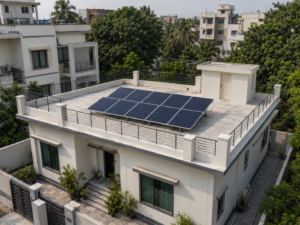
Residential Solar for Every Home

Design Factors
What FSP Checks Before Sizing Your Home System
A correct residential design depends on all of these — we do not skip any of them.
- Monthly electricity bill
- Monthly unit consumption
- Full load list
- Essential backup load
- Backup hour requirement
- Inverter capacity
- Battery capacity
- Solar panel capacity
- Roof space
- Roof type & condition
- Shadow condition
- Inverter & battery location
- Cable route
- Earthing & protection
- Cloudy-weather margin
- Future load growth
- Surge load (fridge, motor, pump, AC, compressor)
Load Priority
Not Every Load Belongs on Backup
A good hybrid system separates and prioritizes essential loads — connecting everything to backup wastes battery and money.
Essential Backup Loads
- Lights
- Fans
- Router / internet
- TV
- Refrigerator
- Selected sockets
- Security system
High-Power Loads
- Air conditioner
- Water pump
- Motor
- Heater
- Induction cooker
- Compressor
Battery & Safety Margin
How Your Backup Is Estimated
Backup depends on selected load, wattage, running hours, inverter efficiency, usable battery capacity, charging loss, cloudy weather, surge load, and future growth. Values below are editable placeholders, marked as estimates.
| Input | Your Value (editable) |
|---|---|
| Selected backup load | [X] W |
| Required backup hours | [X] hours |
| Inverter size | [X] kVA |
| Battery capacity | [X] kWh |
| Usable capacity | [X] kWh (after depth-of-discharge) |
| Estimated backup duration | ≈ [X] hours (estimate) |
| Safety margin | [X] % (cloudy-day reserve) |
| Future expansion note | [Headroom for load growth] |
System Sizes
Typical Home Hybrid Systems
General ranges only — your actual system size depends on your real load list and backup requirement.
1 kW Hybrid
Best for: Small flats, essential backup.
Typical load: Lights, fans, router, TV.
Roof: ≈ [X] sq. ft.
Battery: [X] kWh
2 kW Hybrid
Best for: Small families.
Typical load: Essentials + extra rooms.
Roof: ≈ [X] sq. ft.
Battery: [X] kWh
3 kW Hybrid
Best for: Most families.
Typical load: Essentials + refrigerator.
Roof: ≈ [X] sq. ft.
Battery: [X] kWh
5 kW Hybrid
Best for: Larger homes.
Typical load: Essentials + partial AC.
Roof: ≈ [X] sq. ft.
Battery: [X] kWh
6 kW Hybrid
Best for: Big homes / duplex.
Typical load: Multi-room + AC/motor support.
Roof: ≈ [X] sq. ft.
Battery: [X] kWh
Hybrid vs On-grid
Which Home System Fits You?
Hybrid Residential
- Includes battery
- Supports essential backup loads
- Suitable for load shedding
- Higher cost than on-grid
- Needs load priority planning
On-grid Residential
- Grid-connected, no battery by default
- Mainly for bill reduction
- No backup during grid failure
- Suitable where backup is not required
Site Visit
What We Check at Your Home
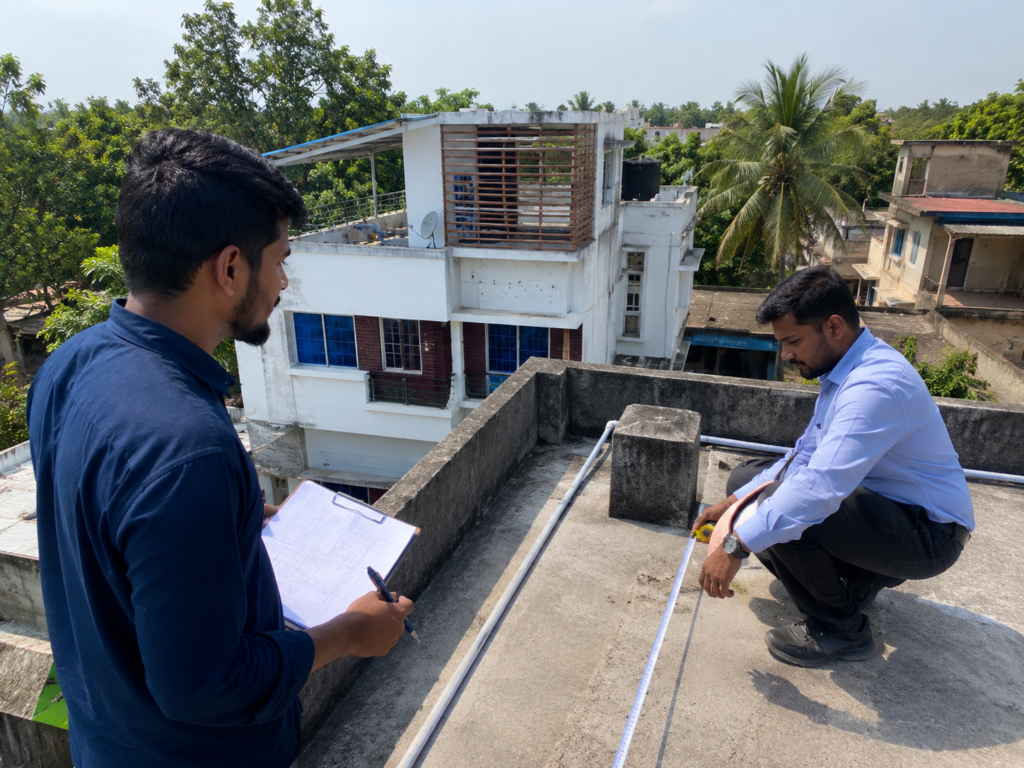
- Roof measurement
- Shadow condition
- Roof type & surface condition
- Panel placement area
- Inverter location
- Battery location
- Cable route
- DB location
- Earthing point
- Safety access
- Future expansion possibility
- Photo documentation
How We Work
From First Call to Power On
Inquiry
Tell us your backup goal and concerns.
Load List Collection
We list the appliances you want on backup.
Bill Review
Consumption pattern and savings potential analyzed.
Site Visit
Roof, shading, inverter/battery location verified.
System Design
Inverter, battery, and panel sizing from real data.
Quotation
Transparent, itemized scope with honest estimates.
Installation
Professional installation with full protection.
Testing
Backup switching and safety verification.
Handover
Usage guidance and documentation.
Support / AMC
Battery and inverter service long-term.
Filter by Type
Residential Solar Project Gallery
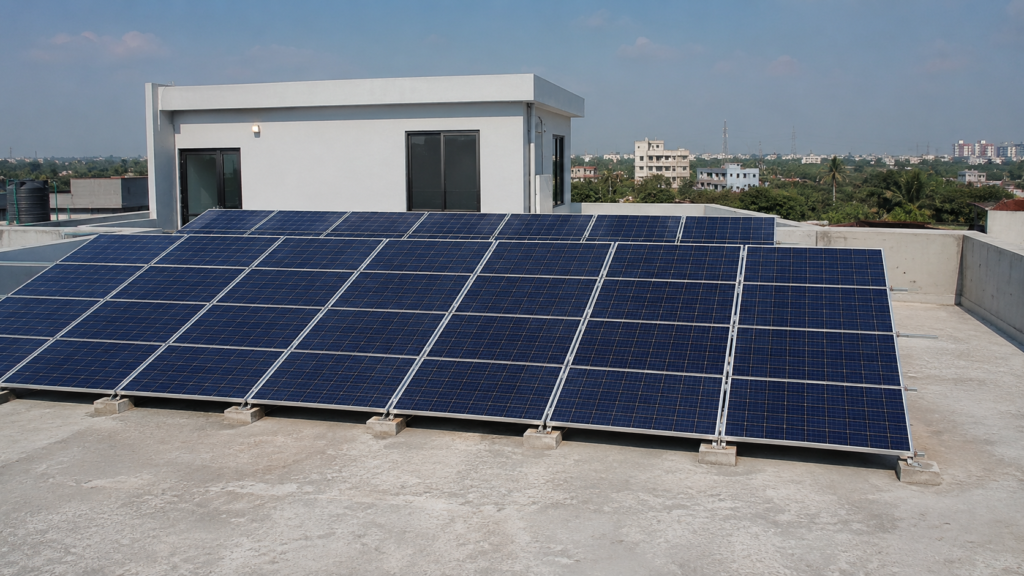
Add home rooftop, site visit, inverter, battery, installation, and completed residential project photos here. Each tile is a ready frame — drop an image in to replace the placeholder.
<img src="…"> inside any tile — the dashed frame disappears automatically and the image fills the frame.Before · During · After
Project Story in Photos
Three ready galleries to document each home project’s journey — drop photos in as work progresses.
Before Installation
During Installation
After Completion
Components
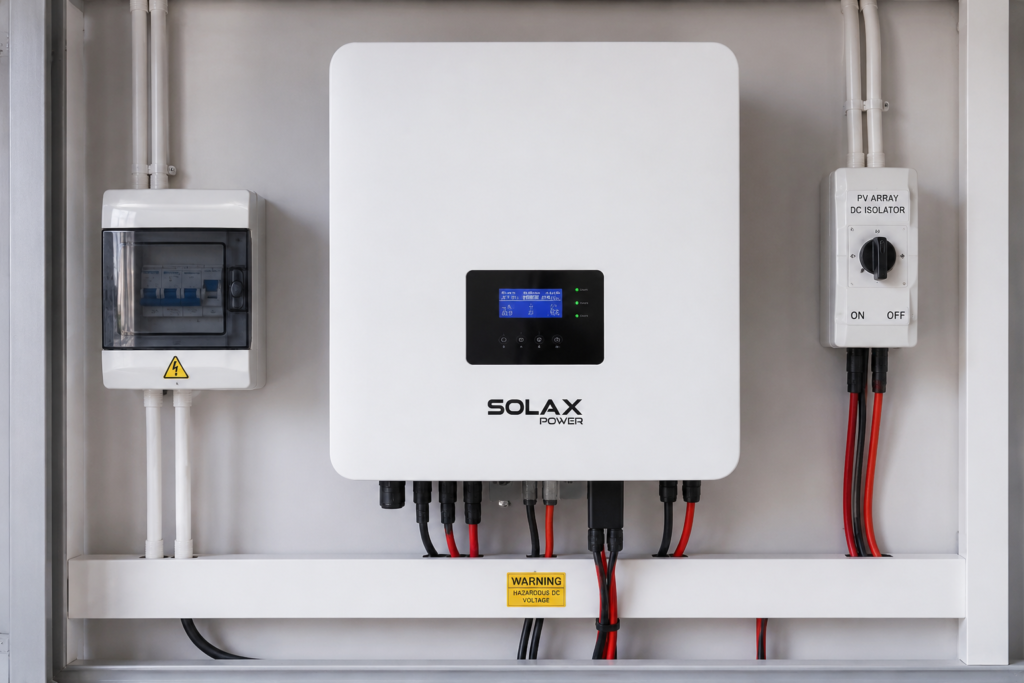
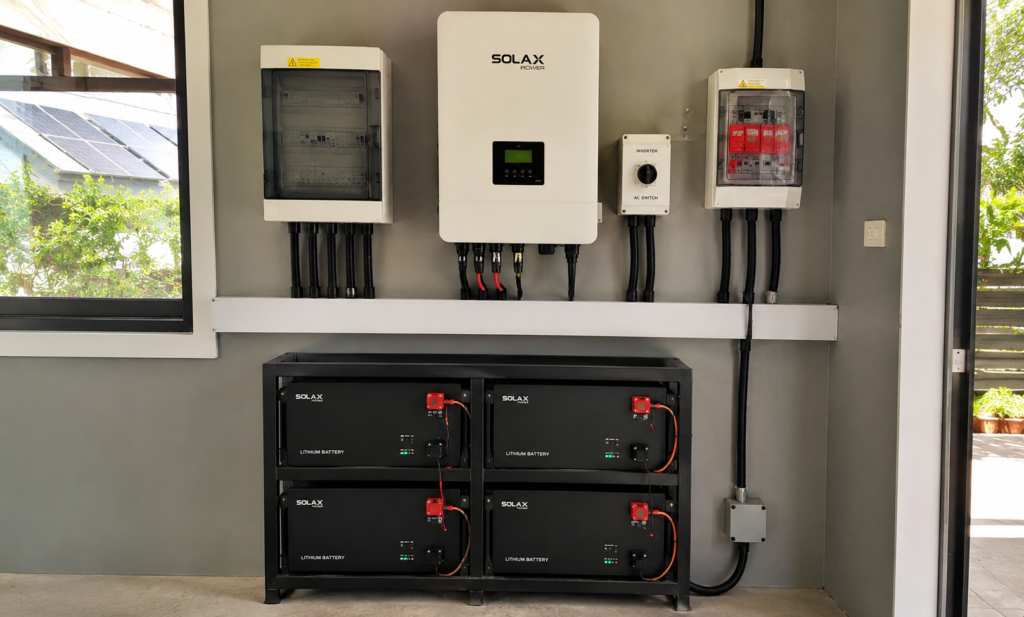
System Components
Final product selection depends on system design, load requirement, backup requirement, roof condition, product availability, warranty condition, and client approval.
Why FSP
Design-First Home Engineering
Design Before Price
We engineer the system before quoting — your load first, price second.
Load Priority Review
Essential loads separated so the battery is used wisely.
Correct Battery Sizing
Sized properly from day one — even when it makes our quote bigger.
Safety Margin
Cloudy-day reserve so backup holds in real conditions.
Roof Assessment
Structure and shading verified before any proposal.
Safe Installation
Protection, earthing, and safe battery placement.
Testing & Handover
Full validation and complete documentation.
After-Sales Support
Battery and inverter service — our responsibility continues.
Keep Exploring
Related Pages
FAQ
Residential Solar Questions
What size solar system do I need for my home?
Is hybrid solar better for residential backup?
Does on-grid solar provide backup during load shedding?
How long will battery backup last?
Can AC run on residential solar?
What information is needed for a residential quotation?
Is a site visit required?
How much roof space is needed?
Can the system be expanded later?
What maintenance is required?
Ready to Design Your Home Solar System Correctly?
Before recommending system size or price, FSP reviews your load list, backup hour requirement, roof condition, inverter capacity, battery capacity, safety requirements, cable route, and future expansion plan.