
Industrial Solar Designed for Load, Safety, ROI & Long-Term Performance
FSP designs industrial rooftop solar systems around factory load profile, roof condition, cable route, electrical integration, protection system, net metering possibility, maintenance access, and long-term energy value — not price per kW alone.
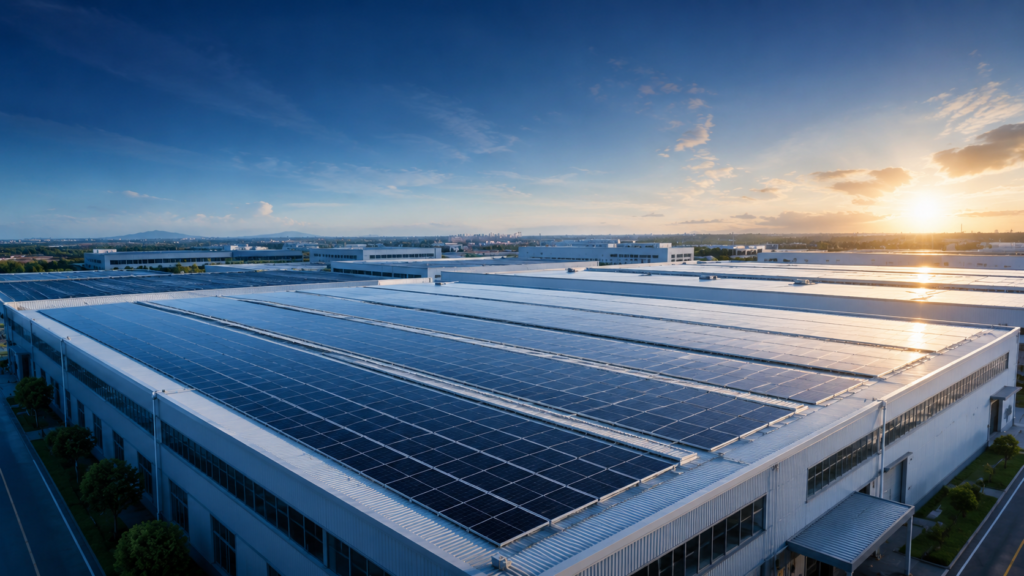
The Challenge
What Makes Industrial Energy Cost So Hard to Control
High Monthly Cost
Demand charges and rising tariffs make energy a top controllable expense.
Large Daytime Load
Production runs during sun hours — a near-perfect solar match.
Unused Rooftop
Acres of roof sit idle while you pay full grid tariff below.
Unclear ROI
No transparent payback model behind the quoted price.
Wrong Sizing
Systems sized by price, not by load — underperform for years.
Poor Cabling & Protection
Weak routing and protection planning create loss and risk.
No O&M Plan
Without maintenance, generation quietly declines.
Price-First Quotes
Quotations issued with no real engineering review behind them.
Who It’s For
Built for High-Consumption Facilities
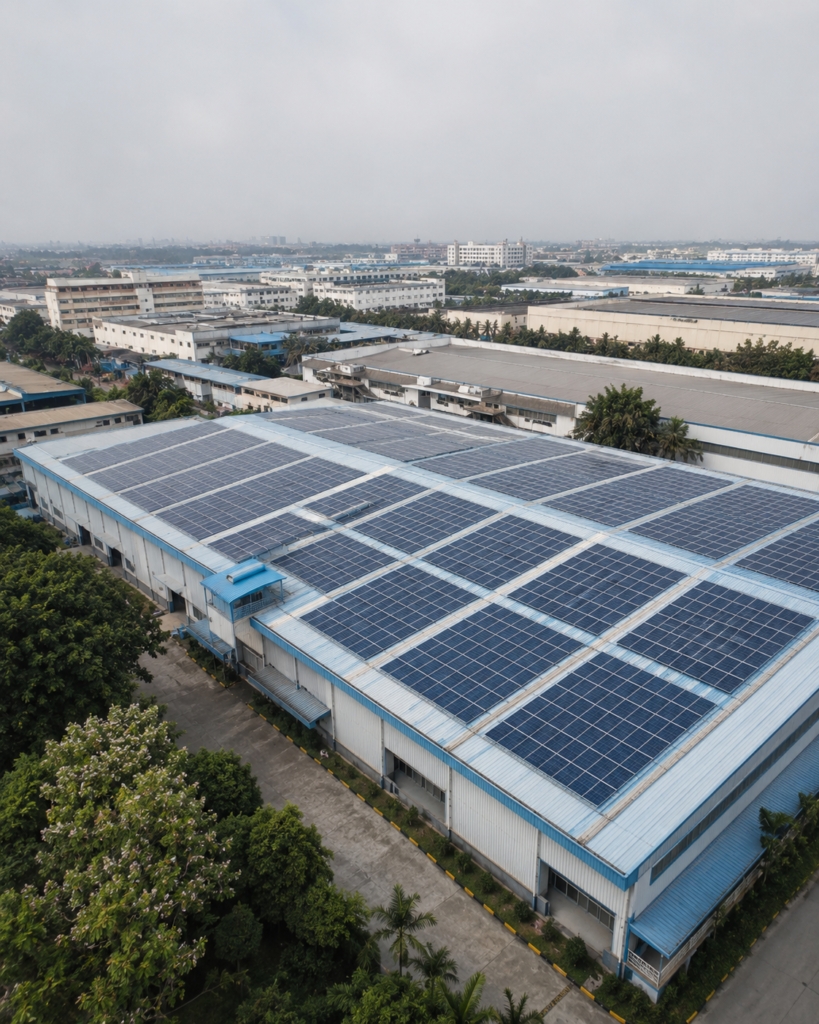
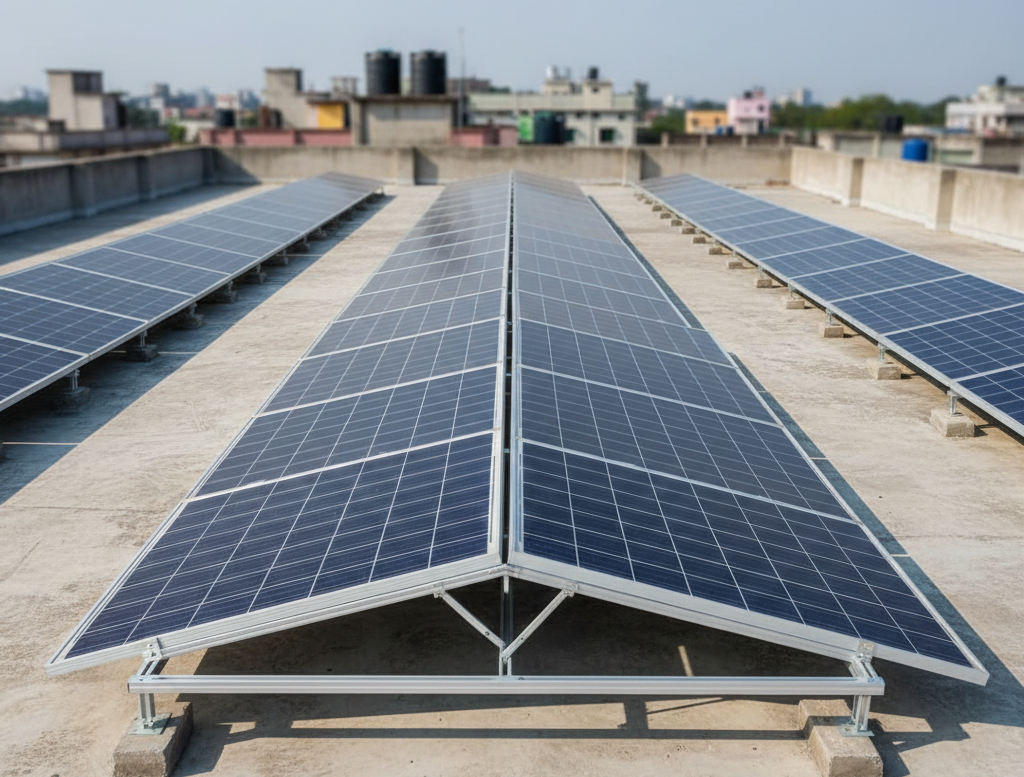
We also design for textile facilities, cold storage, export-oriented factories, and other high-consumption sites — every plant is sized from its own load profile and roof.
Design Factors
What FSP Checks Before Sizing an Industrial Plant
A complete industrial design depends on all of these — we do not skip any of them.
- Monthly electricity bill
- Monthly unit consumption
- Load profile
- Daytime load
- Transformer capacity
- MDB / SDB condition
- Roof type & condition
- Roof strength
- Available roof area
- Shadow condition
- Panel layout
- Inverter location
- DC cable route
- AC cable route
- Cable tray path
- DCDB / ACDB
- SPD / protection
- Earthing
- Lightning protection
- Net metering possibility
- Monitoring system
- Maintenance walkway
- Future expansion
Engineering Scope
FSP’s Full Industrial Engineering Scope
Load & Bill Analysis
Consumption and demand profile define the generation target. Why: correct sizing.
Roof Assessment
Usable area, type, and shading verified. Why: real capacity ceiling.
Structure Design
Mounting engineered for wind & load. Why: 25-year safety.
Panel Layout
Row spacing, tilt, walkways. Why: yield + maintenance.
Inverter Selection
String sizing, placement, ventilation. Why: performance & life.
DC Cable Routing
Voltage drop & path control. Why: minimal loss.
AC Cable Routing
Inverter-to-MDB path engineered. Why: safe, efficient delivery.
DCDB / ACDB
Combiner and distribution design. Why: clean fault isolation.
Protection System
Fuses, SPDs, breakers, isolation. Why: equipment & people safety.
Earthing System
Resistance-tested earthing. Why: shock & fault safety.
Lightning Protection
LPS by site exposure. Why: strike protection.
Transformer / MDB / SDB
Safe interconnection review. Why: grid-side safety.
Net Metering Support
Application & approval handling. Why: export credit.
O&M Planning
Cleaning, inspection, monitoring. Why: sustained yield.
Monitoring System
String-level performance tracking. Why: early fault detection.
Handover Documentation
Complete system record. Why: maintenance & warranty.
System Flow
How an Industrial Solar System Connects
Site Assessment
What We Check On Your Industrial Roof
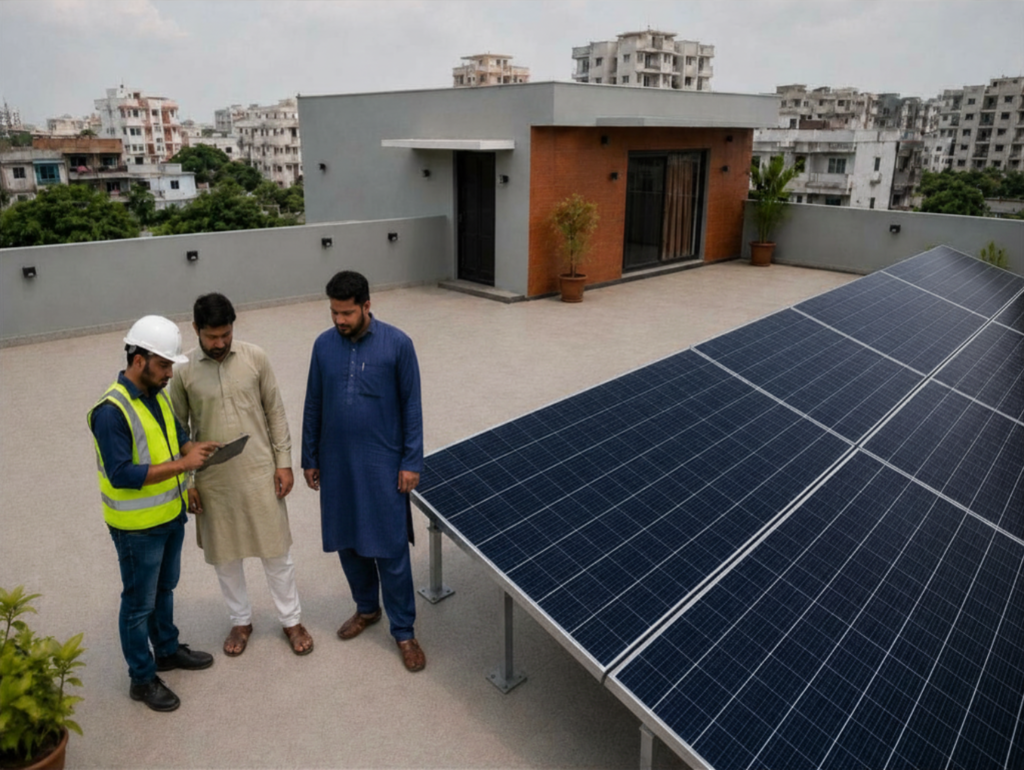
- Roof measurement & usable area
- Roof strength (load-bearing)
- Tin-shed or RCC roof condition
- Shadow analysis
- Panel layout possibility
- Cable routing & tray path
- Inverter location
- MDB / SDB location
- Earthing point
- Lightning protection requirement
- Safety access & maintenance walkway
- Photo documentation
ROI & Generation
How Your Industrial Return Is Estimated
We calculate from real data. The numbers below are a worked example to show the method — your real figures come from your bills and site survey, and are always presented as estimates, never guaranteed.
| Input | Example Value |
|---|---|
| Monthly electricity bill | ৳450,000 (example) |
| Monthly unit consumption | 60,000 kWh |
| Proposed system size | 100 kW |
| Estimated monthly generation | ≈ 12,000 kWh (estimate) |
| Estimated monthly saving | ≈ ৳90,000 (estimate) |
| Estimated payback period | ≈ 4–6 years (estimate) |
| Degradation consideration | ≈ 0.5% / year (typical) |
| O&M consideration | Cleaning + AMC per plan |
| 25-year value concept | Long-term asset on your roof |
Execution
Industrial Project Execution Timeline
Inquiry
Facility type, bill, and goal shared.
Bill & Load Review
Consumption and demand profile analyzed.
Site Visit
Roof, structure, shading, MDB, and route verified.
Engineering Assessment
Feasibility, capacity, and integration confirmed.
System Design
Layout, strings, protection, structure engineered.
Quotation
Calculated ROI and transparent scope.
Approval
Design and commercial terms confirmed.
Procurement
Approved components sourced to spec.
Installation
Professional installation with site safety.
Testing & Commissioning
Electrical testing and protection verification.
Handover
Net metering support and full documentation.
O&M / AMC Support
Monitoring and maintenance for the plant’s life.
Safety & Protection
Engineered Safe at Industrial Scale
DC Protection
DC fuses, isolators, and combiner protection.
AC Protection
AC breakers and isolation at the ACDB.
SPD
Surge protection on DC and AC sides.
MCCB / MCB
Correctly rated breakers throughout.
Earthing
Resistance-tested earthing system.
Lightning Protection
LPS designed by site exposure.
Cable Sizing
Correct DC/AC sizing for current & heat.
Fire Safety
Fire-safe layout and component selection.
Isolation & Labeling
Clear isolation points and safety labeling.
Maintenance Access
Safe walkways for long-term servicing.
In the Field
Industrial Solar Gallery
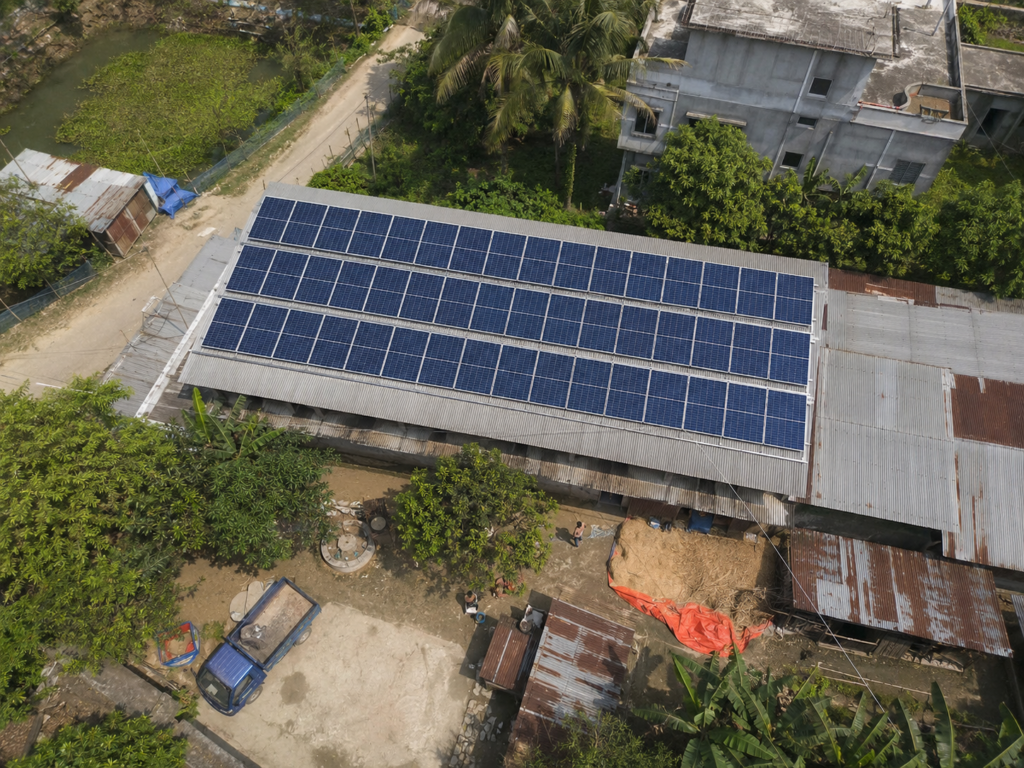
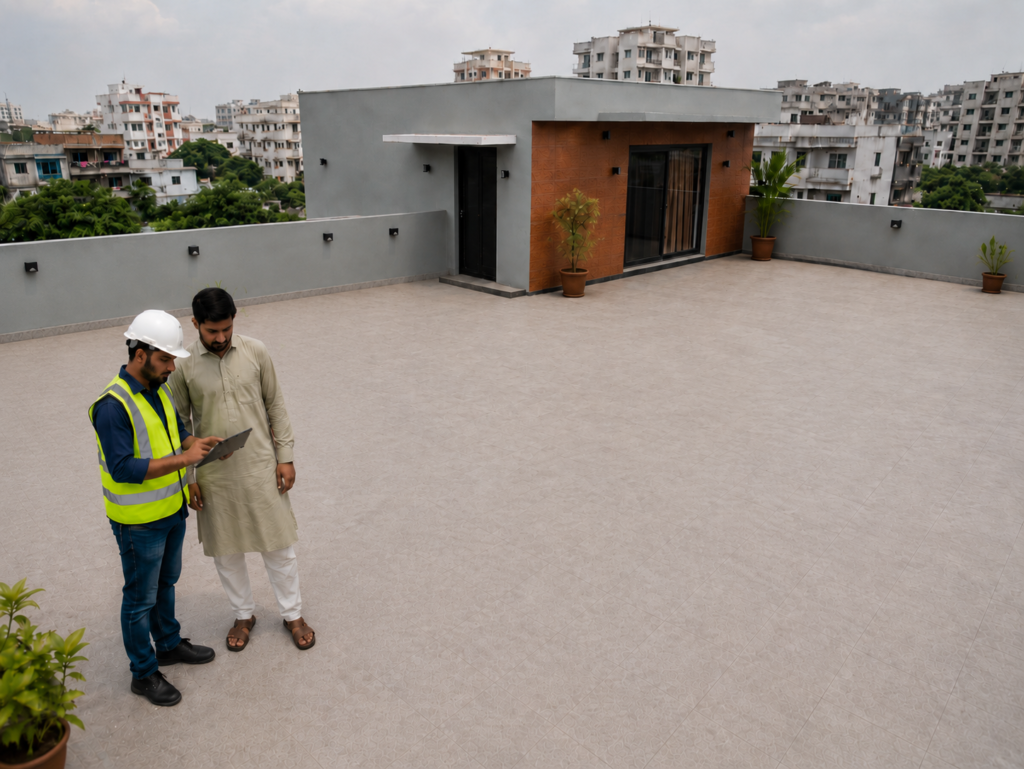
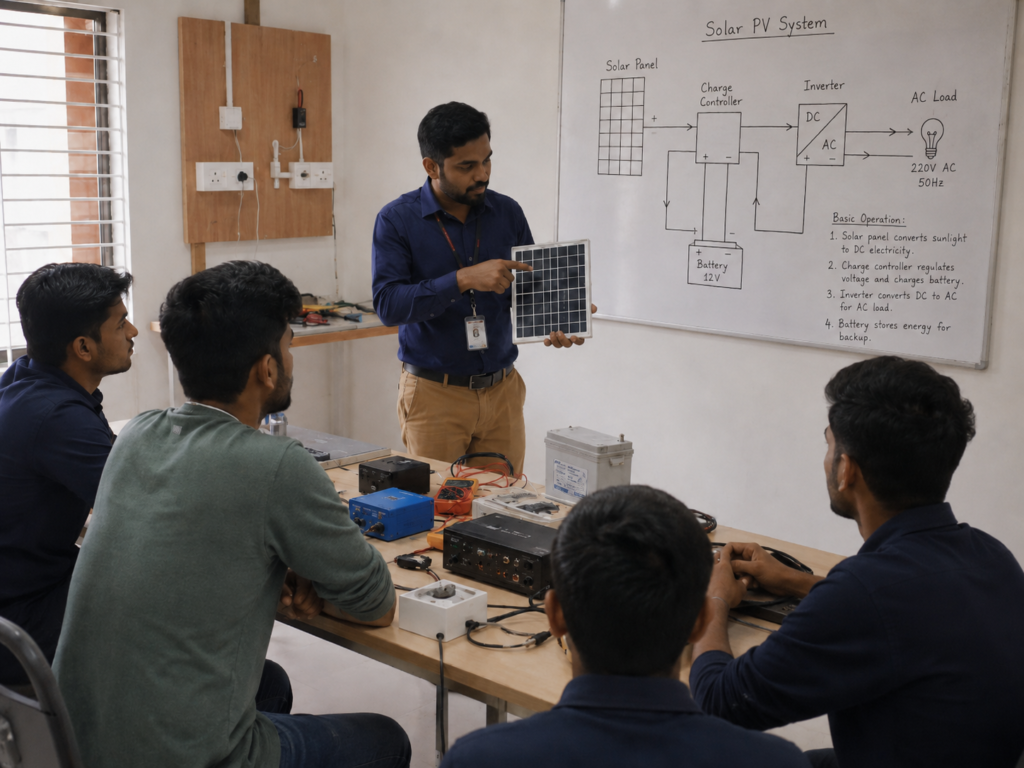
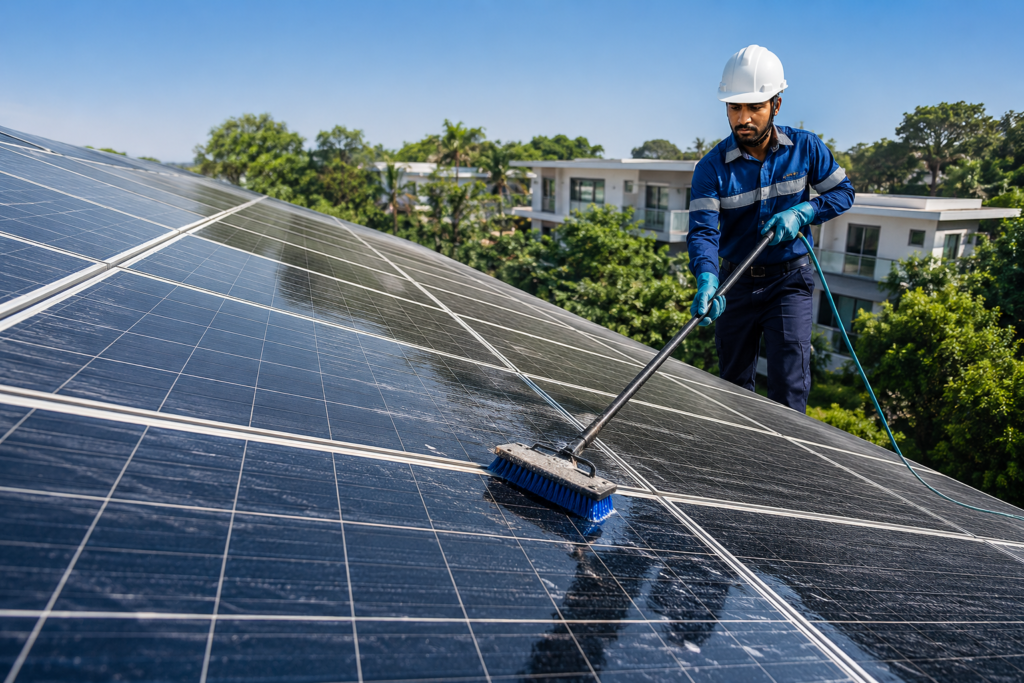
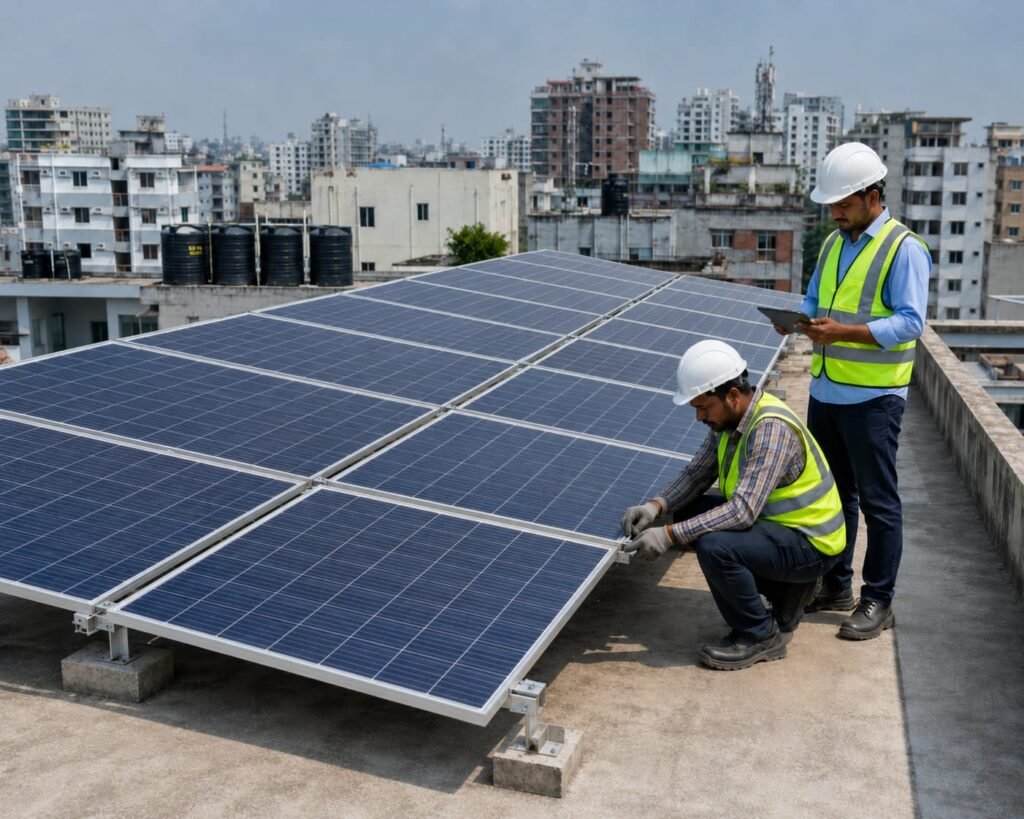
A look at the industrial work we design and deliver — rooftop, site survey, installation, and completed systems.


Components
System Components
Final product selection depends on system design, project requirement, product availability, warranty condition, and client approval.
Why FSP
Design-First Industrial Engineering
Design Before Price
Engineering first, quotation second — the order that protects a large investment.
Engineering Review Before Quotation
No price is issued without a real design behind it.
Load & Roof Assessment
Your real consumption and roof drive the system.
Safe Electrical Integration
Correct MDB/SDB and transformer-side integration.
Protection Planning
Complete DC/AC protection, earthing, and LPS.
Clear Documentation
A complete system record at handover.
Testing & Commissioning
Full validation before the plant goes live.
O&M & AMC Support
Structured maintenance for sustained yield.
Keep Exploring
Related Pages
FAQ
Industrial Solar Questions
What information is needed for an industrial solar quotation?
Is a site visit required before final industrial quotation?
How is industrial solar system size calculated?
How much roof space is required?
Can industrial solar reduce monthly electricity bills?
Does on-grid industrial solar provide backup?
What is the difference between on-grid and hybrid industrial solar?
How is ROI calculated?
What protection system is needed?
What maintenance is required after installation?
Can the system be expanded later?
How does net metering work for industrial solar?
Ready to Design Your Industrial Solar Project Correctly?
Before recommending system size or price, FSP reviews your load profile, electricity bill, roof condition, safety requirements, cable route, transformer/MDB condition, net metering possibility, ROI target, and future expansion plan.