Solar Technology Selected Around Design, Safety, Warranty & Performance
FSP reviews project requirement, system design, compatibility, safety, warranty, availability, and client approval before final product selection. A solar system is only as reliable as its complete design and component selection.
Why It Matters
Panels Alone Don’t Define a System
Panels Aren’t Everything
Module quality matters — but it’s only one part of the system.
Inverter Compatibility
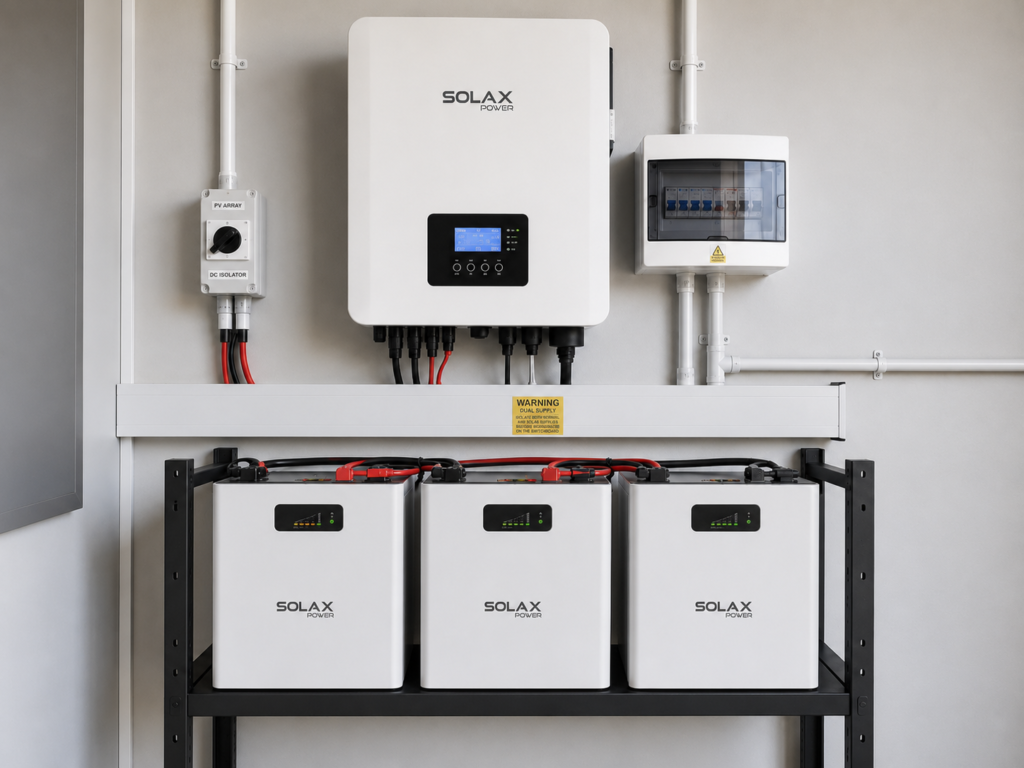
The inverter must match panels, load, and battery correctly.
Battery Selection
Battery type and sizing directly affect backup performance.
Cable Quality
Cable sizing affects safety and energy loss.
Protection Devices
Breakers, SPDs, and fuses reduce real electrical risk.
Structure Quality
Mounting durability decides 20-year survival.
Monitoring
Tracking output catches faults before they grow.
Warranty & Support
Terms and service availability must be reviewed.
Technology Categories
Twelve Component Categories We Engineer
Solar Panels
Used in: Every system.
Why: Generation source.
Selection: Wattage class, efficiency, warranty.
On-grid Inverters
Used in: On-grid systems.
Why: DC→AC + grid export.
Selection: Capacity, string design, MPPT.
Hybrid Inverters
Used in: Backup systems.
Why: Solar + battery + grid.
Selection: Surge rating, battery compatibility.
Off-grid Inverters
Used in: Independent systems.
Why: Battery-based supply.
Selection: Load rating, charge control.
Lithium Batteries
Used in: Hybrid / off-grid.
Why: Energy storage.
Selection: Usable capacity, cycle life, BMS.
Mounting Structures
Used in: Every system.
Why: Holds panels safely.
Selection: Wind load, material, roof type.
AC/DC Cables
Used in: Every system.
Why: Power transmission.
Selection: Sizing for current & voltage drop.
DCDB / ACDB
Used in: Every system.
Why: Combine & protect circuits.
Selection: Rating, enclosure, IP class.
Protection Devices
Used in: Every system.
Why: Fault & surge safety.
Selection: Breakers, SPD, fuse, isolator.
Earthing System
Used in: Every system.
Why: Shock & fault protection.
Selection: Electrode type, resistance target.
Lightning Protection
Used in: Exposed sites.
Why: Strike safety.
Selection: By site exposure & height.
Monitoring System
Used in: Most systems.
Why: Track & alert.
Selection: Inverter app or plant-level.
Selection Framework
How a Product Is Actually Chosen
Every product passes through this sequence before it reaches your project.
System Matching
Which Components Each System Needs
On-grid Solar
- Solar panels
- On-grid inverter
- DCDB / ACDB
- Protection devices
- Earthing
- Monitoring
- Net metering support
Hybrid Solar
- Solar panels
- Hybrid inverter
- Battery
- Backup load planning
- Protection devices
- Monitoring
Off-grid Solar
- Solar panels
- Off-grid inverter / charge controller
- Battery
- Strict load control
- Protection & maintenance planning
Industrial Solar
- High-capacity panels
- Commercial / industrial inverter
- Cable tray & routing
- AC/DC protection
- Earthing & lightning protection
- Monitoring & O&M planning
Product & Technology Brands
Brands We Work With
Final product selection depends on project design, product availability, warranty terms, and client approval — we do not claim official partnership, dealership, or authorization with any brand unless confirmed.
Equipment Gallery
Technology & Components in the Field
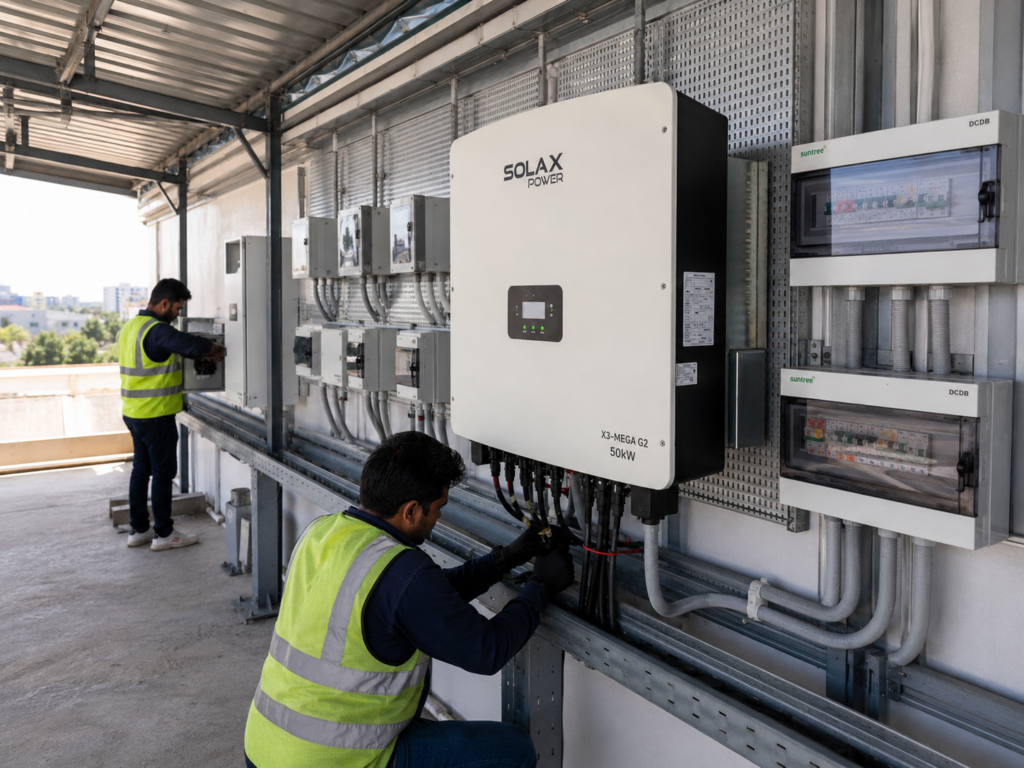
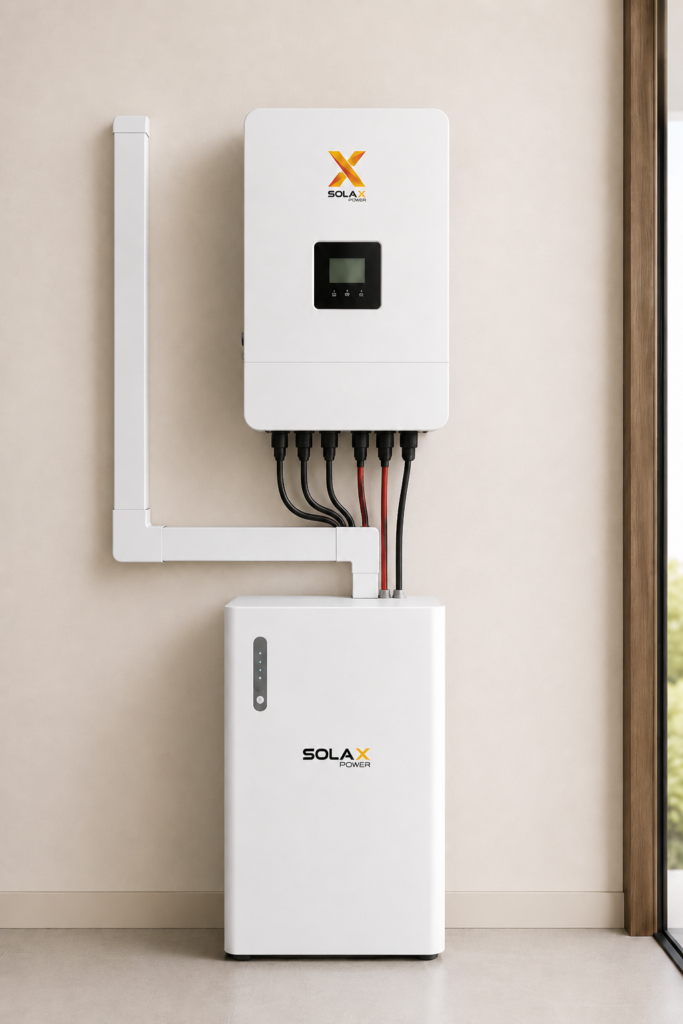
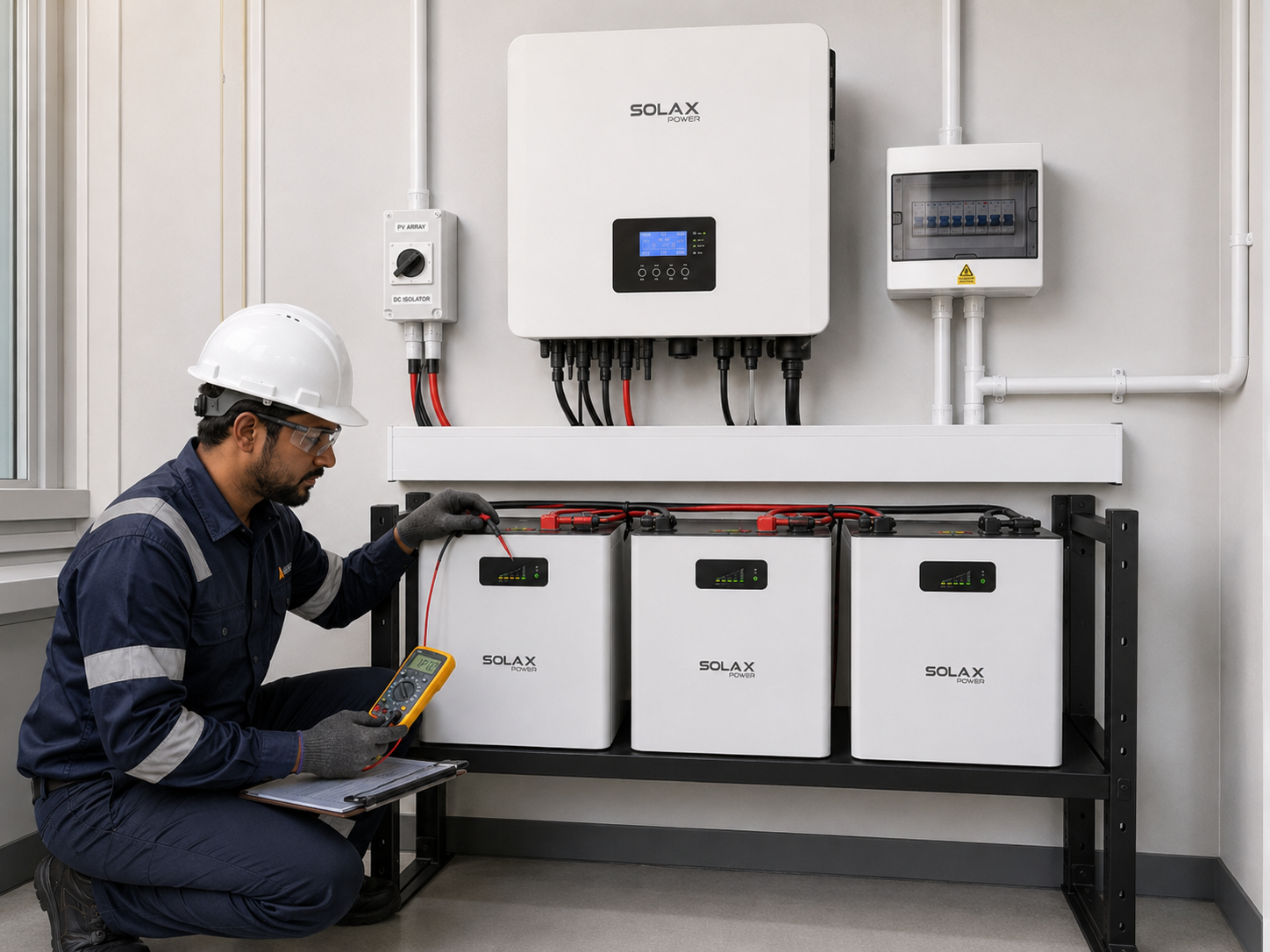
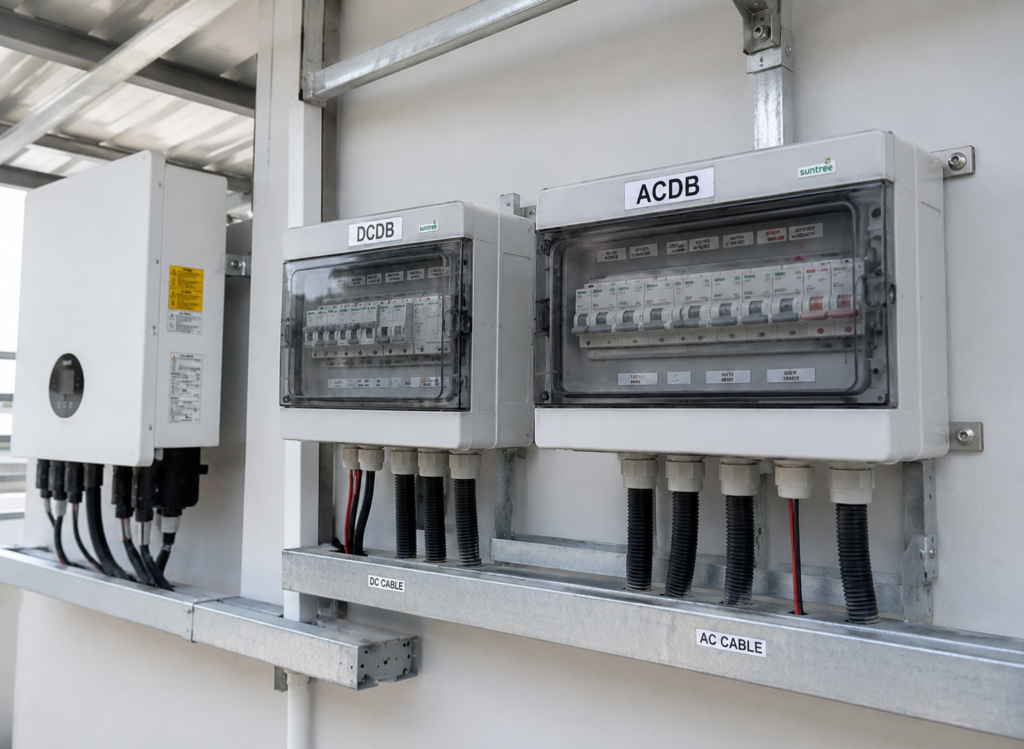
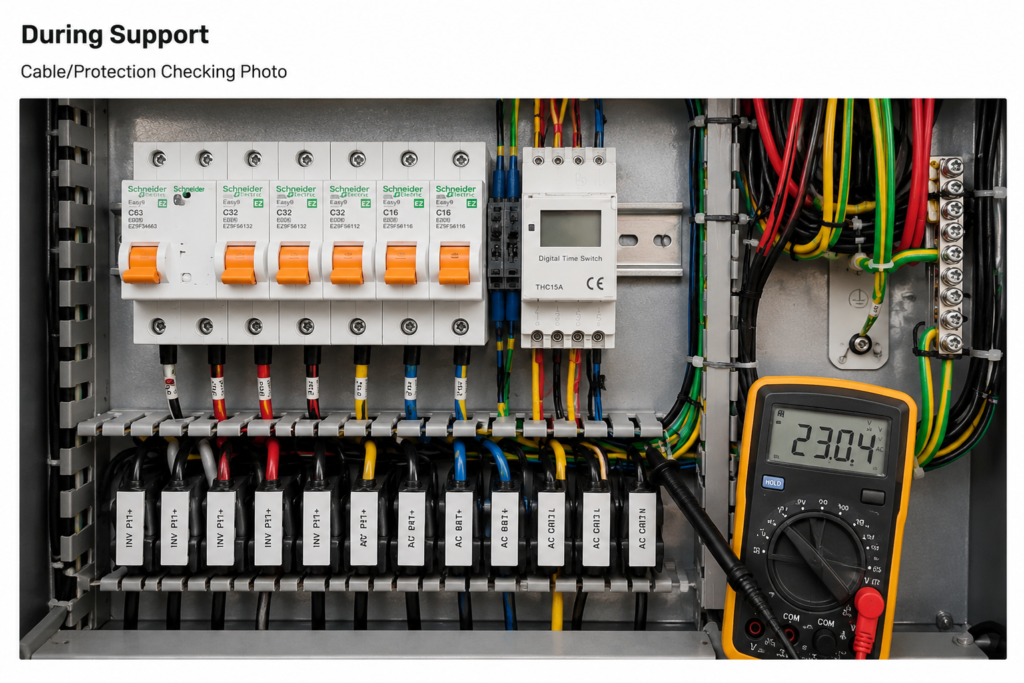
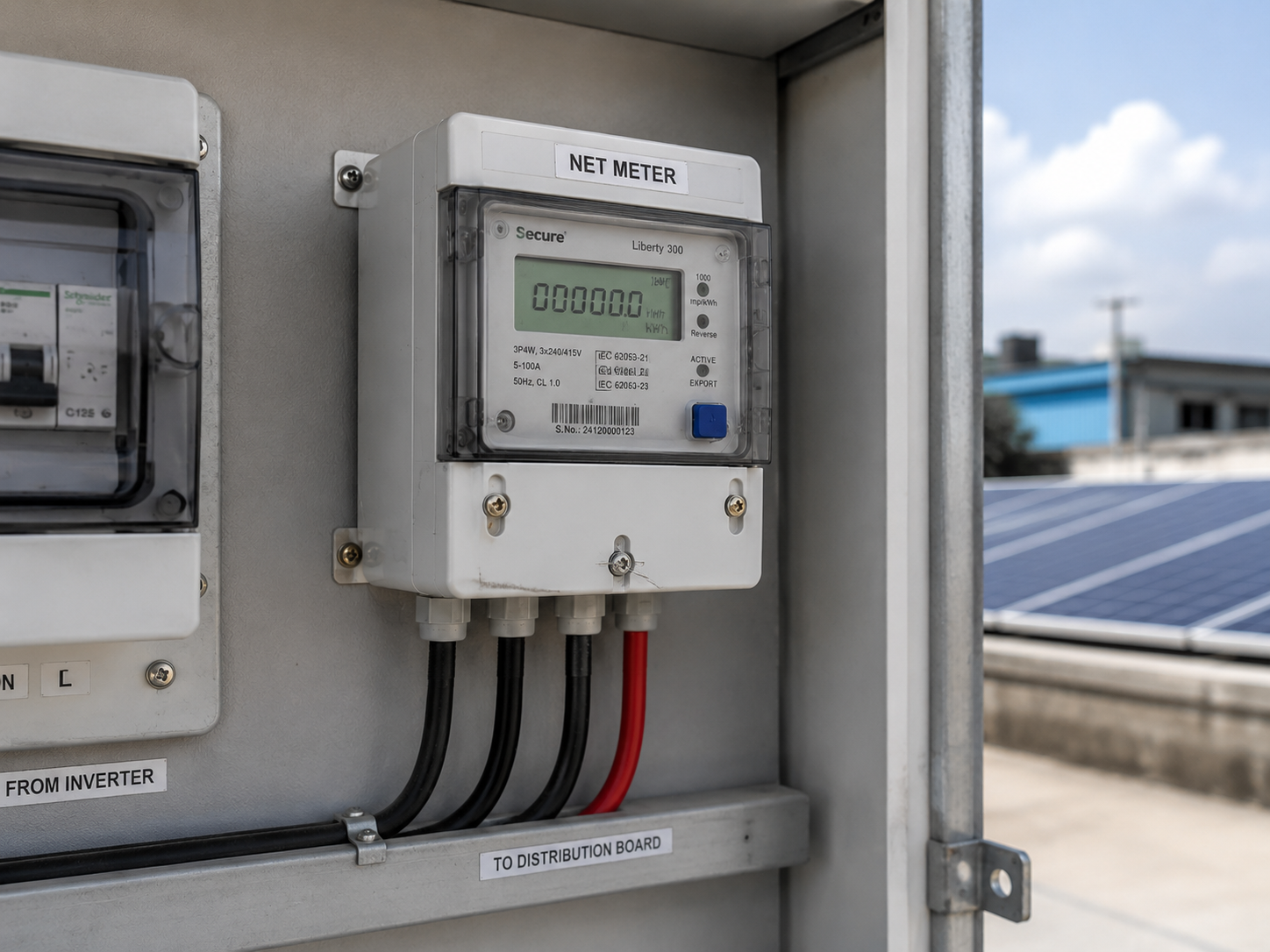
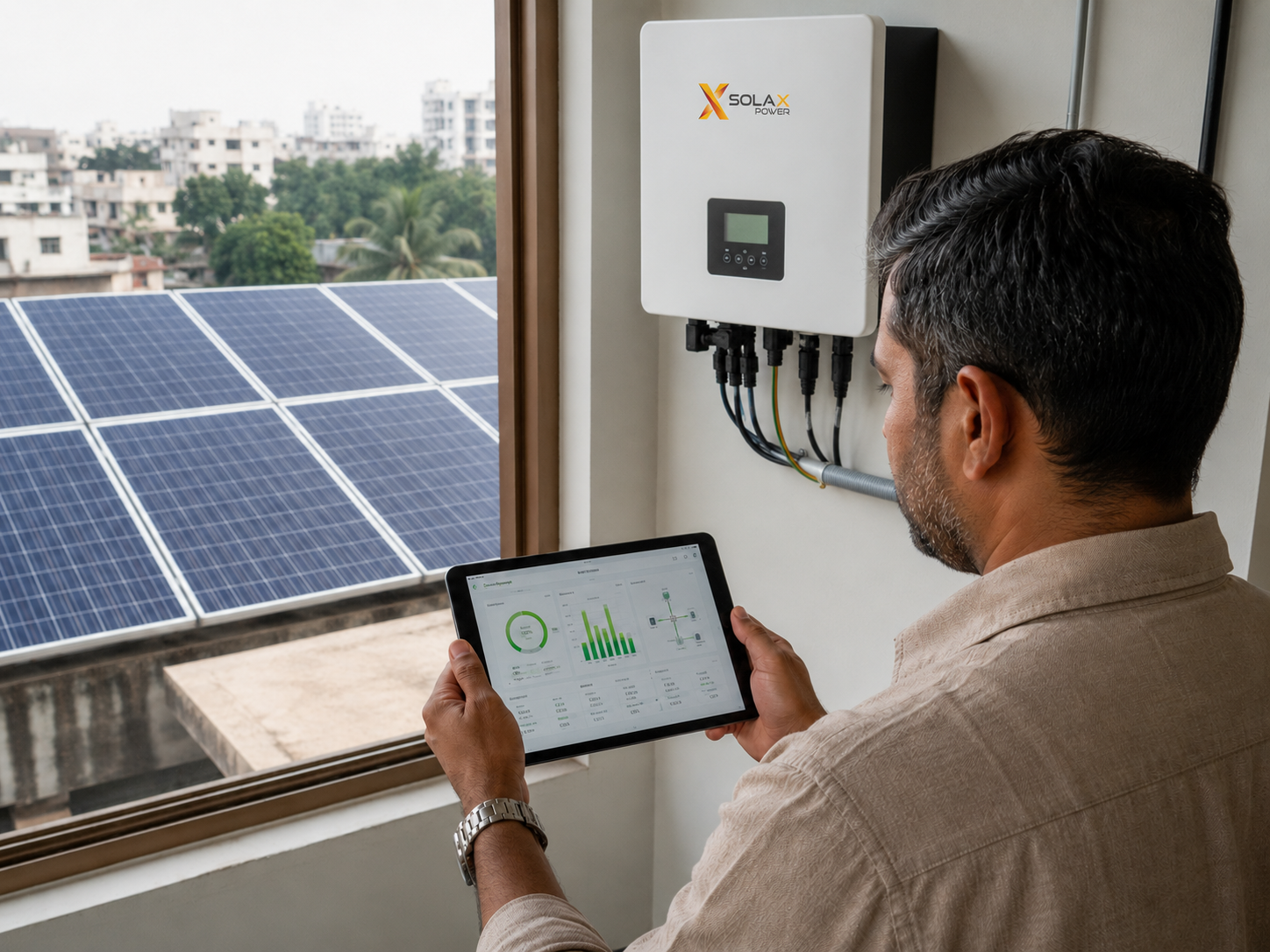
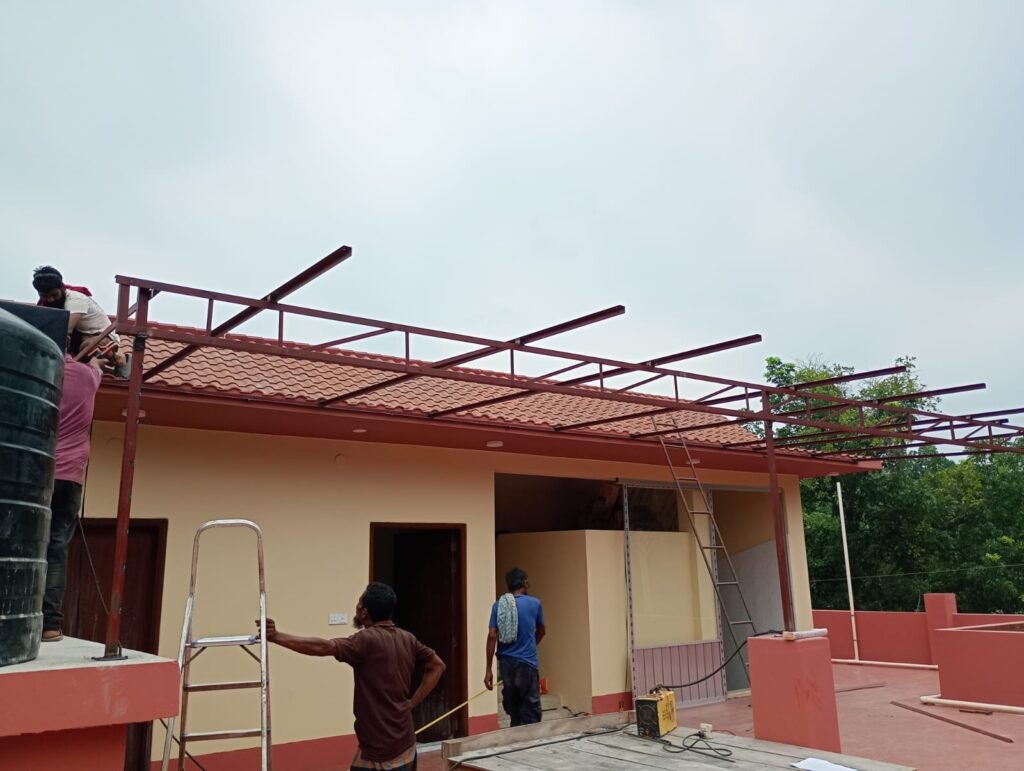
Real panels, inverters, batteries, protection, and balance-of-system components from our project work.

Product Quality
What We Verify Before Selecting a Product
- Warranty document
- Datasheet review
- Compatibility check
- Installation requirement
- IP rating (where applicable)
- Capacity matching
- Safety certification
- Supplier confirmation
- Service support
- Spare parts availability
- Monitoring compatibility
- Client approval
Safety Components
Protection Is Not Optional Decoration
These components are part of system reliability — never an afterthought to cut cost.
DC Protection
Fuses, isolators, DC breakers.
AC Protection
AC breakers and isolation.
SPD
Surge protection both sides.
MCCB / MCB
Correctly rated breakers.
Fuse / Isolator
Safe isolation points.
Earthing
Resistance-tested earthing.
Lightning Protection
By site exposure.
Cable Sizing
For current and heat.
Labeling
Clear circuit identification.
Fire Safety
Fire-safe components & layout.
Documentation
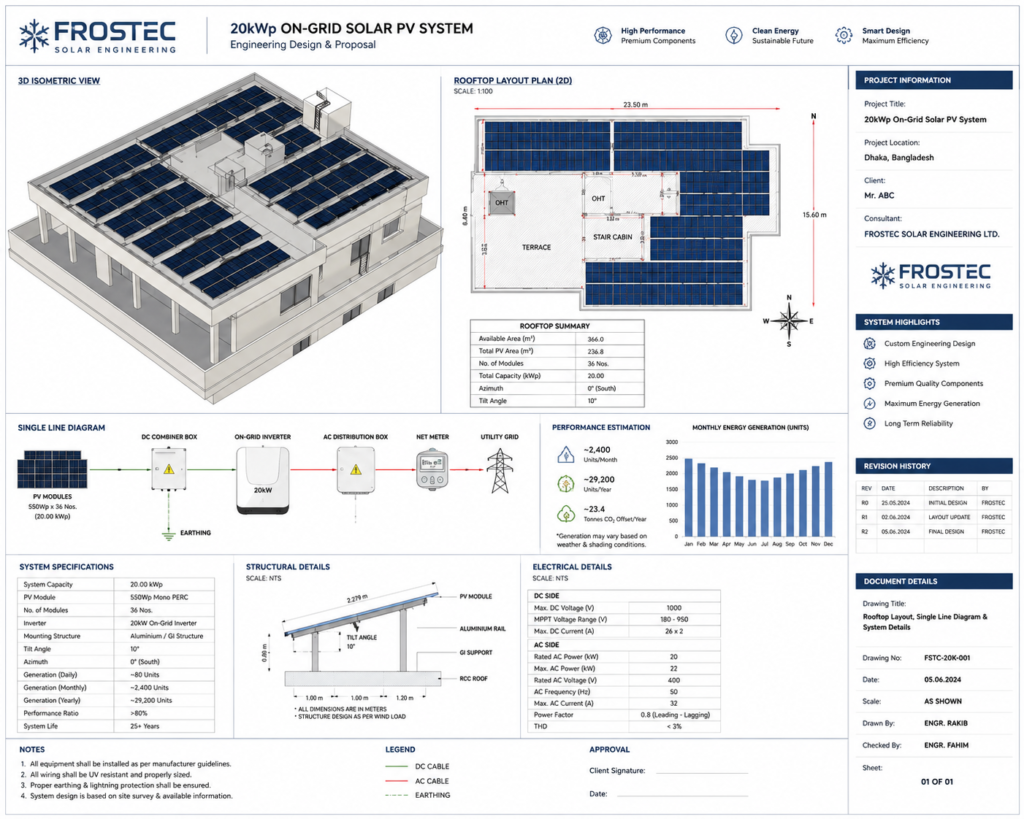
Documents That Come With Your Products
- Product datasheet
- Warranty card
- User manual
- Test certificate
- Installation guide
- Monitoring setup guide
- Handover document
- Service contact information
Why FSP
How We Handle Technology Selection
Design Before Product
The design decides the product, every time.
Compatibility Review
Components matched to work together.
Warranty Consideration
Terms and support weighed, not just price.
Safety-First Components
Protection planned into every system.
Availability Check
Real supply confirmed before promising.
Client Approval
Nothing procured without your sign-off.
Proper Installation
Right components, installed right.
Long-Term Support
Serviceability and spares planned.
Keep Exploring
Related Pages
Engineering Guides
System Types
By Type & Support
FAQ
Technology Questions
Does FSP work with specific solar brands?
Are these official partner brands?
How does FSP select products for a project?
Can clients choose preferred brands?
Why does inverter selection matter?
Why does battery selection matter?
Why are protection devices important?
What documents are needed for products?
Can product availability change?
Does final product selection depend on design?
Need the Right Technology for Your Solar Project?
Before recommending products or brands, FSP reviews your system type, load requirement, roof condition, backup need, safety requirements, compatibility, warranty, and long-term support plan.