
Most solar systems that fail early do not fail on day one. They pass the first switch-on, produce well for a few months and look like a success. The trouble arrives in years three to five — and by then the saving that caused it has long been forgotten.
Updated October 2026 · Written and reviewed by the Frostec Solar Powers engineering team
- Early failure is usually not the panels — it is the inverter, cables, connectors, protection or structure around them.
- Six common cost cuts: cheap or undersized inverters, thin cables and poor terminations, missing protection and earthing, no structural review, no commissioning, no maintenance plan.
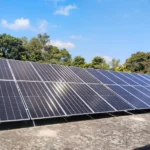
- Neat, protected cable routing like the trays in the photo is one of the easiest quality signs to check.
- The low price and the early failure are the same decision, seen at two different times.

What does “early failure” mean in solar?
Definition: early failure is the loss of performance, safety or reliability well before the 25-year design life — usually not because the modules failed, but because the engineering around them was cut to lower the price. Anything that forces major repair, replacement or sustained underperformance within the first few years counts.
Where the money is cut — and how it comes back
| Cost cut | What happens in years 3–5 | What to check |
|---|---|---|
| Cheap or undersized inverter | Overheats on hot rooftops, derates, then fails; replacements can take weeks. | Brand, model, warranty, temperature derating, ventilation. |
| Thin cables & poor terminations | Energy lost every day; connectors scorch in heat and humidity. | Cable cross-section, voltage-drop limit, genuine connectors, crimp quality. |
| Missing protection & earthing | Surge and lightning damage; fire and shock risk. | DC/AC isolators, fuses, SPDs, earth resistance test. |
| No structural review | Rows loosen after storms; roof leaks; corrosion. | Wind-uplift design, galvanised or aluminium structure, roof fixing method. |
| No commissioning or documents | Nobody can diagnose low output; warranty claims fail. | Commissioning report, layout, single-line diagram. |
| No maintenance plan | Dust and loose terminals quietly cut output. | Monitoring access, cleaning schedule, AMC option. |
Cable management: the detail you can see
Look at the roof in the photo: cables run in trays along defined routes to a combiner box instead of lying loose across the surface. Loose cable on a Bangladeshi roof faces 60–70 °C surface temperatures, UV, standing water and foot traffic. Protected routing keeps insulation healthy for decades. It costs a little more at installation; damaged cables cost far more later.
Why the inverter is usually first to fail
The inverter is the hardest-working component in the system. Fixed in direct sun, in a closed room, or sized without allowing for high ambient temperature, it runs hot and derates — and electronics age quickly with heat. A shaded, ventilated location and a quality unit with a solid local warranty make the difference. Many quality hybrid inverters carry up to 10-year manufacturer warranties, subject to terms.
The business implication
A system that loses 10–20% of its output to poor design, or stops for six weeks waiting for an inverter, can wipe out the entire price difference between a cheap quotation and a properly engineered one — often within the first few years. Read how we calculate this in Solar ROI & Payback Guide.
Engineering checklist: will this system last?
- Exact panel and inverter models are named, with datasheets.
- The inverter location is shaded and ventilated.
- Cable sizes and a voltage-drop limit are written in the quotation.
- Cables run in trays or conduit, with genuine connectors.
- DC and AC isolators, fuses and surge protection devices are listed.
- Earthing is designed and tested, with the value recorded.
- The structure is designed for wind uplift on your roof type.
- Commissioning tests and handover documents are included.
- A cleaning schedule and maintenance option are offered.
Frequently Asked Questions
Why do cheap solar systems fail early?
Usually because the cost savings came from invisible parts — inverter quality and placement, cable size, connectors, protection, earthing and structure — not from the panels themselves.
Which part of a solar system fails most often?
The inverter, especially when it is undersized, low quality or installed in a hot, unventilated location.
How can I check the quality of an installation?
Ask for the layout, single-line diagram, cable sizes, protection list, earthing test value and commissioning report. Then look at the roof: tidy cable routing, firm structure and protected connections are good signs.
Get a Second Opinion on a Quotation
Send us a quotation or photos of an existing system. We will point out the risks honestly.
Questions? Call or WhatsApp +880 1805-208117 or email info@frostecsolarpowers.com. Head office: Suite 708/B, Level 7, Zaman Tower, 37/2 Purana Paltan, Dhaka 1000. Figures in this article are indicative and approximate; final values depend on your site survey, design and the manufacturer terms of the equipment supplied.