
From November, many solar owners notice their daily generation falling and call us worried that something is broken. Usually it is the season, not the system. Knowing what is normal helps you spot a real fault — and a little preparation recovers a lot of lost output.
Updated October 2026 · Written and reviewed by the Frostec Solar Powers engineering team
- In Dhaka, average solar radiation falls from about 5.2 kWh/m² a day in April to about 3.25 in December — roughly 35–40% less.
- December output is typically about 20–25% below the yearly average. That is normal.
- Fog reduces morning generation; dust builds up because there is almost no rain from November to March.
- The low winter sun lengthens shadows from tanks, stair rooms and parapets.
- Cool panels are slightly more efficient, and winter bills are lower, so annual savings are not affected.
How much lower is winter output?
For Dhaka, average daily solar radiation is about 4.2 kWh/m² over the year, ranging from about 3.25 in December to about 5.23 in April. Generation follows the same pattern:
| Period | Typical daily output per kW of panels | Compared with yearly average |
|---|---|---|
| March–May | ≈ 4.2–4.6 units | Higher |
| Yearly average | ≈ 3.5–4.0 units | — |
| Monsoon (cloudy days) | Varies widely day to day | Lower on rainy days |
| December–January | ≈ 2.7–3.1 units | About 20–25% lower |
A 5 kW system that makes 22 units on a clear April day may make 14–15 on a December day. Compare your monitoring with the same month last year, not with April.
Four winter factors
1. Lower sun and shorter days
The sun is lower in the southern sky and the day is shorter, so less energy reaches each panel.
2. Fog and haze
Dense morning fog can keep output near zero until it lifts, often late morning. Urban haze in the dry season reduces light further.
3. Dust and soiling
With almost no rain from November to March, dust, soot and bird droppings stay on the glass. Low-tilt rooftop panels are not washed by rain until the pre-monsoon storms.
4. Longer shadows
A water tank or stair room that casts no shadow in summer can shade a row of panels in December mornings and afternoons. Because panels in a string act like a chain, one shaded panel can reduce the whole string — see the hidden engineering behind a rooftop array.
The good news
- Cold improves efficiency: modern panels lose about 0.28–0.29% of output for every °C of heat, so cooler winter panels convert light slightly better.
- Your bill is lower too: without air conditioning, winter consumption drops, so solar still covers a large share.
- Annual return is unchanged: payback calculations already use the yearly average — see the ROI guide.
Pre-winter maintenance checklist
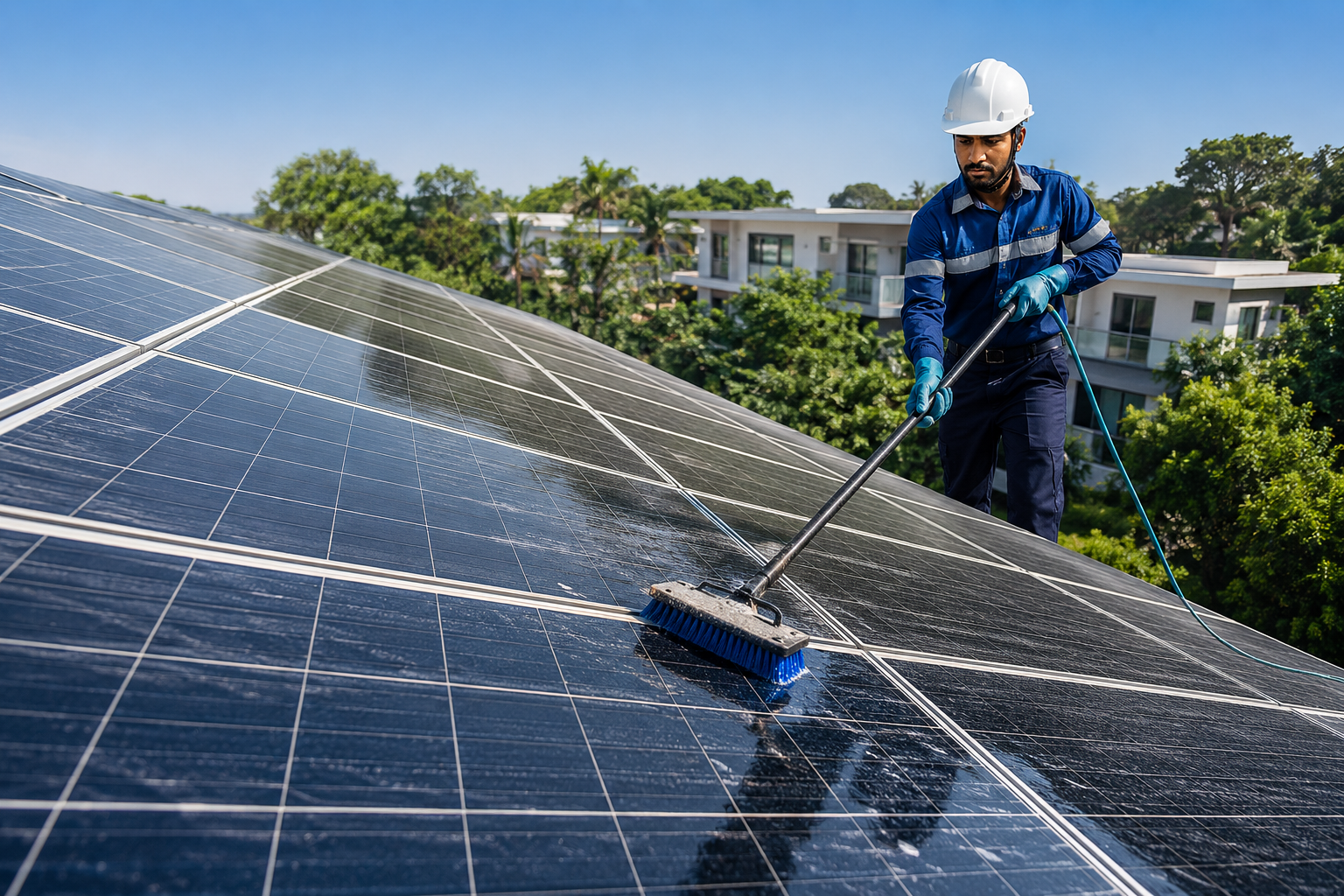
- Clean the panels early in the morning or late afternoon with clean water and a soft brush — no detergent, no abrasive pads, no high-pressure jets, and never walk on panels.
- Clean every 2–4 weeks during the dry season, more often near roads, construction or factories.
- Check for new shading from tanks, antennas, plants or new construction nearby.
- Inspect cables and connectors for rodent damage, loose clips and UV cracking.
- Check inverter alarms and logs and compare monthly generation with last year.
- Test earthing and surge protection before the next storm season.
- For hybrid systems: check battery health and state of charge — winter fog means less recharging before evening load shedding.
Frostec’s Support & AMC plans include scheduled cleaning, inspection and performance reports.
Frequently Asked Questions
Why is my solar generation lower in winter?
Because the sun is lower, days are shorter, morning fog and haze block light, dust builds up without rain, and shadows are longer. In Dhaka, December radiation is about 35–40% lower than April.
How much solar output is normal in December in Bangladesh?
Roughly 2.7–3.1 units per kW of panels per day on average, about 20–25% below the yearly average. A 5 kW system may make 14–15 units on a clear December day.
How often should I clean solar panels in winter?
Every 2–4 weeks during the dry season, and more often in dusty areas. Use clean water and a soft brush in the early morning or late afternoon.
Do solar panels work in fog?
They produce very little in dense fog and recover as it lifts. Output on foggy mornings is low, but clear afternoons still generate well.
Does cold weather damage solar panels?
No. Bangladesh’s winter temperatures are well within panel ratings, and cooler panels are slightly more efficient.
Book a Pre-Winter Check
Our team cleans, inspects and tests your system and compares its output with expected seasonal values — so you know it is performing as it should.
Questions? Call or WhatsApp +880 1805-208117 or email info@frostecsolarpowers.com. Figures in this article are indicative and approximate; final values depend on your site survey, design and the manufacturer terms of the equipment supplied.