

The Failures Nobody Predicted on Day One
Most solar systems that fail early do not fail on day one. They pass the first switch-on, generate for a few months, and look like a success. The failures arrive in years three to five — an inverter that dies and takes weeks to replace, output that has quietly fallen, a connector that scorched in the monsoon, a structure that loosened in the wind.
By then the buyer has forgotten the saving that caused it. The low price and the early failure are the same decision, seen at two different times.
Definition: What “Early Failure” Really Means
Early failure in solar is the loss of performance, safety, or reliability well before the design life — usually not because the modules failed, but because the surrounding engineering was cut to lower the price.
A solar plant is designed to run for 25 years. Anything that forces major repair, replacement, or sustained underperformance within the first few years is early failure — and it is almost always traceable to a decision made before installation.
Where the Money Was Cut — and How It Comes Back
Cheap or mismatched inverters
The inverter is the hardest-working component and the most common early failure. Undersized for ambient temperature, poorly ventilated, or simply low quality, it runs hot and fails. In a hot climate, an inverter chosen without temperature derating is a failure waiting for summer.
Undersized cables and poor connections
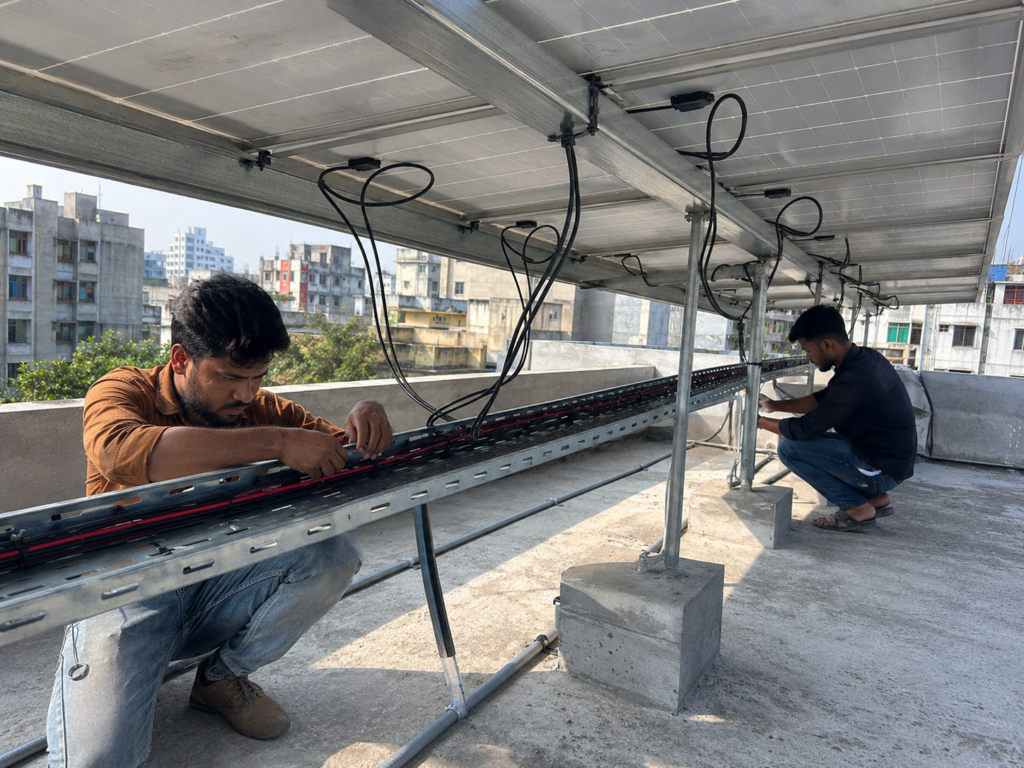
Thin cable and badly made connections waste energy as heat every day and run hot. Heat ages insulation and connectors, which eventually fail — sometimes safely as lost output, sometimes unsafely as a hot joint.
Missing protection and earthing
When DCDB, ACDB, surge protection, and earthing are thinned out to win the price, the plant is unprotected against faults, switching transients, and lightning. The system runs fine until the day it needs protection it does not have — and then the damage is sudden and expensive.
No structural review
A mounting structure designed without a wind and roof review may hold in calm weather and loosen, lift, or leak in a storm. The cost of skipping the review is paid once, badly.
No commissioning, no documentation
If the plant was never properly tested and no documents were handed over, faults cannot be diagnosed. Small problems that a commissioning test would have caught become chronic losses nobody can explain.
No maintenance plan
Without scheduled cleaning and monitoring, soiling and undetected faults erode output year after year. This is not dramatic failure — it is slow, permanent underperformance that the owner never sees because nothing is measured.
The Business Implication
The lowest-price plant is rarely the cheapest plant. Its true cost is the purchase price plus lost generation, repairs, replacements, downtime, and an asset that cannot be diagnosed or financed. Spread over 25 years, a well-engineered plant that costs more on day one usually costs far less to own.
Any payback or saving figure used to justify the cheap option is approximate and assumes the plant performs — which is exactly what the cost-cutting put at risk. Warranties do not rescue this either: they apply subject to manufacturer terms, and a warranty on a module does not cover a system that was never engineered to support it.
Common Mistakes That Cause Early Failure
- Choosing the lowest bid for a 25-year asset.
- Inverter sized to capacity only, with no temperature derating.
- Undersized cables and unverified connections.
- Protection and earthing cut to lower the price.
- No structural / wind review before mounting.
- No commissioning tests and no handover documents.
- No maintenance plan or monitoring.
Engineering Checklist: Will This System Last?
- Is the inverter sized for your ambient temperature and properly ventilated?
- Are cables sized by calculation and connections specified?
- Are DCDB, ACDB, SPD, and earthing fully included?
- Was a structural / wind review done for this roof?
- Is there a commissioning test and documentation handover?
- Is there a maintenance and monitoring plan?
- Are warranty terms in writing and realistic, not “guaranteed for 25 years”?
Bangladesh and International Relevance
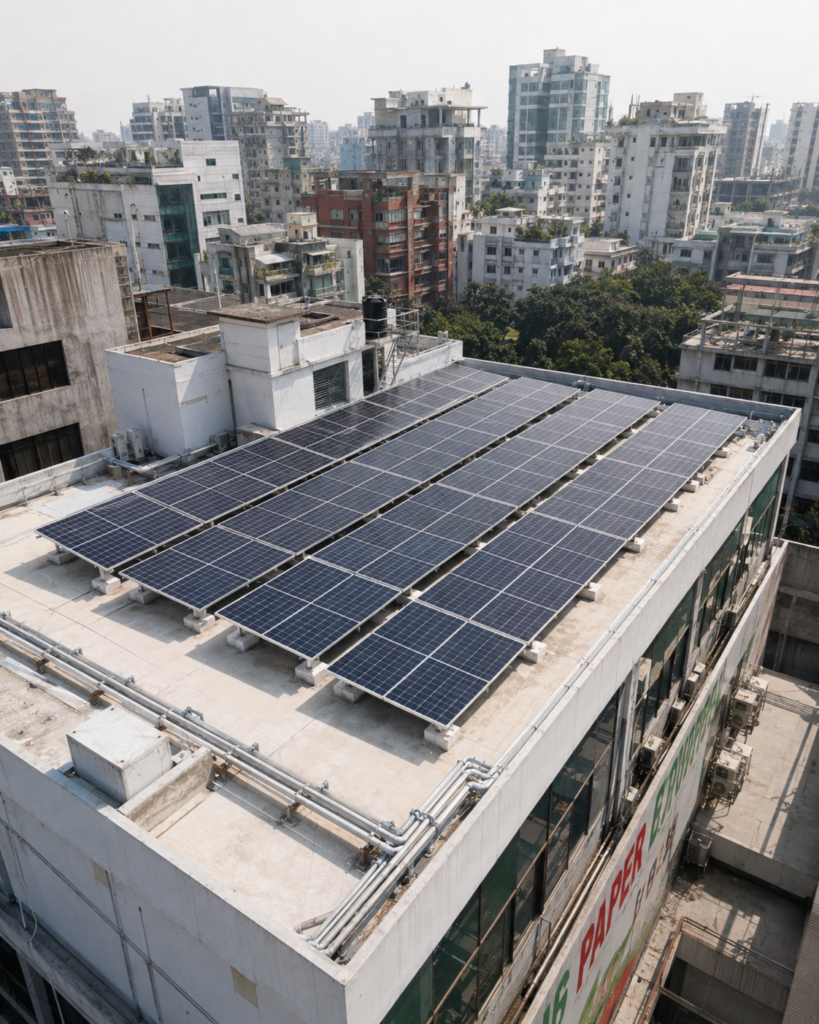
In Bangladesh, the conditions that expose cut corners arrive every year: extreme heat for inverters, monsoon and lightning for protection, dust for soiling losses, and cyclonic wind for structures. A cheap system here is tested harder and fails faster. Internationally, the failure modes are the same wherever solar is built cheaply; only the climate that triggers them changes [VERIFY LOCAL CONDITIONS AND CODE].
Frequently Asked Questions
Why do cheap solar systems fail in 3 to 5 years?
Because the savings come from the surrounding engineering — inverter quality, cable sizing, protection, structure, commissioning, and maintenance — whose absence only shows up after a few years of real conditions. The modules are usually not the problem.
Doesn’t the warranty protect me?
Warranties apply subject to manufacturer terms and typically cover specific components, not a system that was never engineered properly. A module warranty does not compensate for chronic underperformance or a failed cheap inverter.
Is a more expensive system always better?
No. The goal is a well-engineered system, not the most expensive one. Price should reflect real engineering — design, protection, commissioning, documentation — not be high or low for its own sake.
Where to Read Next
This supports the pillar Solar Is Not a Product. It Is Engineered Infrastructure. Read it with Lifecycle Cost vs Upfront Cost and Why Lowest-Price Solar Often Costs More. The Hidden Engineering Behind
Don’t Buy an Early Failure
Send your quotation for a Second Opinion and we will flag the cut corners before you sign. Or start with a Free Load Assessment to define a system built to last on your site.
Hotline: +880 1805-208117 · Email: info@frostecsolarpowers.com