
Solar equipment in Bangladesh became duty-free in the 2026-27 national budget. Many people now ask two questions: how much does a solar system cost today, and should I wait for prices to fall further? This guide answers both with numbers.
Updated October 2026 · Written and reviewed by the Frostec Solar Powers engineering team
- Budget 2026-27 set 0% import duty, regulatory duty, supplementary duty and advance tax on key solar power equipment, valid until June 2031.
- Incentives for mounting structures, lithium cells, battery packs and battery storage end after 30 June 2028.
- Industry reports estimate that solar generation costs could fall by 25–30% as a result.
- Indicative Frostec turnkey rates (October 2026): about ৳32 per watt for on-grid and about ৳75 per watt for hybrid with battery.
- Lower duties make equipment cheaper, but design and installation quality still decide whether the system lasts 25 years.
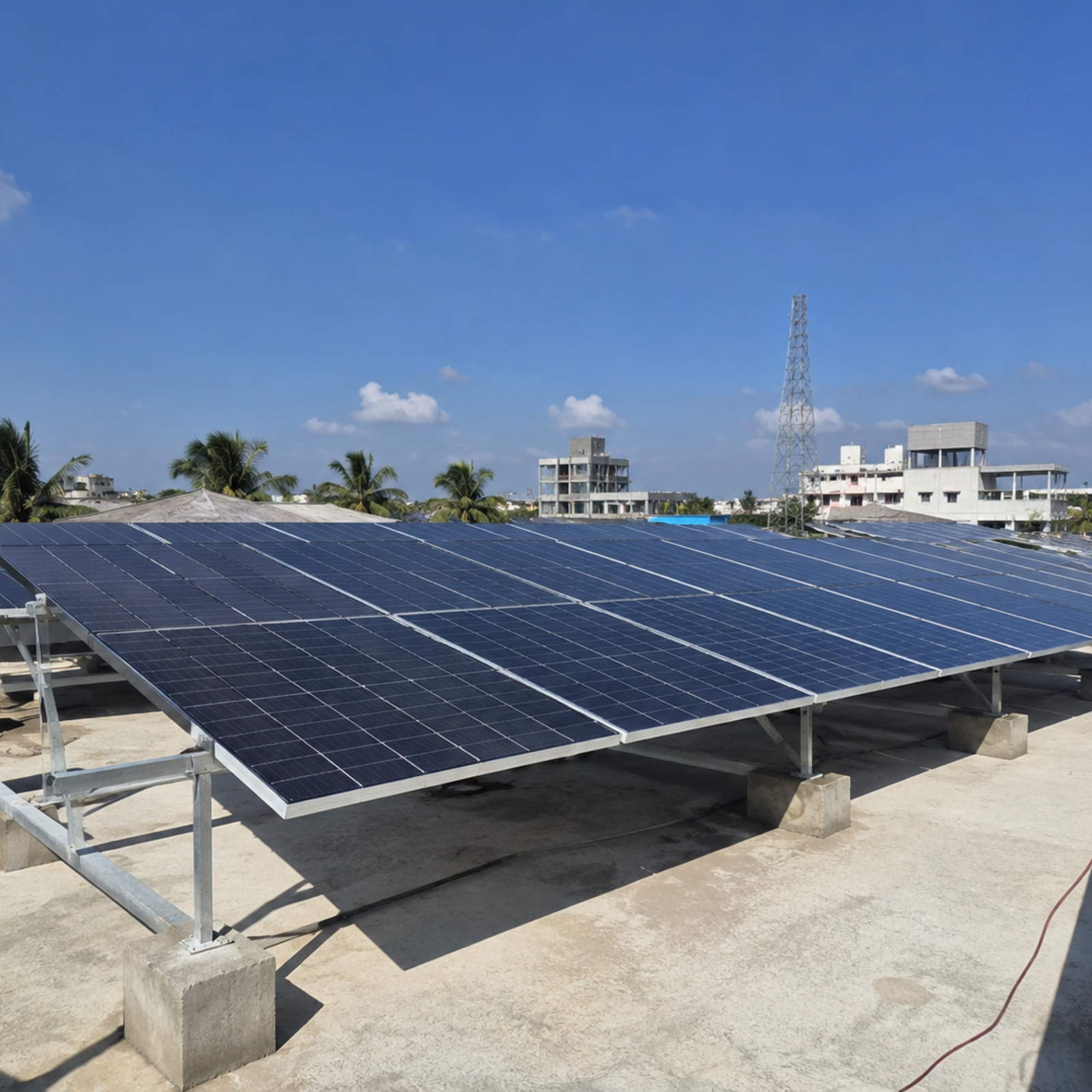
What changed in the 2026-27 budget?
The budget for fiscal year 2026-27 introduced a 0% rate of import duty, regulatory duty, supplementary duty and advance tax on key solar power equipment. According to published reports:
| Item | Benefit | Valid until |
|---|---|---|
| Key solar power equipment (panels, inverters and related equipment) | 0% import, regulatory and supplementary duty and advance tax | June 2031 |
| Mounting structures, lithium cells, battery packs, battery energy storage systems | Duty and tax exemptions | 30 June 2028 |
| Materials for making lithium-ion and sodium-ion battery packs locally | Duty and tax exemptions | 30 June 2030 |
Analysts reported that before the change, combined duties on items such as panels, inverters, lithium battery packs and mounting structures could add up to around 58%. Stakeholders estimate the relief at 30–70% on affected items and expect the cost of solar electricity to fall by 25–30%.
Indicative solar system prices in Bangladesh (October 2026)
The table below uses Frostec’s indicative turnkey rates, which include panels, inverter, mounting structure, cables, protection, earthing, installation and net-metering support. Final prices are confirmed only after a site survey.
| System size | On-grid (≈ ৳32/W) | Hybrid with lithium battery (≈ ৳75/W) | Typical user |
|---|---|---|---|
| 3 kW | ≈ ৳96,000 | ≈ ৳2.25 lakh | Flat or small house, 250–400 units a month |
| 5 kW | ≈ ৳1.60 lakh | ≈ ৳3.75 lakh | Larger home, 400–700 units a month |
| 10 kW | ≈ ৳3.20 lakh | ≈ ৳7.50 lakh | Duplex, clinic, school or shop |
| 50 kW | ≈ ৳16 lakh | Designed per site | Factory, office or commercial building |
Each kW of panels produces about 3.5–4.5 units a day on average in Bangladesh, so a 5 kW system makes roughly 550–650 units a month. To see what that is worth on your bill after BERC’s June 2026 tariff revision, read our ROI & payback guide.
Why one quote is ৳25 per watt and another is ৳45
Prices differ because quotes are not describing the same thing. Ask every supplier to show, line by line:
- Panel brand, model and wattage — Tier-1 manufacturers such as Jinko, LONGi or JA Solar (see our comparison).
- Inverter brand, model and warranty years.
- Battery chemistry, usable kWh and cycle life for hybrid systems.
- Structure material and thickness — galvanised steel or aluminium, wind-load design and roof fixing method.
- DC and AC cable sizes, breakers, surge protection and earthing.
- Net-metering paperwork, commissioning report and after-sales support.
A quote that hides these details usually saves money on exactly the parts that fail first. We explain the pattern in why low-cost solar fails in 3–5 years.
Should you wait for prices to fall further?
For most buyers, waiting costs more than it saves:
- Every month without solar is a month of full electricity bills. A home paying ৳5,000 a month loses about ৳60,000 a year.
- Battery incentives end on 30 June 2028, earlier than the rest.
- The Tk 10.50 per unit export incentive applies only to battery-backed systems installed by 28 February 2027 — see our incentive guide.
- Load shedding is happening now. A hybrid system starts protecting you from the day it is commissioned — see which backup actually works.
Other financial benefits to ask about
Businesses can choose between owning the system (CAPEX) or paying for the electricity under a third-party model (OPEX), which needs little or no upfront capital. Green financing is also available through banks and IDCOL. Compare the models in Solar Investment Models: CAPEX vs OPEX.
Frequently Asked Questions
What is the price of a solar system in Bangladesh in 2026?
As an indicative October 2026 guide, Frostec’s turnkey on-grid systems are about ৳32 per watt (≈ ৳96,000 for 3 kW) and hybrid systems with lithium battery about ৳75 per watt (≈ ৳2.25 lakh for 3 kW). Final prices depend on a site survey.
Is solar equipment duty-free in Bangladesh?
Yes. The 2026-27 budget set 0% import duty, regulatory duty, supplementary duty and advance tax on key solar power equipment until June 2031. Benefits for mounting structures, lithium cells, battery packs and battery storage end after 30 June 2028.
Why are some solar quotes much cheaper?
Usually because they use lower-grade structures, undersized cables, missing protection or unbranded components. Always compare itemised quotes with model numbers, cable sizes and warranties.
Will solar prices fall further?
Equipment prices may change, but waiting means paying full electricity bills meanwhile. Battery incentives end in June 2028, and the Tk 10.50 export incentive requires installation by 28 February 2027.
How much does a 5 kW solar system cost in Bangladesh?
Indicatively about ৳1.60 lakh for on-grid and about ৳3.75 lakh for a hybrid system with lithium battery, based on Frostec’s October 2026 turnkey rates.
Get an Itemised, Design-Based Quote
We quote with model numbers, cable sizes, protection and warranties listed line by line — so you can compare honestly.
Questions? Call or WhatsApp +880 1805-208117 or email info@frostecsolarpowers.com. Figures in this article are indicative and approximate; final values depend on your site survey, design and the manufacturer terms of the equipment supplied.